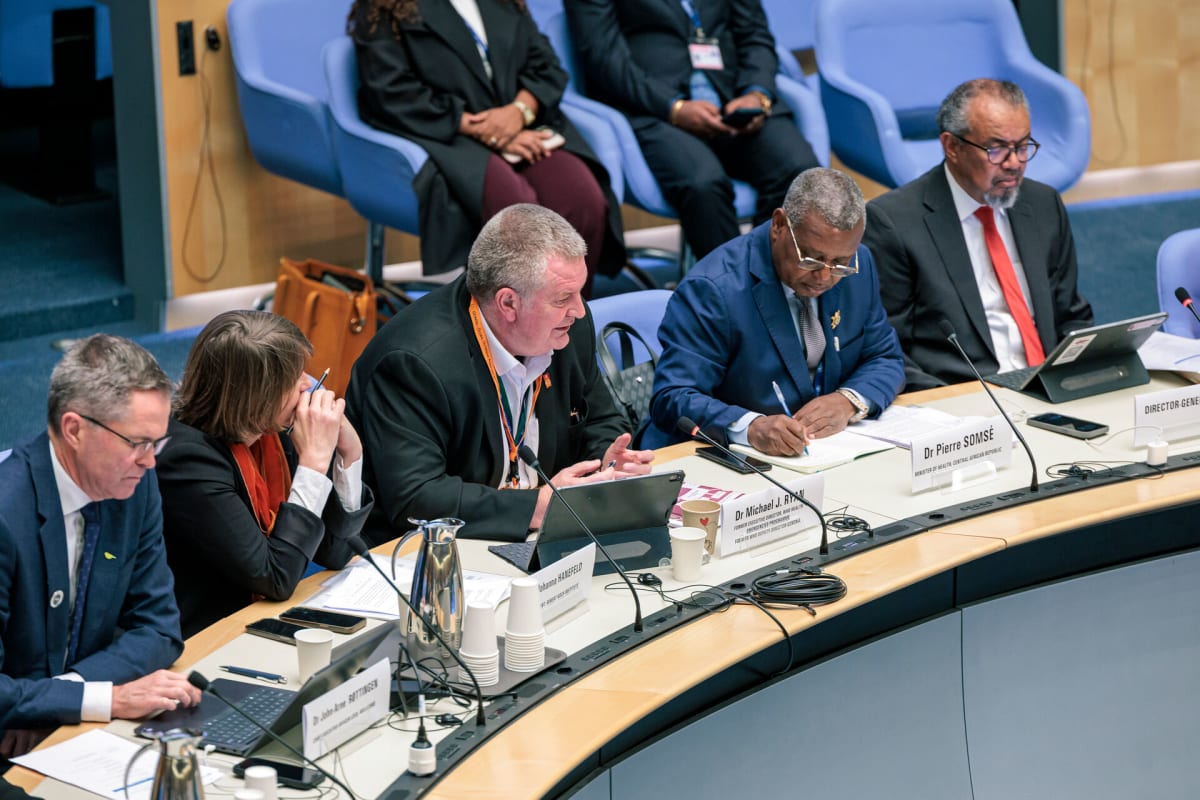
Geneva, 19 May 2026, The World Health Organization’s Seventy ninth World Health Assembly convened today with a dual focus: advancing critical negotiations to reshape global pandemic preparedness and reflecting on a decade of hard won lessons from COVID 19. Director General Dr. Tedros Adhanom Ghebreyesus presented his annual report to Member States, emphasizing the need for shared responsibility in addressing the world’s most pressing health threats. The assembly’s theme, Reshaping global health: a shared responsibility, underscored the urgency of translating crisis driven reforms into sustainable systems that protect communities before, during, and after emergencies strike.
What Happened
The 79th World Health Assembly (WHA) opened its doors in Geneva with a packed agenda centered on pandemic preparedness, public health emergency response, and the ongoing evolution of the World Health Organization’s (WHO) Health Emergencies Programme (WHE). On the agenda was the critical negotiation of the Pathogen Access and Benefit Sharing (PABS) Annex under the WHO Pandemic Agreement, a framework designed to ensure equitable access to pathogen data and benefits derived from their use during future pandemics.
Delegates also addressed urgent public health challenges, including the health impacts of the ongoing conflict in the Middle East, with a specific focus on protecting healthcare workers and facilities in conflict zones. The assembly adopted a draft decision on the health emergency in Lebanon, signaling a commitment to addressing crises that transcend national borders. Additionally, certificates of achievement were presented to countries and organizations for outstanding contributions to tobacco control, highlighting progress in a long standing public health priority.
Outside the formal sessions, a strategic roundtable commemorated the tenth anniversary of the WHE, bringing together global leaders to reflect on the evolution of health emergency response systems since the SARS outbreak in 2003. The discussions centered on how successive crises, from Ebola to COVID 19, have exposed systemic weaknesses while simultaneously accelerating innovation and collaboration.
Why Public Health Officials Are Concerned
Public health officials and delegates at the WHA emphasized that the world remains vulnerable to the next pandemic, despite the progress made since COVID 19. The COVID 19 crisis exposed critical gaps in global preparedness, including inequitable access to medical countermeasures, fragmented supply chains, and the erosion of public trust in health institutions. The PABS Annex negotiations are seen as a pivotal step toward addressing these gaps by establishing a transparent and equitable framework for pathogen data sharing and benefit distribution.
Another major concern is the protection of healthcare workers in conflict settings, where attacks on medical facilities and personnel have surged in recent years. The assembly’s focus on Lebanon reflects broader concerns about the health impacts of prolonged conflicts, which often lead to prolonged humanitarian crises and strained health systems. The adoption of the draft decision on Lebanon sends a clear message that the international community must prioritize the safety of healthcare workers and the continuity of essential health services in war torn regions.
The roundtable discussions highlighted the need for proactive, rather than reactive, approaches to health emergency preparedness. Experts warned that global health systems have historically evolved in response to crises rather than anticipating them, leaving populations vulnerable to preventable suffering. The challenge now is to build systems that are resilient, adaptable, and capable of responding to emerging threats before they escalate into full blown pandemics.
Symptoms or Risk Factors
While the WHA’s discussions focused on systemic and structural risks, the lessons from COVID 19 provide a clear picture of the symptoms of unpreparedness:
- Delayed or inequitable access to medical countermeasures: The initial rollout of COVID 19 vaccines and treatments highlighted disparities in access between high income and low income countries, exacerbating global health inequalities.
- Erosion of public trust: Misinformation and disinformation during the pandemic undermined confidence in health authorities and delayed critical public health interventions.
- Fragmented supply chains: Shortages of essential medical supplies, including personal protective equipment (PPE) and oxygen, revealed vulnerabilities in global supply chains that must be addressed.
- Attacks on healthcare workers: In conflict zones, healthcare workers face targeted violence, which disrupts the delivery of essential health services and exacerbates humanitarian crises.
Who May Be Affected
The outcomes of the WHA’s discussions will have far reaching implications for multiple stakeholders:
- Global health institutions: The WHO and its Member States will need to finalize the PABS Annex and ensure its implementation aligns with the broader Pandemic Agreement, which is expected to open for signature in 2027.
- Low and middle income countries (LMICs): These countries are particularly vulnerable to the inequities in pathogen data sharing and benefit distribution. The PABS Annex aims to address these disparities by ensuring that benefits derived from pathogen data, such as vaccines and treatments, are shared equitably across all nations.
- Healthcare workers: The assembly’s focus on protecting healthcare workers in conflict settings underscores the risks they face daily. Strengthening international protections for healthcare workers is critical to maintaining essential health services in crisis zones.
- Communities in conflict zones: Prolonged conflicts, such as those in the Middle East, have devastating health impacts on civilian populations. The WHA’s discussions on Lebanon highlight the need for sustained international support to address these crises.
- Public health researchers and scientists: The PABS Annex will shape how pathogen data is shared and utilized, influencing research priorities and collaborations between countries.
Government or WHO Response
The WHO and its Member States have taken several concrete steps to address the challenges highlighted during the WHA:
- Negotiation of the PABS Annex: The Intergovernmental Working Group (IGWG) on the WHO Pandemic Agreement has been tasked with finalizing the PABS Annex. The outcome of these negotiations will be submitted to the Eightieth World Health Assembly in May 2027, or at a dedicated special session in 2026. The goal is to adopt the PABS Annex before the Pandemic Agreement opens for signature, ensuring that the framework is in place to guide equitable responses to future pandemics.
- Reforms to the International Health Regulations (IHR): The assembly noted the report on the implementation of the IHR (2005), which provides a legal framework for global health security. The reforms aim to strengthen the IHR’s effectiveness in preventing and responding to public health emergencies.
- Protection of healthcare workers: The assembly adopted a draft decision on the health emergency in Lebanon, signaling a commitment to addressing the health impacts of conflicts. This decision builds on the WHO’s ongoing efforts to protect healthcare workers and ensure the continuity of essential health services in crisis zones.
- Strengthening the WHO Health Emergencies Programme (WHE): The roundtable discussions commemorating the tenth anniversary of the WHE highlighted the program’s evolution and the need for sustained investment in emergency preparedness. The WHE has played a critical role in responding to global health emergencies, and its continued strengthening is essential to addressing future threats.
Prevention and Safety Guidance
The WHA’s discussions underscored the importance of proactive measures to prevent future pandemics and strengthen health emergency preparedness. Key guidance includes:
- Investing in epidemic intelligence: Advanced analytics and artificial intelligence (AI) can enhance early detection and response to emerging health threats. However, these tools must be paired with strong national health systems and public trust to be effective.
- Ensuring sustainable and flexible financing: Reliance on reactive funding limits the ability of countries to prepare for and respond to health emergencies. Sustainable financing mechanisms, such as the Universal Health and Preparedness Review (UHPR), can help align technical, political, and community action to improve preparedness.
- Strengthening supply chains: Fragmented supply chains for essential medical supplies must be addressed to ensure that countries have access to the resources they need during emergencies. This includes investing in local production capacity and diversifying supply sources.
- Protecting healthcare workers: International protections for healthcare workers in conflict zones must be strengthened. This includes advocating for the implementation of the UN Security Council Resolution 2286, which condemns attacks on healthcare workers and facilities.
- Promoting equitable access to medical countermeasures: The PABS Annex aims to ensure that benefits derived from pathogen data are shared equitably across all nations. This includes prioritizing the needs of low and middle income countries in the development and distribution of vaccines and treatments.
What Readers Should Know
The 79th World Health Assembly has set the stage for critical advancements in global health security, but the work is far from over. Here’s what readers should keep in mind:
1. The PABS Annex is a game changer for pandemic preparedness: The Pathogen Access and Benefit Sharing Annex is a cornerstone of the WHO Pandemic Agreement. Its adoption will ensure that pathogen data is shared transparently and that benefits derived from their use, such as vaccines and treatments, are distributed equitably. This is particularly important for low and middle income countries, which have historically borne the brunt of inequities in global health.
2. Conflict zones remain a critical public health challenge: The assembly’s focus on Lebanon and the broader Middle East highlights the devastating health impacts of prolonged conflicts. Protecting healthcare workers and ensuring the continuity of essential health services in these regions must remain a global priority.
3. Proactive preparedness is essential: The lessons from COVID 19 have made it clear that reactive approaches to health emergency preparedness are insufficient. Countries must invest in epidemic intelligence, sustainable financing, and resilient health systems to address emerging threats before they escalate into full blown pandemics.
4. Public trust is a non negotiable component of health security: Misinformation and disinformation during the COVID 19 pandemic undermined confidence in health authorities and delayed critical interventions. Building and maintaining public trust must be a priority for health institutions worldwide.
5. The work of the WHO Health Emergencies Programme is more important than ever: As the world commemorates the tenth anniversary of the WHE, it is clear that the program’s role in responding to global health emergencies will only grow in importance. Sustained investment in the WHE is critical to ensuring that the world is prepared for the next pandemic.
Key Takeaways
- The Pathogen Access and Benefit Sharing (PABS) Annex under the WHO Pandemic Agreement is a critical step toward ensuring equitable access to pathogen data and benefits during future pandemics.
- Global health systems must shift from reactive to proactive approaches to preparedness, building resilience against emerging threats before they escalate.
- Protecting healthcare workers in conflict zones remains a global priority, with the WHA adopting measures to address the health impacts of prolonged conflicts.
- Sustainable financing and investment in epidemic intelligence are essential to strengthening health emergency preparedness and response.
- Public trust in health institutions is a non negotiable component of effective pandemic preparedness and response.
Frequently Asked Questions
What is the Pathogen Access and Benefit Sharing (PABS) Annex, and why is it important?
The PABS Annex is a framework under the WHO Pandemic Agreement designed to ensure transparent and equitable sharing of pathogen data and the benefits derived from their use during future pandemics. Its adoption is critical to addressing inequities in access to medical countermeasures and ensuring that low and middle income countries are not left behind in pandemic responses.
How has the WHO Health Emergencies Programme (WHE) evolved over the past decade?
The WHE has evolved significantly since its establishment, shaped by lessons from successive health emergencies, including SARS, Ebola, and COVID 19. The program has expanded its mandate to include epidemic intelligence, sustainable financing, and the protection of healthcare workers in conflict zones, reflecting a shift toward proactive preparedness.
What are the key challenges in protecting healthcare workers in conflict zones?
Healthcare workers in conflict zones face targeted violence, which disrupts the delivery of essential health services and exacerbates humanitarian crises. Strengthening international protections, such as the implementation of UN Security Council Resolution 2286, and ensuring the continuity of essential health services are critical to addressing these challenges.
How can countries improve their preparedness for future pandemics?
Countries can improve their preparedness by investing in epidemic intelligence, sustainable financing, resilient health systems, and equitable access to medical countermeasures. Proactive measures, such as strengthening supply chains and promoting public trust in health institutions, are also essential.
What role does public trust play in pandemic preparedness and response?
Public trust is a non negotiable component of effective pandemic preparedness and response. Misinformation and disinformation during the COVID 19 pandemic undermined confidence in health authorities and delayed critical interventions. Building and maintaining public trust must be a priority for health institutions worldwide.
Medical Review: MedSense Editorial Board








DISCUSSION (0)
POST A COMMENT