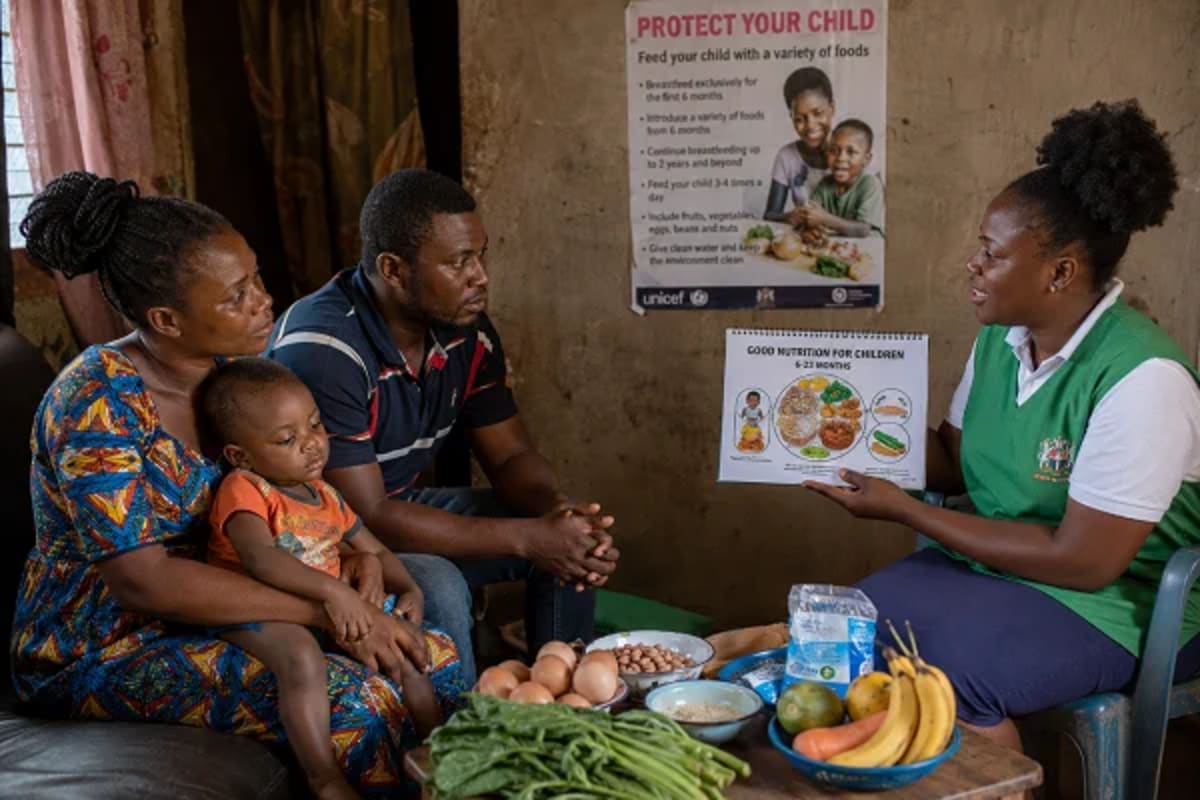
In the predawn quiet of Ashalaja, a densely populated community on the outskirts of Accra, Sarah Yeboah begins her day the same way she has for months. At 43, she balances the weight of her 14 month old son on her back while stirring a pot of porridge over a charcoal stove. The child’s cries are frequent, his arms alarmingly thin, his growth stunted compared to other children his age. What makes this scene even more troubling is not just the malnutrition itself, but the absence of the child’s father, a pattern increasingly observed in Ghana’s fight against child hunger. Public health experts warn that the exclusion of fathers from nutrition interventions is undermining efforts to combat child malnutrition in Ghana. While mothers like Yeboah bear the daily burden of feeding their children, fathers often remain disconnected from discussions about diet, healthcare, and financial support for proper nutrition. This gap is not just a family issue; it is a systemic challenge with far reaching consequences for child development, economic stability, and long term public health.
What Happened
In communities like Ashalaja, child malnutrition is not just a consequence of poverty, it is also a consequence of fractured family dynamics. Mothers, often the primary caregivers, are left to navigate the complexities of child nutrition alone, while fathers, who may contribute financially, remain emotionally and practically disengaged from the process. This disconnect is not unique to Ghana but is particularly pronounced in urban and peri urban areas where traditional family structures are evolving.
Data from the Ghana Demographic and Health Survey reveals that nearly one in five children under five in Ghana suffers from stunting, a condition linked to chronic malnutrition. While food insecurity and limited access to healthcare are well documented contributors, the role of paternal involvement in nutrition remains an understudied yet critical factor. In households where fathers are actively involved in meal planning, healthcare decisions, and financial support for nutritious food, children show significantly better growth outcomes.
Why Public Health Officials Are Concerned
The absence of fathers in nutrition efforts is not merely a cultural oversight, it is a public health blind spot. Dr. Matilda Steiner Asiedu, a nutrition expert at the University of Ghana, emphasizes that child nutrition is a shared responsibility. "When fathers are excluded from nutrition education and decision making, we miss a critical opportunity to improve child health outcomes," she notes. "Men often control household finances, and their understanding of nutrition directly impacts what food is purchased and how it is prepared."
Beyond individual households, the implications are societal. Malnourished children are more likely to experience cognitive delays, weakened immune systems, and lower educational attainment, factors that perpetuate cycles of poverty. The World Health Organization estimates that malnutrition contributes to nearly half of all child deaths globally, making it one of the most pressing public health challenges of our time. In Ghana, where economic growth has not translated into equitable health outcomes, addressing paternal disengagement could be a game changer.
Who May Be Affected
The impact of this issue extends beyond individual families. Children under five in low income urban communities are most vulnerable, particularly in households where mothers lack financial autonomy. However, the consequences ripple outward:
- Mothers: Women like Sarah Yeboah face increased stress, limited time for income generating activities, and social isolation as they shoulder the full responsibility of childcare.
- Children: Stunting and malnutrition in early childhood can lead to lifelong health complications, including diabetes, heart disease, and reduced earning potential.
- Communities: High rates of child malnutrition strain healthcare systems and reduce workforce productivity, hindering economic development.
- Fathers: Men who remain disengaged miss opportunities to build stronger relationships with their children and contribute meaningfully to their development.
Government and NGO Response
Recognizing the gap, some organizations are beginning to design interventions that actively include fathers. The Ghana Health Service, in collaboration with UNICEF, has piloted programs that engage men in nutrition education through community health workers. These initiatives focus on practical steps, such as involving fathers in meal preparation, budgeting for nutritious food, and attending antenatal and postnatal care visits.
"We’ve seen that when fathers are included in these conversations, they become advocates for better nutrition," says a UNICEF representative in Ghana. "It’s not about blaming men but creating spaces where they can learn and participate."
However, challenges remain. Deep seated gender norms, limited awareness, and logistical barriers, such as men’s work schedules, often hinder participation. Scaling these programs will require sustained funding, community buy in, and policy support.
Prevention and Safety Guidance
For families and communities looking to address this issue, experts recommend the following steps:
- Engage fathers early: Nutrition education should begin during pregnancy, with fathers encouraged to attend antenatal visits and participate in discussions about breastfeeding and complementary feeding.
- Community based education: Local health workers can organize workshops that include both parents, focusing on practical skills like meal planning and budgeting for nutritious food.
- Workplace interventions: Employers can support paternal involvement by offering flexible schedules or paternity leave, allowing fathers to attend healthcare appointments with their families.
- Media campaigns: Public health messages should challenge stereotypes about gender roles in childcare and highlight the positive impact of paternal involvement.
- Peer support groups: Men who have successfully engaged in their children’s nutrition can serve as role models, sharing their experiences with other fathers in the community.
What Readers Should Know
Child malnutrition is not just a women’s issue, it is a family issue, a community issue, and a national priority. While Ghana has made progress in reducing child mortality, malnutrition remains a stubborn challenge, one that cannot be solved without addressing the role of fathers. For parents, the message is clear: active paternal involvement can transform a child’s health and future. For policymakers and health workers, the task is to create the conditions that make this involvement possible.
As Sarah Yeboah stirs her pot of porridge, she hopes for a day when her son’s father will not just provide financially but also share the emotional and practical burden of raising a healthy child. That day may still be distant, but with targeted interventions and shifting cultural norms, it is within reach.
Key Takeaways
- Child malnutrition in Ghana is exacerbated by the absence of fathers in nutrition efforts, despite their influence over household finances and food choices.
- Active paternal involvement in child nutrition is linked to better growth outcomes, yet cultural and logistical barriers persist.
- Public health interventions must engage fathers early, through community education, workplace policies, and media campaigns, to create lasting change.
- Malnutrition in early childhood has lifelong consequences, including cognitive delays and reduced economic potential, making this a critical public health issue.
Frequently Asked Questions
Why are fathers often absent from discussions about child nutrition in Ghana?
Cultural norms, lack of awareness, and logistical barriers, such as work schedules, often exclude fathers from nutrition related decisions. Many men view childcare as a mother’s responsibility, even when they control household finances.
How does paternal involvement impact child nutrition?
Studies show that children in households where fathers are actively involved in meal planning, healthcare decisions, and financial support for nutritious food have better growth outcomes. Fathers’ understanding of nutrition directly influences what food is purchased and prepared.
What can be done to encourage fathers to participate in child nutrition?
Interventions include community based education programs, workplace policies that support paternal involvement (such as paternity leave), and media campaigns that challenge traditional gender roles. Peer support groups can also help by showcasing positive examples of engaged fathers.
What are the long term consequences of child malnutrition?
Malnutrition in early childhood can lead to stunting, cognitive delays, weakened immune systems, and lower educational attainment. These effects can persist into adulthood, reducing earning potential and perpetuating cycles of poverty.
Are there any successful programs in Ghana that involve fathers in child nutrition?
Yes, the Ghana Health Service and UNICEF have piloted programs that engage fathers in nutrition education through community health workers. These initiatives focus on practical steps like meal preparation, budgeting, and attending healthcare visits, with promising results.
Medical Review: MedSense Editorial Board








DISCUSSION (0)
POST A COMMENT