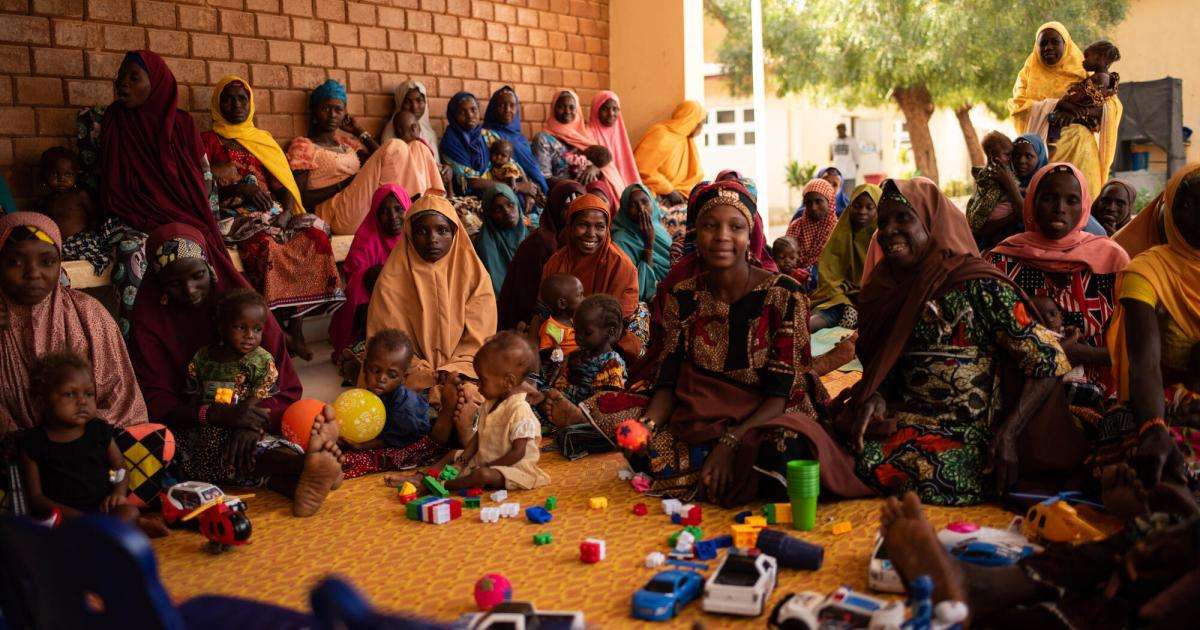
Nigeria’s battle against child malnutrition has reached a critical juncture, with Médecins Sans Frontières (MSF) warning that funding shortfalls are pushing an already strained healthcare system to the brink of collapse. In its 2025 Country Activity Report, the organization highlights that nearly 300,000 children under five suffered from acute malnutrition in 2024, a figure that could surge without immediate intervention.
The crisis is unfolding against a backdrop of economic instability, widespread insecurity, and the erosion of humanitarian aid networks that have historically provided lifelines to vulnerable populations. With clinics operating beyond capacity and supplies dwindling, families are left with few options as preventable conditions escalate into life threatening emergencies.
What Happened
MSF’s 2025 Country Activity Report documents a sharp decline in Nigeria’s ability to address acute malnutrition, particularly in conflict affected regions of the north. The report attributes the deterioration to a 40% reduction in international humanitarian funding over the past two years, leaving clinics unable to stock essential therapeutic foods and medications. In Borno, Adamawa, and Yobe states, where malnutrition rates were already among the highest in the world, the situation has deteriorated further as displaced families struggle to access care.
Why Public Health Officials Are Concerned
Public health experts warn that the combination of funding cuts, economic instability, and insecurity is creating a humanitarian catastrophe. Nigeria’s inflation rate, which exceeded 30% in 2024, has made basic food items unaffordable for millions, pushing families into deeper poverty. Malnutrition not only weakens immune systems but also increases susceptibility to infectious diseases such as cholera, measles, and respiratory infections, which are already circulating at elevated levels in underserved communities.
Healthcare facilities, including those supported by MSF, are operating at unsustainable levels. In some hospitals, patient to staff ratios have exceeded 300%, forcing medical personnel to prioritize care based on severity rather than need. The report notes that without urgent funding restoration, the mortality rate among malnourished children could rise by 20% in the coming year.
Symptoms or Risk Factors
Acute malnutrition in children is characterized by rapid weight loss, swelling in the limbs or face, and severe wasting. Early signs include lethargy, irritability, and a weakened immune response, often leading to frequent illnesses. Pregnant women and infants under two years old are particularly vulnerable, as malnutrition during these critical periods can result in long term developmental delays and increased risk of maternal mortality.
Who May Be Affected
The crisis disproportionately impacts children under five in northern Nigeria, where conflict and displacement have disrupted food systems and healthcare access. Families in rural areas, where 70% of Nigeria’s poor reside, face the highest risk due to limited infrastructure and economic barriers. Women and girls, who often bear the responsibility for securing food and water, are also severely affected, with malnutrition rates among adolescent girls reaching alarming levels in some regions.
Government or WHO Response
Nigeria’s Federal Ministry of Health has acknowledged the severity of the crisis and is collaborating with international partners to expand nutrition programs. The World Health Organization (WHO) has deployed emergency response teams to support surveillance and treatment efforts in high risk areas. However, officials emphasize that these measures are insufficient without sustained funding and coordinated action from global donors.
The Nigerian government has called for a $1.2 billion humanitarian appeal to address the crisis, but only 30% of the required funds have been secured to date. The United Nations Children’s Fund (UNICEF) has warned that without additional resources, the number of children requiring treatment for severe acute malnutrition could exceed 500,000 by the end of 2025.
Prevention and Safety Guidance
Preventing malnutrition requires a multi sectoral approach, including access to fortified foods, clean water, and primary healthcare. Public health campaigns are urging families to prioritize nutrient rich diets, particularly for children under two, and to seek early medical intervention if symptoms of malnutrition appear. Community health workers are being trained to identify and refer at risk children to treatment centers before their conditions deteriorate.
For pregnant women, prenatal care and nutritional support are critical to reducing the risk of low birth weight and complications during childbirth. In conflict zones, mobile health clinics are being deployed to reach displaced populations, but their reach remains limited by funding constraints.
What Readers Should Know
This is not just a humanitarian crisis, it is a preventable one. The collapse of funding for nutrition programs in Nigeria reflects a broader trend of declining international aid for global health emergencies. While the immediate focus must be on restoring lifesaving services, long term solutions require addressing the root causes of malnutrition, including poverty, food insecurity, and conflict.
Readers can support the response by donating to reputable organizations such as MSF, UNICEF, or the Nigerian Red Cross Society. Advocacy efforts to pressure governments and donors to fulfill their funding commitments are also critical. Sharing verified information about the crisis can help amplify the voices of those most affected and hold decision makers accountable.
Key Takeaways
- Nearly 300,000 Nigerian children under five suffered from acute malnutrition in 2024, a figure expected to rise without urgent intervention.
- Funding cuts to humanitarian organizations have reduced access to therapeutic foods and medications, leaving clinics overwhelmed and under resourced.
- Economic instability, with inflation exceeding 30%, has made basic food items unaffordable for millions, exacerbating malnutrition rates.
- Conflict and displacement in northern Nigeria have cut off vulnerable populations from healthcare, increasing mortality risks.
- Public health experts warn that without immediate action, the crisis could result in a 20% rise in child mortality rates.
Frequently Asked Questions
What is acute malnutrition, and how is it treated?
Acute malnutrition in children is a condition characterized by rapid weight loss or failure to gain weight, often due to inadequate food intake or illness. It is classified as severe when a child’s weight for height ratio falls below three standard deviations from the median. Treatment typically involves the administration of ready to use therapeutic foods (RUTFs), such as Plumpy’Nut, which are high in calories, vitamins, and minerals. Children with complications may require hospitalization for intravenous fluids or antibiotics.
How does economic instability contribute to malnutrition in Nigeria?
Nigeria’s soaring inflation, which reached over 30% in 2024, has eroded purchasing power, making it difficult for families to afford nutritious foods. The devaluation of the naira has further increased the cost of imported goods, including essential medicines and fortified foods. As a result, many households are forced to reduce meal sizes or rely on cheaper, less nutritious alternatives, increasing the risk of malnutrition.
What role does insecurity play in Nigeria’s malnutrition crisis?
Armed conflict and banditry in northern Nigeria have displaced over 2 million people, disrupting food production and access to healthcare. Many families have been forced to flee their homes without adequate shelter or food supplies, leaving them reliant on humanitarian aid that is increasingly scarce due to funding cuts. Insecurity also restricts the movement of aid workers, limiting their ability to reach affected populations.
How can individuals support the response to Nigeria’s malnutrition crisis?
Individuals can contribute by donating to reputable organizations such as Médecins Sans Frontières (MSF), UNICEF, or the Nigerian Red Cross Society. Advocacy efforts to pressure governments and donors to fulfill their funding commitments are also critical. Sharing verified information about the crisis can help amplify the voices of those most affected and hold decision makers accountable.
What long term solutions are needed to address malnutrition in Nigeria?
Addressing malnutrition requires a combination of short term humanitarian aid and long term structural solutions. This includes expanding social protection programs, improving agricultural productivity, and investing in healthcare infrastructure. Additionally, efforts to resolve conflicts and promote food security are essential to breaking the cycle of poverty and malnutrition.
Medical Review: MedSense Editorial Board








DISCUSSION (0)
POST A COMMENT