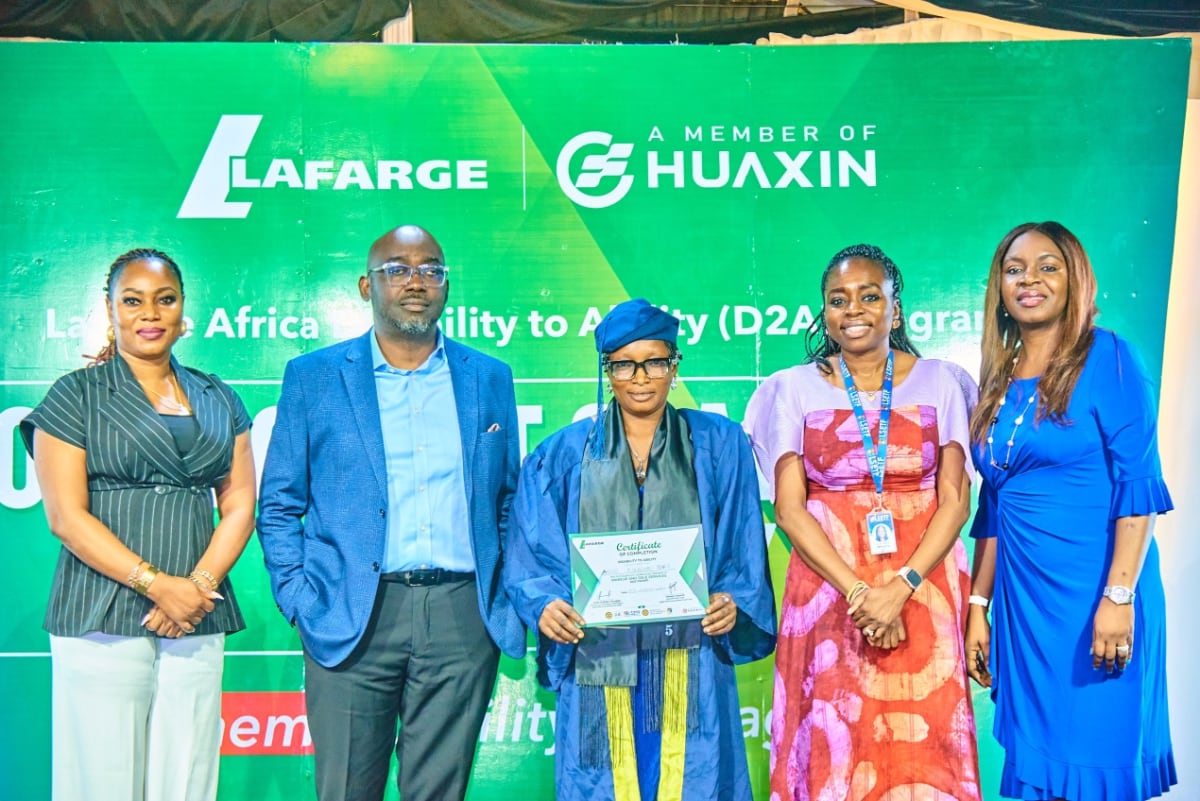
In Nigeria, where an estimated 25 million people live with disabilities, systemic barriers to education, employment, and financial independence remain entrenched. For many, the greatest obstacle is not ability but access to opportunity, a gap Lafarge Africa Plc is addressing through its Disability to Advantage (D2A) initiative.
Since its launch, the program has equipped more than 100 participants with vocational training, workplace placements, and advocacy support, offering a model for inclusive economic participation in Africa’s largest economy.
What Happened
Lafarge Africa’s D2A program was designed to dismantle the structural inequities that exclude persons with disabilities from Nigeria’s workforce. By focusing on skills development, workplace integration, and disability rights advocacy, the initiative has created pathways to economic stability for participants who might otherwise face chronic unemployment.
Why Public Health Officials Are Concerned
Disability inclusion remains a critical public health and social equity issue in Nigeria, where limited access to vocational training and workplace accommodations perpetuates cycles of poverty. Programs like D2A address these gaps by aligning corporate resources with community needs, reducing long term dependence on social support systems.
Symptoms or Risk Factors
For persons with disabilities in Nigeria, the risks of economic exclusion include reduced access to healthcare, nutrition, and housing stability. The D2A program mitigates these risks by providing participants with stable income sources, which in turn improves overall well being and reduces vulnerability to secondary health complications.
Who May Be Affected
The D2A program primarily benefits Nigerians with physical, sensory, or cognitive disabilities who lack access to formal employment. However, the initiative’s broader impact extends to their families, local businesses, and the national economy by fostering a more inclusive labor market.
Government or WHO Response
While Nigeria has ratified the United Nations Convention on the Rights of Persons with Disabilities, implementation of inclusive policies remains uneven. Corporate led programs like D2A complement government efforts by demonstrating scalable models for disability inclusion, though experts emphasize the need for stronger policy enforcement and funding.
Prevention and Safety Guidance
For individuals with disabilities seeking economic opportunities, programs like D2A offer structured pathways to skill development and employment. Employers are encouraged to adopt inclusive hiring practices, such as adaptive workplace modifications and flexible work arrangements, to accommodate diverse abilities.
What Readers Should Know
Lafarge Africa’s D2A program is not just a corporate social responsibility initiative, it is a blueprint for how private sector leadership can drive systemic change. By prioritizing accessibility and economic empowerment, the program challenges outdated perceptions of disability while delivering tangible benefits to participants and their communities.
Key Takeaways
- Nigeria’s 25 million people with disabilities face systemic barriers to employment and financial independence.
- Lafarge Africa’s D2A program has provided vocational training and job placements to over 100 participants since its launch.
- The initiative combines skills development, workplace integration, and advocacy to foster long term economic inclusion.
- Expansion plans aim to reach 500 beneficiaries by 2025, with potential to influence national disability policies.
- Corporate led models like D2A demonstrate how targeted interventions can reduce poverty and improve public health outcomes.
Frequently Asked Questions
What types of disabilities does the D2A program support?
The D2A program is designed for Nigerians with physical, sensory, or cognitive disabilities who face barriers to employment. Participants receive tailored vocational training based on their abilities and career interests.
How can employers participate in the D2A initiative?
Employers interested in hiring D2A participants can partner with Lafarge Africa to create adaptive roles, modify workplace environments, and provide mentorship opportunities. The program offers guidance on inclusive hiring practices.
What sectors does the D2A program focus on for vocational training?
The program prioritizes high demand sectors such as construction, logistics, digital literacy, and other fields where participants can gain marketable skills and secure stable employment.
Has the D2A program been recognized by government or international organizations?
While the program operates independently, it aligns with Nigeria’s commitments under the UN Convention on the Rights of Persons with Disabilities. Lafarge Africa has highlighted the initiative as a model for corporate disability inclusion in public forums.
What are the long term goals of the D2A program?
Lafarge Africa aims to expand the program to 500 beneficiaries by 2025 and advocate for broader policy changes that support disability inclusion across Nigeria’s corporate sector.
Medical Review: MedSense Editorial Board









DISCUSSION (0)
POST A COMMENT