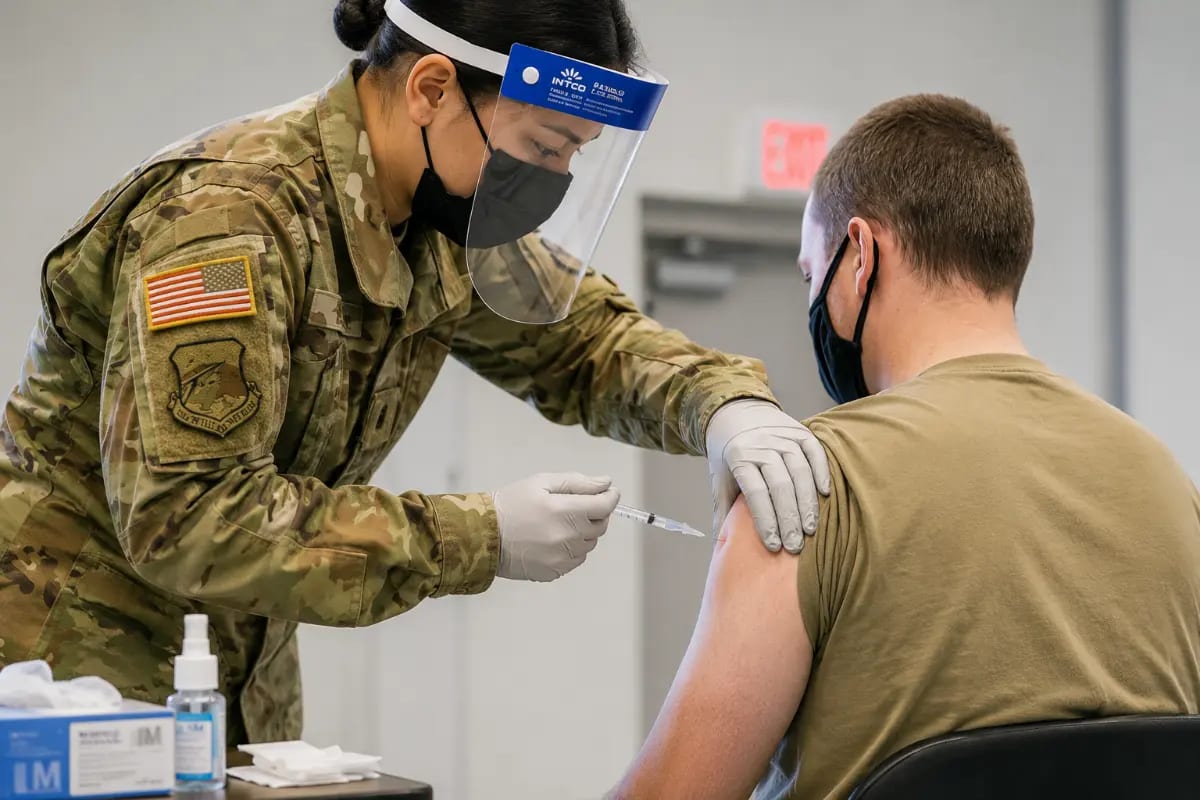
More than a year after former President Donald Trump pledged to reinstate military personnel discharged for refusing Covid 19 vaccines, many veterans remain entangled in bureaucratic delays. Despite policy changes allowing their return, administrative hurdles and inconsistent processing have left hundreds in limbo. Advocates warn the delays undermine trust in military leadership while veterans face financial and professional uncertainty.
What We Know
Hundreds of veterans who were discharged from the US military for refusing Covid 19 vaccines continue to face significant obstacles in their attempts to rejoin, despite political promises and policy reversals. The Department of Defense lifted its vaccine mandate in January 2023, yet many former service members report being stuck in a bureaucratic maze with little clarity on timelines or requirements for reinstatement.
Advocacy groups estimate that approximately 8,000 service members were discharged for vaccine refusal, though the exact number remains unclear. Of those, only a fraction have successfully returned to active duty or reserve status. The delays appear particularly acute for veterans seeking to rejoin the National Guard or Reserves, where state level policies add another layer of complexity.
Why This Matters
The prolonged delays raise serious questions about military accountability and the treatment of service members who acted on sincerely held beliefs. Many veterans report feeling abandoned by the institution they once served, with some facing financial hardship due to lost income and benefits. The situation has also become a political flashpoint, with conservative lawmakers accusing the Pentagon of slow walking reinstatements despite the policy change.
Beyond individual cases, the issue highlights broader challenges in military personnel management. The Pentagon has acknowledged the backlog but provided few details about specific timelines for resolution. Veterans Affairs officials note that the uncertainty is creating additional strain on an already overburdened system, as many affected veterans seek alternative healthcare and employment support.
Response Efforts
The Department of Defense has established a task force to address reinstatement requests, though critics argue its progress has been opaque. Some branches have implemented expedited review processes for certain cases, particularly for veterans with critical skills or those who left with honorable discharges. However, these efforts remain inconsistent across different military components.
Several states have taken independent action to facilitate returns for National Guard members. Florida and Texas, for example, have created streamlined pathways for veterans to rejoin their state guard units. These state level initiatives contrast sharply with the slower federal response, creating a patchwork of policies that further complicates the reinstatement process.
Expert Perspective
Military personnel experts warn that the delays could have long term consequences for recruitment and retention. "When service members see their peers treated this way, it erodes trust in the system," said Katherine Kuzminski, a senior fellow at the Center for a New American Security. "The military needs to demonstrate it values its people, especially when policies change."
Legal advocates note that many veterans are reluctant to pursue formal complaints due to fears of retaliation or further delays. Some have turned to congressional offices for assistance, though these interventions have produced mixed results. The lack of standardized procedures across military branches remains a core frustration for those seeking reinstatement.
What's Next
The Pentagon has indicated it will release updated guidance on reinstatement procedures in the coming months, though no specific timeline has been provided. Lawmakers on both sides of the aisle have introduced legislation to force greater transparency and accountability in the process. Meanwhile, veterans groups continue to pressure military leadership for clearer communication and faster action.
For affected veterans, the path forward remains uncertain. Many report being told to "wait and see" while their cases languish in administrative purgatory. The situation serves as a stark reminder of how quickly military policies can change and how slowly the bureaucracy adapts to those changes.
Key Takeaways
- Over 8,000 service members were discharged for Covid vaccine refusal, with only a fraction successfully reinstated despite policy reversals
- Bureaucratic delays and inconsistent procedures across military branches are creating significant hardships for veterans seeking to return
- The situation has become a political and institutional trust issue, with experts warning of long term consequences for military recruitment
Frequently Asked Questions
How many veterans are affected by these reinstatement delays?
While exact numbers are unclear, advocacy groups estimate approximately 8,000 service members were discharged for vaccine refusal. Only a small percentage have successfully returned to service.
What is the Department of Defense doing to address the backlog?
The Pentagon has established a task force and some branches have created expedited review processes, but progress remains inconsistent and opaque across different military components.
Can veterans appeal their discharge or seek legal recourse?
While legal options exist, many veterans are reluctant to pursue formal complaints due to fears of retaliation or further delays. Some have sought assistance through congressional offices with mixed results.
Published by O. Ayodeji John | Review by MedSense Editorial Board























DISCUSSION (0)
POST A COMMENT