
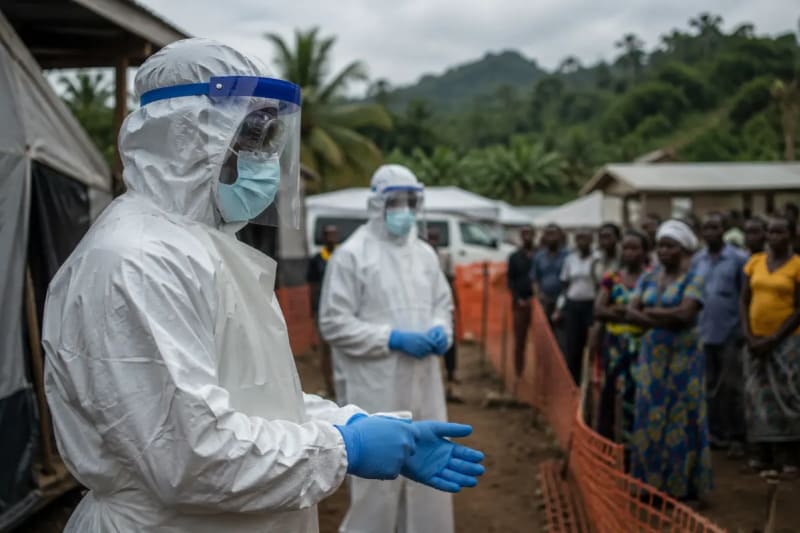
A UK humanitarian worker has been medically evacuated to London for precautionary monitoring after potential exposure to Ebola while supporting outbreak response efforts in the Democratic Republic of Congo. The individual, who remains asymptomatic, is being assessed at a specialized high-level isolation unit. The UK Health Security Agency confirmed the worker was transferred as a precautionary measure following a healthcare-related incident in an outbreak response setting.
What Happened
The UK resident, working as a humanitarian aid worker in the Democratic Republic of Congo, was medically evacuated to London after a potential healthcare-related exposure to Ebola. The worker, who has not developed symptoms, was transferred as a precautionary measure. The UK Health Security Agency stated the individual is being monitored in a London hospital equipped with a high-level isolation unit, though the specific facility was not named.
The evacuation occurred during an active Ebola outbreak in the DR Congo, where the virus has infected over 2,400 people and claimed nearly 1,000 lives since mid-May. The current outbreak, caused by the Bundibugyo strain of Ebola, has proven particularly challenging due to the lack of an approved vaccine for this specific variant. Neighboring Uganda has also reported cases, signaling regional spread.
Why It Matters
Ebola remains one of the most feared pathogens globally due to its high fatality rate and severe symptoms. While this case involves a single asymptomatic individual, it highlights the persistent threat posed by emerging infectious diseases in regions with limited healthcare resources. The evacuation demonstrates the logistical and ethical complexities of managing potential exposures in humanitarian workers operating in high-risk environments.
For the UK, this incident serves as a reminder of the country’s preparedness protocols for high-consequence infectious diseases. The Royal Free Hospital’s isolation unit, which has successfully managed previous Ebola cases, plays a critical role in preventing onward transmission. However, the lack of a vaccine for the Bundibugyo strain complicates containment efforts, both in the DR Congo and for any potential imported cases.
Who Does It Affect
This case primarily affects the evacuated humanitarian worker, who will undergo monitoring and isolation for up to 21 days. The individual’s close contacts, including colleagues in the DR Congo and medical staff in the UK, may also be subject to surveillance as a precaution. While the UK Health Security Agency has emphasized that the risk to the general public is low, the incident has broader implications for:
- Humanitarian workers: Those deployed in Ebola-affected regions face elevated exposure risks, particularly in settings where personal protective equipment may be limited or protocols are difficult to enforce.
- Healthcare systems: Hospitals with specialized isolation units must maintain readiness for rare but high-impact pathogens, requiring ongoing training and resource allocation.
- Global health security: The DR Congo’s ongoing outbreak underscores the need for sustained international support to prevent cross-border spread, particularly in countries with porous borders and under-resourced health systems.
- Travelers and expatriates: Individuals returning from Ebola-affected regions may face heightened scrutiny or temporary restrictions, depending on local public health policies.
What Should I Do
While the risk of Ebola transmission in the UK remains minimal, public awareness and preparedness are key components of outbreak response. Here’s what you can do:
- Stay informed: Follow updates from trusted sources such as the UK Health Security Agency, World Health Organization, or your local public health authority. Avoid misinformation by relying on official communications.
- Know the symptoms: Ebola typically presents with sudden fever, fatigue, muscle pain, headache, and sore throat. As the disease progresses, symptoms may include vomiting, diarrhea, rash, and in some cases, internal or external bleeding. If you or someone you know develops these symptoms after traveling to an Ebola-affected region, seek medical attention immediately and inform healthcare providers of the travel history.
- Practice infection control: Ebola spreads through direct contact with bodily fluids. Basic hygiene measures, such as regular handwashing with soap and water, can reduce the risk of transmission. Avoid contact with blood or bodily fluids of individuals who are sick, and do not handle items that may have been contaminated.
What We Don't Know Yet
Several critical questions remain unanswered in this case and the broader context of the DR Congo’s Ebola outbreak:
- Source of exposure: While the UK Health Security Agency described the incident as a healthcare-related exposure, specific details about how the worker came into contact with the virus have not been disclosed.
- Vaccine development: The Bundibugyo strain of Ebola, responsible for the current outbreak, lacks an approved vaccine. While several candidates are in development, their efficacy and timeline for deployment remain uncertain.
- Regional spread: The DR Congo’s outbreak has already crossed into Uganda, raising concerns about further geographic expansion. The effectiveness of border screening and community engagement efforts in preventing additional cases remains to be seen.
Key Takeaways
- A UK humanitarian worker is being monitored for Ebola in London after potential exposure in DR Congo, though the individual remains asymptomatic and the public risk is low.
- The case highlights the challenges of managing high-consequence infectious diseases in humanitarian settings and the importance of specialized isolation units in preventing onward transmission.
- The current outbreak in DR Congo, caused by the Bundibugyo strain, lacks an approved vaccine, complicating containment efforts and increasing reliance on traditional public health measures.
Frequently Asked Questions
What is Ebola and how does it spread?
Ebola is a severe, often fatal viral illness that spreads through direct contact with the bodily fluids of infected individuals or contaminated surfaces. It is not airborne and cannot be transmitted through casual contact.
What are the symptoms of Ebola?
Symptoms typically appear 2 to 21 days after exposure and include sudden fever, fatigue, muscle pain, headache, and sore throat. As the disease progresses, patients may experience vomiting, diarrhea, rash, and in some cases, internal or external bleeding.
Is there a risk of Ebola spreading in the UK?
The risk of Ebola spreading in the UK is currently considered low. The country has robust protocols for managing high-consequence infectious diseases, including specialized isolation units and public health surveillance.
Medical Review: MedSense Editorial Board










DISCUSSION (0)
POST A COMMENT