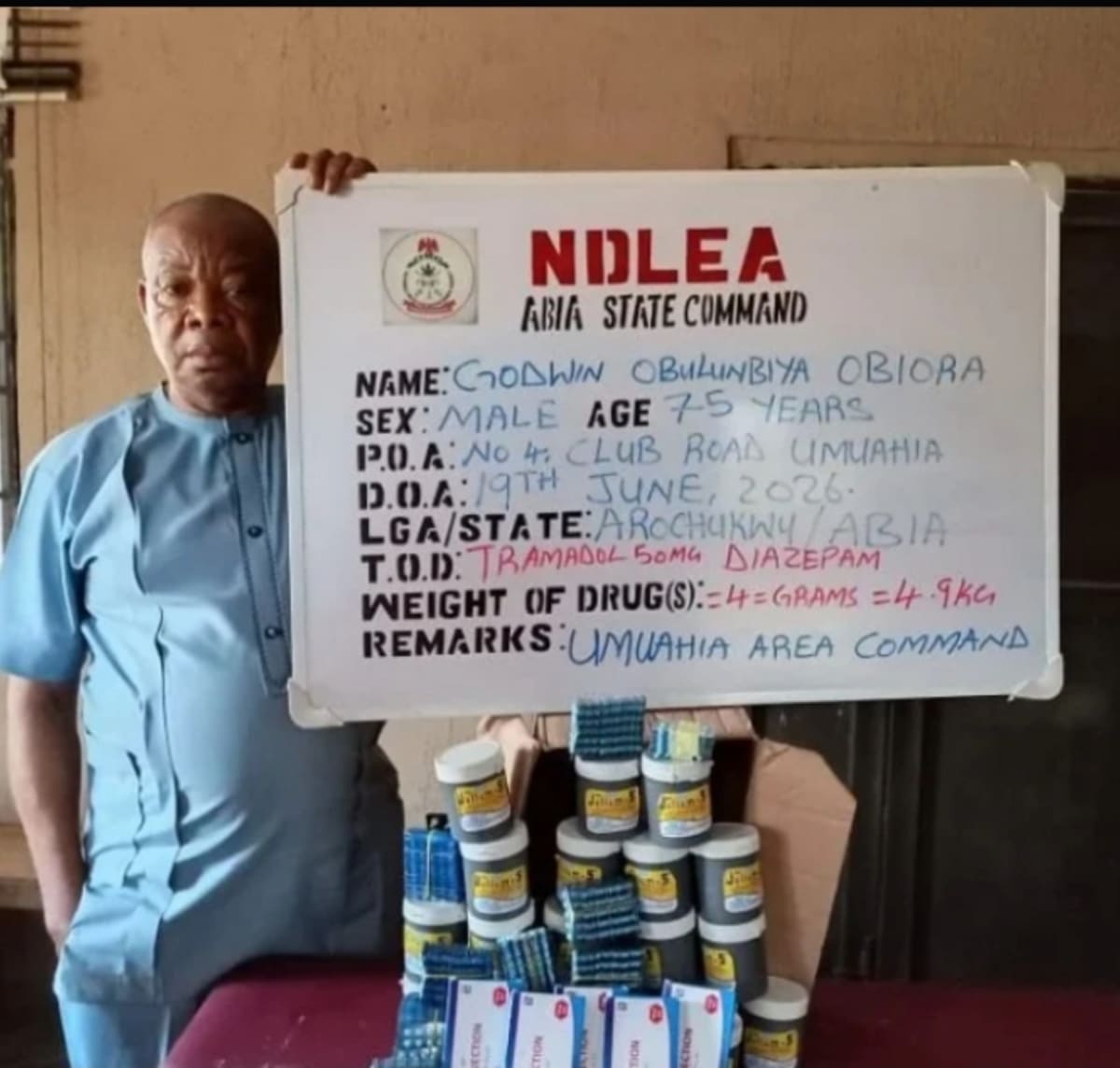
In a disturbing revelation that underscores the depth of Nigeria’s drug crisis, two elderly men, 84 and 75 years old, have been arrested for allegedly supplying illicit substances to secondary school students in Umuahia, Abia State. The National Drug Law Enforcement Agency NDLEA confirmed the arrests of Godfrey Orji and Godwin Obulunbiya Obiora in separate operations, exposing a sinister network preying on vulnerable youth. Public health officials are raising alarms over the growing trend of drug peddlers targeting schoolchildren, a pattern that threatens to derail the health and future of an entire generation.
What Happened
The NDLEA, Nigeria’s primary agency for combating drug trafficking, apprehended Godfrey Orji, 84, and Godwin Obulunbiya Obiora, 75, following intelligence led operations in Umuahia. The suspects are accused of selling and distributing illicit drugs, including cannabis and prescription medications, to teenage students within and around secondary schools. While the full extent of their operations remains under investigation, the arrests highlight a troubling intersection of drug trafficking and youth exploitation.
Why Public Health Officials Are Concerned
The involvement of elderly individuals in drug supply chains is not merely a law enforcement issue but a public health emergency. Adolescents are particularly vulnerable to substance abuse due to developmental factors, peer pressure, and limited access to mental health resources. The NDLEA’s findings suggest that drug networks are increasingly infiltrating educational institutions, where students may lack the awareness or support to resist temptation. Experts warn that early exposure to drugs can lead to addiction, academic decline, and long term health consequences, including mental health disorders and increased risk of infectious diseases.
Dr. Mojisola Adeyeye, Director General of Nigeria’s National Agency for Food and Drug Administration and Control NAFDAC, has previously emphasized the dangers of unchecked drug proliferation among youth. While she was not directly commenting on this case, her warnings align with the broader crisis: "When young people have easy access to illicit substances, we are not just dealing with addiction, we are risking the collapse of their futures."
Who May Be Affected
The primary victims in this case are secondary school students in Umuahia, particularly those in areas where drug peddling has become normalized. However, the ripple effects extend to families, educators, and the broader community. Parents may struggle to identify signs of drug use, while schools face challenges in implementing effective prevention programs. The arrests also raise questions about the role of older adults in drug networks, whether as willing participants or coerced accomplices, and the societal factors that enable such exploitation.
Government Response
The NDLEA has intensified its crackdown on drug trafficking in Abia State, with a renewed focus on dismantling supply chains that target minors. Agency spokesperson Femi Babafemi stated that the arrests are part of a larger operation to curb drug abuse in schools, including undercover surveillance and community engagement. The NDLEA is also collaborating with state education authorities to implement drug awareness programs in schools, though critics argue that such efforts require sustained funding and political will to be effective.
At the national level, Nigeria’s drug policy remains a work in progress. While the NDLEA has made strides in intercepting large scale drug shipments, the proliferation of small scale dealers, like the two elderly suspects, poses a persistent challenge. Public health advocates are calling for a multi pronged approach, combining law enforcement with education, rehabilitation, and economic opportunities to address the root causes of drug abuse.
Prevention and Safety Guidance
For parents, educators, and community leaders, vigilance is critical. Signs of drug use in adolescents may include sudden changes in behavior, declining academic performance, withdrawal from family or social activities, and unexplained financial requests. Schools are encouraged to establish anonymous reporting systems for students to flag suspicious activities, while parents should maintain open lines of communication with their children about the risks of substance abuse.
The NDLEA recommends the following steps for communities:
- Report suspicious drug related activities to local authorities or the NDLEA’s toll free helpline.
- Organize drug awareness workshops in schools and religious centers.
- Support rehabilitation programs for individuals struggling with addiction.
- Advocate for stricter penalties for drug dealers targeting minors.
What Readers Should Know
This case is not an isolated incident but a symptom of a larger crisis. Nigeria’s youth are increasingly exposed to illicit drugs, with devastating consequences for public health and social stability. While law enforcement plays a crucial role, long term solutions require community involvement, policy reforms, and investment in mental health resources. For families, the message is clear: early intervention can save lives. For policymakers, the challenge is to move beyond arrests and address the systemic factors that fuel drug abuse.
The NDLEA’s ongoing investigations may uncover more links in this network, but the broader battle against drug trafficking demands collective action. As this story develops, MedSense News will continue to provide updates on the public health implications and the steps being taken to protect Nigeria’s youth.
Key Takeaways
- Two elderly men, 84 and 75, were arrested in Nigeria for allegedly supplying illicit drugs to secondary school students in Umuahia, Abia State.
- The case highlights a growing public health crisis as drug networks increasingly target vulnerable youth, with long term consequences for mental health, education, and community safety.
- Prevention requires a combination of law enforcement, education, community engagement, and policy reforms to address the root causes of drug abuse.
- Parents and educators should remain vigilant for signs of drug use in adolescents and foster open communication about the risks of substance abuse.
Frequently Asked Questions
What drugs were the suspects allegedly supplying to students?
The NDLEA reported that the suspects were distributing illicit substances, including cannabis and prescription medications, though the full range of drugs involved is still under investigation.
How can parents identify if their child is using drugs?
Signs may include sudden behavioral changes, declining academic performance, withdrawal from family or social activities, and unexplained requests for money. However, these signs can also indicate other issues, so open communication is key.
What is the NDLEA doing to prevent drug abuse in schools?
The NDLEA is conducting undercover operations, collaborating with schools on awareness programs, and encouraging community reporting of suspicious activities. However, sustained funding and policy support are needed for long term impact.
Are elderly individuals commonly involved in drug trafficking in Nigeria?
While not common, this case reflects a broader trend of drug networks exploiting individuals across age groups. The NDLEA has previously arrested suspects of varying ages, indicating that drug trafficking is a complex, multi generational issue.
What should communities do to combat drug abuse among youth?
Communities can organize drug awareness campaigns, support rehabilitation programs, report suspicious activities to authorities, and advocate for stronger policies to protect minors from drug exposure.
Medical Review: MedSense Editorial Board















DISCUSSION (0)
POST A COMMENT