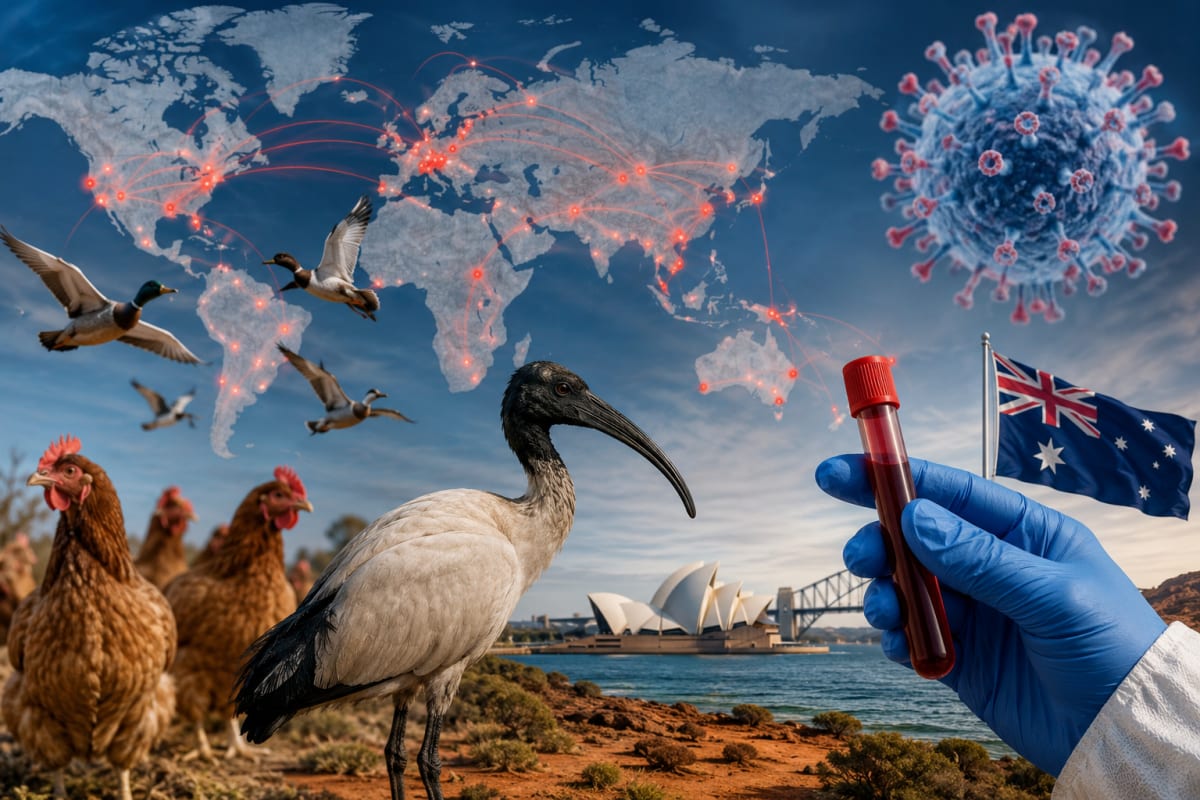
Australia has confirmed its first detection of the H5 strain of avian influenza, a development that completes the virus’s global spread across all continents. The case, identified in a migratory brown skua on a remote island, was announced by Agriculture Minister Julie Collins during a press briefing over the weekend. While the finding does not immediately threaten human populations, public health experts are closely monitoring the situation as part of broader efforts to track the highly contagious pathogen’s movement and potential risks to both wildlife and domestic poultry.
What Happened
Agriculture officials in Australia reported the country’s first confirmed case of the H5 avian influenza strain in a wild migratory bird, a brown skua, found in a remote location. The detection, announced by Minister Julie Collins, follows a pattern of global dissemination that has seen the virus emerge in every inhabited continent over the past two years. The brown skua, a predatory seabird, was tested as part of routine wildlife surveillance programs.
Why Public Health Officials Are Concerned
The H5 strain of avian influenza, particularly the H5N1 subtype, has been responsible for widespread outbreaks in poultry and wild bird populations worldwide. While human infections remain rare, the virus’s ability to cross species barriers raises concerns about potential zoonotic transmission. The World Organisation for Animal Health (WOAH) has repeatedly warned that the ongoing circulation of H5 in wild birds increases the risk of spillover into domestic flocks, which could disrupt food supplies and lead to economic losses in the agricultural sector.
Australia’s detection comes amid heightened global vigilance. The country had previously remained free of the H5 strain despite outbreaks in neighboring regions, including Southeast Asia and Antarctica. The arrival of the virus in Australia underscores the role of migratory birds in long distance viral dissemination and the challenges of containing a pathogen with such a broad geographic reach.
Who May Be Affected
The immediate risk to the general public remains low, as the virus primarily affects birds. However, individuals in close contact with infected animals, such as poultry farmers, wildlife researchers, and veterinarians, may face a higher exposure risk. Domestic poultry industries are particularly vulnerable, as outbreaks can lead to mass culling, trade restrictions, and economic instability. Wild bird populations, already under pressure from habitat loss and climate change, could also experience significant mortality events.
Government and Global Response
Australian authorities have activated enhanced surveillance measures in wildlife and domestic poultry to monitor for further cases. The Department of Agriculture, Fisheries and Forestry is working with state agencies to assess the scope of the detection and prevent potential spread to commercial flocks. Internationally, the World Health Organization (WHO) and WOAH continue to coordinate global tracking efforts, emphasizing the importance of early detection, transparent reporting, and collaborative research to mitigate risks.
In a recent statement, WOAH highlighted the need for countries to strengthen biosecurity protocols in poultry farms and improve wildlife monitoring systems. The organization also called for increased funding to support low and middle income nations in building capacity for avian influenza detection and response.
Prevention and Safety Guidance
Public health agencies recommend the following precautions to reduce risks associated with avian influenza:
- Avoid contact with sick or dead birds, including wild species and domestic poultry.
- Poultry workers and farmers should use personal protective equipment (PPE) when handling birds or cleaning coops.
- Consumers should cook poultry and eggs thoroughly to eliminate potential viral contamination.
- Report unusual bird deaths or signs of illness in domestic flocks to local veterinary authorities.
- Travelers to regions with active outbreaks should avoid live bird markets and poultry farms.
What Readers Should Know
The detection of H5 avian influenza in Australia is a reminder of the virus’s relentless global spread and the importance of sustained surveillance. While the current risk to human health is minimal, the situation serves as a critical opportunity for governments, industries, and communities to reinforce preparedness measures. For now, the focus remains on monitoring wildlife, protecting domestic poultry, and maintaining robust public health infrastructure to respond swiftly if the threat level changes.
As the virus continues to evolve, international cooperation and scientific research will be essential in understanding its behavior and preventing future outbreaks. For the latest updates, readers are encouraged to follow guidance from national health authorities and global organizations such as the WHO and WOAH.
Key Takeaways
- Australia has confirmed its first case of the H5 avian influenza strain in a wild migratory bird, completing the virus’s spread to all continents.
- While the risk to humans remains low, the detection highlights the role of migratory birds in global viral dissemination and the need for enhanced surveillance.
- Public health agencies recommend avoiding contact with sick birds, using protective measures in poultry settings, and reporting unusual bird deaths to authorities.
- Global organizations are calling for increased biosecurity, funding for detection programs, and international collaboration to mitigate risks.
Frequently Asked Questions
What is H5 avian influenza?
H5 avian influenza is a highly contagious viral strain that primarily affects birds, including wild species and domestic poultry. It belongs to the influenza A virus family and can occasionally infect humans, though such cases are rare.
How does H5 bird flu spread?
The virus spreads through direct contact with infected birds, their saliva, nasal secretions, or feces. Migratory birds play a significant role in long distance transmission, while domestic poultry outbreaks often result from close contact with wild birds or contaminated environments.
What are the symptoms in birds?
Infected birds may exhibit symptoms such as sudden death, respiratory distress, swelling of the head, reduced egg production, or neurological signs like tremors or lack of coordination. Some birds may carry the virus without showing symptoms.
Is there a risk to humans?
Human infections with H5 avian influenza are uncommon but can occur, typically in individuals with close contact to infected birds. Symptoms may range from mild respiratory issues to severe illness. There is currently no evidence of sustained human to human transmission.
How can I protect myself and my poultry?
Avoid handling sick or dead birds, use protective equipment when working with poultry, cook poultry and eggs thoroughly, and report unusual bird deaths to local veterinary authorities. Maintaining strict biosecurity measures on farms can also help prevent outbreaks.
Medical Review: MedSense Editorial Board


















DISCUSSION (0)
POST A COMMENT