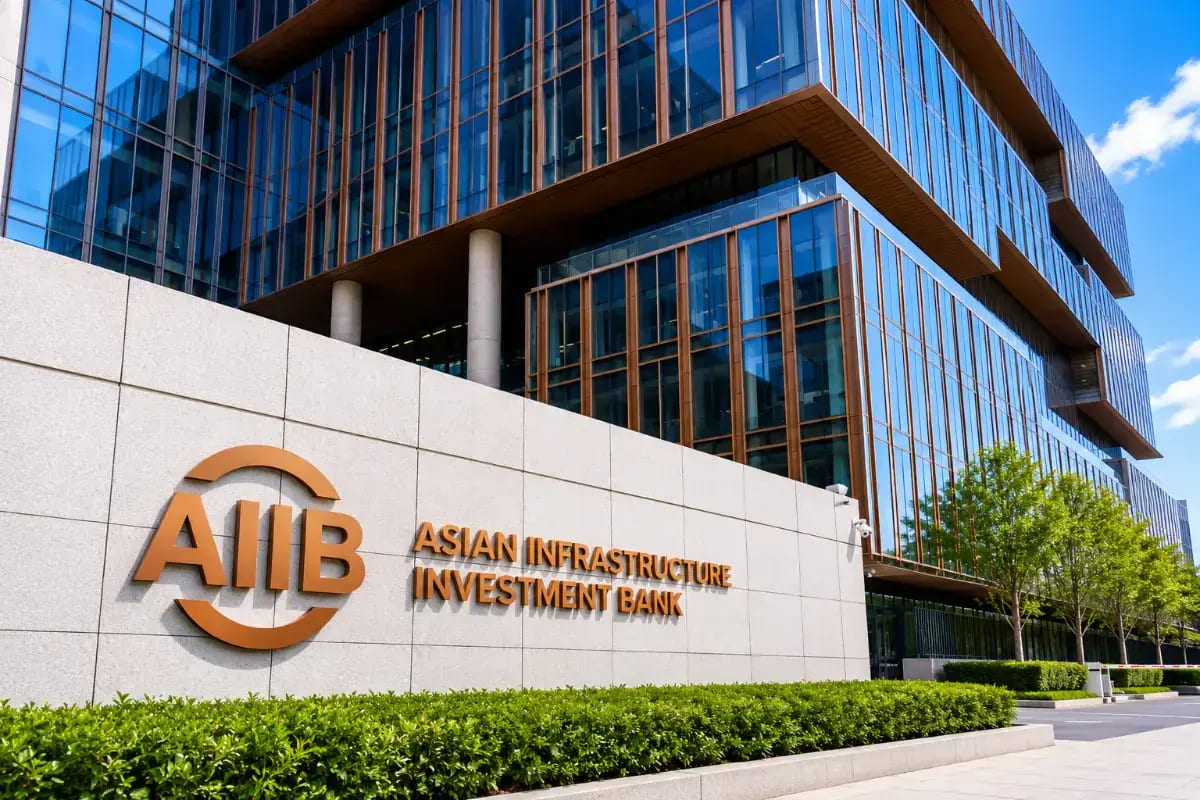
The Asian Infrastructure Investment Bank (AIIB) has approved a $250 million loan to Beijing Gas Group Co for a coal to gas conversion project in rural Beijing. The initiative, the bank's first corporate financing deal in China, aims to replace coal with natural gas for cooking and heating in over 216,000 households across 510 villages. Expected to reduce coal use by 650,000 metric tons annually, the project aligns with China's broader efforts to combat air pollution and transition to cleaner energy sources.
What We Know
The AIIB announced a $250 million loan on Monday to fund a natural gas project in Beijing, marking its first corporate financing deal in China. The funds will support Beijing Gas Group Co in constructing natural gas distribution networks, pipelines, and household connections to replace coal use in rural areas. The project targets 216,750 households across 510 villages and is expected to reduce annual coal consumption by 650,000 metric tons.
The initiative reflects China's push to curb pollution through stricter environmental regulations, including coal to gas conversions. AIIB President Jin Liqun emphasized the project's alignment with the bank's mission to promote sustainable development, noting its potential to reduce greenhouse gas emissions and support economic growth in one of Asia's key economic hubs.
Why This Matters
The project addresses two critical public health challenges: air pollution and energy transition. Beijing has long struggled with severe air quality issues, driven in part by coal combustion in rural households. By replacing coal with natural gas, the initiative could significantly reduce particulate matter and sulfur dioxide emissions, improving respiratory health for millions.
For the AIIB, this loan signals a strategic shift toward green financing in China. As a major shareholder, China's environmental policies directly influence the bank's investment priorities. The project could set a precedent for future AIIB funded clean energy initiatives across Asia, particularly in regions reliant on coal.
Expert Perspective
Financial and energy analysts view the project as a positive step but caution against overreliance on natural gas. Zeng Gang, a researcher at the Chinese Academy of Social Sciences, noted that the AIIB's long term, low cost financing is well suited for large scale infrastructure projects, especially as Chinese commercial banks face liquidity constraints. However, Li Li, energy research director at ICIS China, warned that China must also invest in gas storage, diversify import channels, and reform pricing mechanisms to prevent shortages during peak demand.
Public Health Impact
The transition from coal to natural gas could yield measurable health benefits. Coal combustion is a major source of indoor and outdoor air pollution, linked to respiratory diseases, cardiovascular conditions, and premature deaths. The World Health Organization estimates that household air pollution from solid fuels causes over 4 million deaths annually. By providing cleaner burning natural gas to rural households, the project may reduce exposure to harmful pollutants and lower the burden of disease.
The AIIB estimates the project will be completed by 2021, with immediate effects on local air quality. However, experts stress that natural gas is a transitional fuel, not a long term solution. China's broader energy strategy must prioritize renewable sources like wind and solar to achieve carbon neutrality by 2060.
Key Takeaways
- The AIIB's $250 million loan will replace coal with natural gas in over 216,000 rural Beijing households, cutting annual coal use by 650,000 metric tons.
- The project aligns with China's pollution control efforts and could serve as a model for future AIIB funded clean energy initiatives in Asia.
- While natural gas reduces emissions, experts warn that China must also invest in storage, imports, and pricing reforms to avoid shortages.
Frequently Asked Questions
How will the coal to gas project improve air quality?
By replacing coal with natural gas for cooking and heating, the project will reduce emissions of particulate matter, sulfur dioxide, and other pollutants linked to respiratory and cardiovascular diseases.
Is natural gas a long term solution for China's energy needs?
No. While cleaner than coal, natural gas is a transitional fuel. China aims to achieve carbon neutrality by 2060 through increased reliance on renewables like wind and solar.
What risks does the project face?
Potential risks include gas shortages during peak demand, infrastructure delays, and the need for additional investments in storage and import diversification.
Published by O. Ayodeji | Review by MedSense Editorial Board

















DISCUSSION (0)
POST A COMMENT