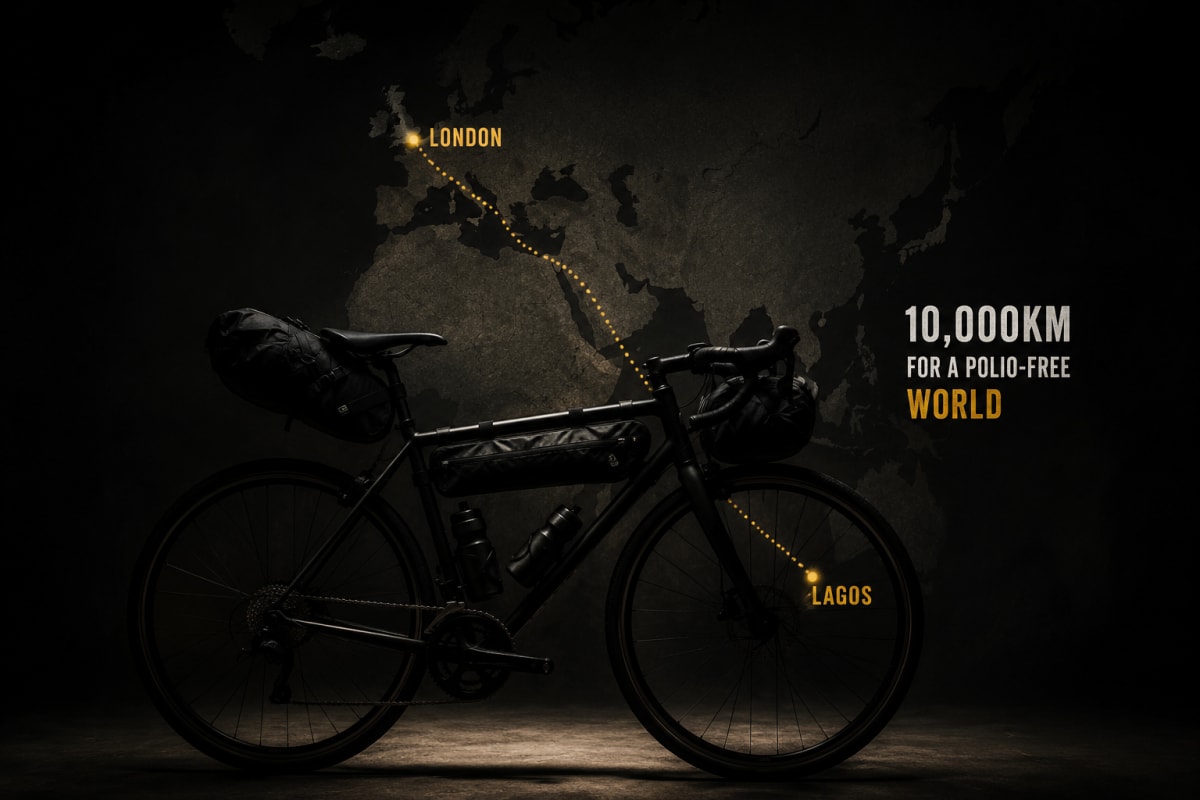
In a bold and physically demanding mission, Captain Okedeyi has set off on a 10,000 kilometer cycling expedition from London to Lagos, aiming to shine a spotlight on the ongoing global fight against polio. This journey is not just a test of endurance but a deliberate effort to reignite public awareness about a disease that, despite significant progress, still threatens vulnerable communities across Africa and beyond. With polio cases resurfacing in regions once declared polio free, health advocates warn that complacency could reverse decades of hard won gains. Okedeyi’s ride serves as a timely reminder of the work that remains to fully eradicate this preventable disease.
What Happened
Captain Okedeyi, a Nigerian cyclist and public health advocate, has embarked on an ambitious cross continental cycling expedition to raise awareness about polio. The journey, spanning approximately 10,000 kilometers, began in London and will conclude in Lagos, Nigeria. Along the route, Okedeyi plans to engage with local communities, health workers, and policymakers to highlight the importance of vaccination and sustained public health efforts in the fight against polio.
Why Public Health Officials Are Concerned
Polio, a highly infectious viral disease that primarily affects children under five, was once a global scourge. Thanks to widespread vaccination campaigns led by organizations like the World Health Organization (WHO), the Global Polio Eradication Initiative (GPEI), and UNICEF, polio cases have decreased by over 99% since 1988. However, the disease has not been fully eradicated. In recent years, outbreaks have occurred in countries like Afghanistan, Pakistan, and several African nations, including Nigeria, where wild poliovirus was detected as recently as 2021. These resurgences underscore the fragility of progress and the need for continued vigilance, funding, and community engagement.
Who May Be Affected
Polio disproportionately affects children in underserved and conflict ridden regions where healthcare infrastructure is weak or inaccessible. Unvaccinated populations, particularly in remote or war torn areas, remain at highest risk. The disease spreads through contaminated water or food and can lead to irreversible paralysis or even death. While polio has been eliminated in most of the world, pockets of transmission persist, posing a threat to global eradication efforts. Travelers, migrant populations, and communities with low vaccination rates are particularly vulnerable to outbreaks.
Government and WHO Response
The Global Polio Eradication Initiative, a public private partnership led by national governments, the WHO, Rotary International, the U.S. Centers for Disease Control and Prevention (CDC), and UNICEF, continues to coordinate global efforts to interrupt polio transmission. In response to recent outbreaks, emergency vaccination campaigns have been launched in high risk areas, including Nigeria, where health workers have conducted door to door immunization drives. Governments in affected regions have also intensified surveillance to detect and respond to new cases swiftly. However, challenges such as vaccine hesitancy, misinformation, and logistical barriers in hard to reach areas remain significant hurdles.
Prevention and Safety Guidance
The most effective way to prevent polio is through vaccination. The oral polio vaccine (OPV) and the inactivated polio vaccine (IPV) have been instrumental in reducing global cases. Health authorities recommend that all children receive multiple doses of the polio vaccine as part of routine immunization schedules. For adults traveling to regions where polio is still endemic, a booster dose may be advised. Communities can also reduce transmission risks by improving sanitation, ensuring access to clean water, and promoting hygiene practices such as regular handwashing.
What Readers Should Know
Okedeyi’s journey is more than a personal challenge; it is a call to action. While polio may no longer dominate headlines, the disease remains a public health threat in some parts of the world. Eradication is within reach, but it requires sustained funding, political will, and grassroots engagement. Individuals can support the cause by staying informed, advocating for vaccination programs, and contributing to organizations working on the front lines of polio eradication. For those inspired by Okedeyi’s mission, following his progress and sharing his story can help amplify the message that polio can, and must, be stopped for good.
Key Takeaways
- Polio remains a threat in several countries despite a 99% reduction in cases since 1988.
- Vaccination is the most effective way to prevent polio, with both oral and inactivated vaccines playing critical roles.
- Recent outbreaks in previously polio free regions highlight the need for continued vigilance and global cooperation.
- Community engagement, improved sanitation, and sustained funding are essential to achieving full polio eradication.
- Captain Okedeyi’s 10,000km cycling journey aims to raise awareness and support for the global fight against polio.
Frequently Asked Questions
What is polio and how does it spread?
Polio is a highly infectious viral disease that primarily affects young children. It spreads through person to person contact, typically via contaminated water or food, and can lead to paralysis or death. The virus multiplies in the intestine and invades the nervous system.
Is polio still a problem today?
Yes, while polio cases have decreased by over 99% since 1988, the disease has not been fully eradicated. Outbreaks still occur in countries like Afghanistan, Pakistan, and parts of Africa, including Nigeria.
How can I protect myself and my family from polio?
The best protection is vaccination. Children should receive multiple doses of the polio vaccine as part of routine immunization. Adults traveling to high risk areas may need a booster dose. Good hygiene and sanitation practices also help reduce transmission risks.
What is the Global Polio Eradication Initiative?
The Global Polio Eradication Initiative is a public private partnership led by national governments, the WHO, Rotary International, the CDC, and UNICEF. Its goal is to eradicate polio worldwide through vaccination campaigns, surveillance, and community engagement.
How can I support the fight against polio?
You can support the cause by staying informed, advocating for vaccination programs, donating to organizations like Rotary International or UNICEF, and raising awareness in your community. Following and sharing stories like Captain Okedeyi’s can also help keep the issue in the public eye.
Medical Review: MedSense Editorial Board
























DISCUSSION (0)
POST A COMMENT