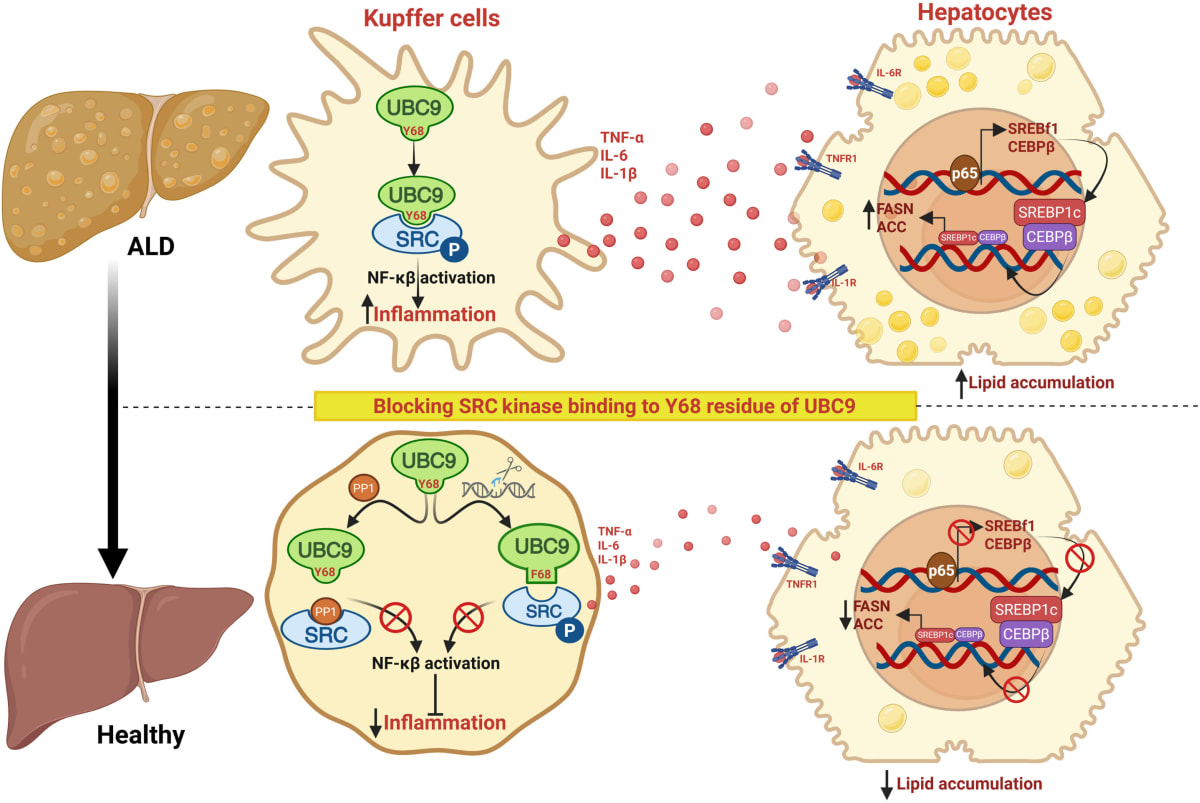
A team of researchers at Cedars Sinai Health Sciences University has made a significant advance in understanding alcohol associated liver disease, a leading cause of liver related death globally. Their study, published in a leading peer reviewed journal, reveals previously unrecognized molecular pathways that fuel chronic inflammation in the liver, a hallmark of the disease. The findings, derived from preclinical models, could pave the way for targeted therapies to halt or reverse liver damage in patients struggling with alcohol use disorder.
Clinical Significance
Alcohol associated liver disease remains one of the most prevalent and deadly forms of liver damage worldwide, with limited treatment options beyond cessation of alcohol use and supportive care. This disease progresses through stages from fatty liver to inflammation, fibrosis, and ultimately cirrhosis, often requiring liver transplantation. The discovery of specific molecular mechanisms driving inflammation offers hope for developing therapies that can intervene earlier in the disease process, potentially preventing irreversible damage. For clinicians, these findings underscore the importance of molecular diagnostics in identifying patients at highest risk of rapid progression.
Deep Dive and Research Findings
The Cedars Sinai team focused on the role of immune cell signaling pathways in alcohol associated liver disease. Using advanced preclinical models, they identified a cascade of molecular events that trigger excessive immune responses in the liver. Specifically, the researchers found that alcohol metabolism disrupts normal cellular signaling in hepatocytes and Kupffer cells, leading to the release of pro inflammatory cytokines such as tumor necrosis factor alpha and interleukin 1 beta. These cytokines recruit additional immune cells to the liver, perpetuating a cycle of inflammation and tissue damage. The study also highlighted the involvement of the NLRP3 inflammasome, a multiprotein complex that amplifies inflammatory responses, as a key mediator in this process.
The team employed a combination of RNA sequencing, proteomics, and advanced imaging techniques to map these pathways with high precision. Their work revealed that certain metabolic byproducts of alcohol, such as acetaldehyde, directly modify proteins in liver cells, altering their function and making them more susceptible to immune mediated damage. This molecular insight provides a clearer picture of how alcohol associated liver disease progresses at the cellular level, offering multiple potential intervention points for future therapies.
Future Outlook and Medical Implications
The identification of these molecular pathways opens new avenues for therapeutic development. Researchers are now exploring drugs that can inhibit specific components of these pathways, such as NLRP3 inflammasome inhibitors or cytokine blockers, to reduce inflammation and liver damage. Clinical trials are likely to follow, focusing on patients with early stage alcohol associated liver disease to assess the safety and efficacy of these targeted therapies. Additionally, the study suggests that molecular biomarkers derived from these pathways could be used to monitor disease progression and response to treatment, enabling more personalized care for patients.
For the broader medical community, these findings also highlight the need for interdisciplinary collaboration. Gastroenterologists, hepatologists, and addiction specialists will need to work together to integrate molecular insights into clinical practice, ensuring that patients receive comprehensive care that addresses both the physical and behavioral aspects of alcohol associated liver disease.
Patient or Practitioner Guidance
For patients with alcohol associated liver disease, the most critical step remains abstinence from alcohol, which can halt or even reverse early stage liver damage. However, the new molecular insights suggest that future treatments may target specific inflammatory pathways to protect the liver even in the presence of continued alcohol use. Patients should discuss emerging therapies and clinical trial opportunities with their healthcare providers, particularly if they have been diagnosed with early stage liver disease or fibrosis. Healthcare professionals are encouraged to stay informed about these developments, as targeted therapies could soon become part of standard treatment protocols for alcohol associated liver disease.
Key Takeaways
- Researchers have mapped molecular pathways that drive inflammation in alcohol associated liver disease, identifying specific immune signaling events and metabolic disruptions as key contributors.
- The study reveals potential therapeutic targets, including the NLRP3 inflammasome and pro inflammatory cytokines, which could lead to new treatments for this deadly condition.
- Early intervention and abstinence from alcohol remain critical, but molecular diagnostics and targeted therapies may soon offer additional tools to prevent liver damage and progression to cirrhosis.
Frequently Asked Questions
What is alcohol associated liver disease, and how does it progress?
Alcohol associated liver disease is a condition caused by chronic alcohol use, leading to liver damage that progresses through stages: fatty liver (steatosis), inflammation (steatohepatitis), fibrosis (scarring), and cirrhosis (irreversible liver damage). Inflammation is a key driver of this progression, as immune cells release cytokines that damage liver tissue.
How do the newly discovered molecular pathways contribute to liver inflammation?
The study found that alcohol metabolism disrupts normal cellular signaling in liver cells, leading to the release of pro inflammatory cytokines like tumor necrosis factor alpha and interleukin 1 beta. These cytokines recruit immune cells to the liver, perpetuating inflammation. The NLRP3 inflammasome, a protein complex, amplifies this response, creating a cycle of damage.
What are the potential treatments emerging from this research?
The findings suggest that therapies targeting specific inflammatory pathways, such as NLRP3 inflammasome inhibitors or cytokine blockers, could reduce liver inflammation and damage. Clinical trials are expected to evaluate these drugs in patients with early stage alcohol associated liver disease.
How can patients benefit from these discoveries?
While abstinence from alcohol remains the most effective treatment, patients with early stage liver disease may soon have access to targeted therapies that protect the liver from inflammation. Patients should discuss clinical trial opportunities and emerging treatments with their healthcare providers.
Medical Review: MedSense Editorial Board























DISCUSSION (0)
POST A COMMENT