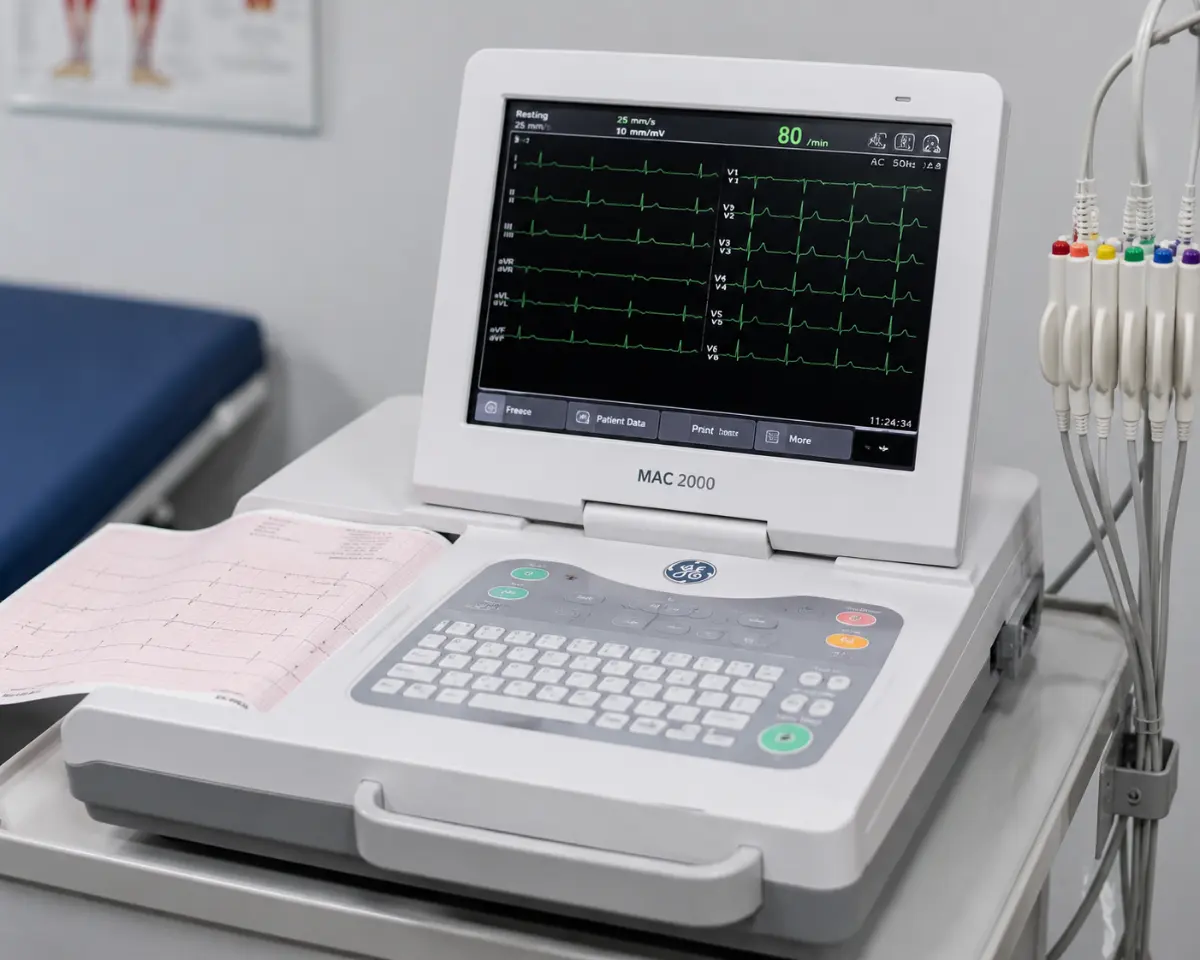
What Is an Electrocardiograph (ECG/EKG)?
An electrocardiograph, or ECG (also spelled EKG, from the German Elektrokardiogramm), is a medical device that records the electrical signals produced by the heart with each beat. These signals travel through the heart muscle, causing it to contract and pump blood throughout the body. By capturing these electrical impulses, an ECG provides a snapshot of the heart’s activity over a short period, typically 10 seconds. The results are displayed as a graph on paper or a digital screen, showing distinct waves that correspond to different phases of the heartbeat.
The ECG is a fundamental tool in cardiology because it can reveal abnormalities in heart rhythm, detect damage from a heart attack, identify structural issues, and monitor the effects of medications or medical devices like pacemakers. Despite its simplicity, the ECG is incredibly versatile and is often one of the first tests ordered when a heart problem is suspected.
How Does an ECG Work?
The heart’s electrical system controls the timing and coordination of its contractions. Each heartbeat begins in the sinoatrial (SA) node, a small cluster of cells in the right atrium that acts as the heart’s natural pacemaker. The electrical impulse spreads through the atria, causing them to contract and push blood into the ventricles. It then travels to the atrioventricular (AV) node, which delays the signal briefly before sending it to the ventricles, allowing them to fill with blood. Finally, the impulse moves through the ventricles, triggering their contraction and pumping blood to the lungs and the rest of the body.
An ECG machine detects these electrical impulses through electrodes placed on the skin. The electrodes are attached to the chest, arms, and legs, and they pick up the tiny electrical changes that occur with each heartbeat. The machine amplifies these signals and records them as a series of waves on the ECG tracing. Each wave corresponds to a specific part of the heartbeat: the P wave represents atrial contraction, the QRS complex reflects ventricular contraction, and the T wave shows ventricular relaxation. By analyzing these waves, healthcare providers can identify irregularities in the heart’s rhythm or structure.
Why Is an ECG Performed?
An ECG is a routine part of many medical evaluations, especially when heart related symptoms or conditions are suspected. Common reasons for performing an ECG include chest pain, shortness of breath, dizziness, fainting, or palpitations (a sensation of rapid, fluttering, or pounding heartbeats). It is also used to screen for heart disease in people with risk factors such as high blood pressure, diabetes, high cholesterol, or a family history of heart problems. Additionally, ECGs are often performed before surgery to assess heart health and reduce the risk of complications during the procedure.
Beyond diagnosing acute issues, ECGs play a key role in monitoring chronic conditions. For example, they can help track the progression of heart disease, evaluate the effectiveness of treatments like medications or pacemakers, and detect side effects of certain drugs. In some cases, an ECG may be part of a stress test, where the heart’s activity is recorded during physical exertion to assess how well it responds to increased demand.
What to Expect During an ECG
An ECG is a quick, painless, and noninvasive procedure that typically takes about 5 to 10 minutes. You will be asked to lie down on an examination table, and a healthcare provider will attach small, sticky electrodes to your chest, arms, and legs. These electrodes are connected to the ECG machine by wires. It’s important to lie still and breathe normally during the test, as movement can interfere with the results. In some cases, you may be asked to hold your breath briefly to improve the clarity of the recording.
Before the test, you may need to remove any jewelry or clothing that could interfere with the placement of the electrodes. Men may need to have their chest hair shaved in areas where the electrodes will be placed to ensure good contact with the skin. The procedure itself does not involve any discomfort, though the electrodes may feel slightly cold when first applied. Once the test is complete, the electrodes are removed, and you can resume your normal activities immediately.
Interpreting ECG Results
The ECG results are displayed as a series of waves on a graph, which a healthcare provider will analyze to assess your heart’s electrical activity. A normal ECG shows a consistent pattern of waves with regular spacing, indicating a steady heartbeat. Abnormalities in the waves or their timing can suggest various heart conditions, such as arrhythmias (irregular heartbeats), heart attacks, enlarged heart chambers, or electrolyte imbalances. For example, a missing P wave might indicate atrial fibrillation, while a widened QRS complex could suggest a blockage in the heart’s electrical pathways.
It’s important to note that an ECG is just one piece of the puzzle when it comes to diagnosing heart conditions. Your healthcare provider will consider your symptoms, medical history, and other test results alongside the ECG findings. In some cases, additional tests, such as an echocardiogram, stress test, or blood tests, may be needed to confirm a diagnosis or develop a treatment plan. If your ECG shows abnormalities, your provider will discuss the results with you and recommend next steps, which may include further testing, lifestyle changes, or treatment.
Limitations of an ECG
While an ECG is a valuable tool, it has some limitations. For instance, it only captures the heart’s electrical activity at the moment the test is performed. If you have an intermittent heart problem, such as occasional palpitations, the ECG may not detect it unless the issue occurs during the test. In such cases, your provider might recommend a longer monitoring period using a Holter monitor, which records your heart’s activity over 24 to 48 hours, or an event monitor, which you can activate when symptoms occur.
Additionally, an ECG may not detect all types of heart disease. For example, it cannot directly visualize the heart’s structure or blood flow, which is why other tests like echocardiograms or angiograms may be needed. Some abnormalities may also be subtle or require specialized interpretation, which is why ECGs are typically reviewed by cardiologists or trained healthcare providers.
When to Seek Medical Care
While an ECG is a routine test, certain symptoms should prompt you to seek medical attention, even if you’ve recently had a normal ECG. If you experience chest pain, pressure, or discomfort, especially if it radiates to your arm, jaw, or back, seek emergency care immediately, as these could be signs of a heart attack. Other concerning symptoms include severe shortness of breath, fainting, rapid or irregular heartbeats, or sudden weakness on one side of the body, which could indicate a stroke or other serious condition.
If you have risk factors for heart disease, such as high blood pressure, diabetes, or a family history of heart problems, regular checkups with your healthcare provider are important. They can determine whether an ECG or other tests are needed to monitor your heart health. Even if you feel fine, preventive care can help detect potential issues early, when they are often easier to manage.
What Experts Recommend
Medical experts agree that the ECG is a safe, effective, and essential tool for evaluating heart health. The American Heart Association recommends ECGs as part of routine screenings for individuals with risk factors for heart disease, such as high blood pressure, diabetes, or a family history of heart problems. For people without symptoms or risk factors, the decision to perform an ECG is typically based on individual circumstances, such as preparing for surgery or evaluating symptoms like dizziness or palpitations.
If you’re scheduled for an ECG, experts advise following your healthcare provider’s instructions, such as avoiding lotions or oils on your skin before the test, as these can interfere with electrode adhesion. It’s also a good idea to wear comfortable clothing that allows easy access to your chest, arms, and legs. While the test itself is simple, being prepared can help ensure accurate results and a smooth experience.
Key Takeaways
- An electrocardiograph (ECG or EKG) is a noninvasive test that records the heart’s electrical activity to assess its rhythm and function.
- ECGs are commonly used to diagnose heart conditions like arrhythmias, heart attacks, and structural abnormalities, as well as to monitor chronic heart disease.
- The test is quick, painless, and involves attaching electrodes to the chest, arms, and legs to capture the heart’s electrical signals.
- While ECGs are highly useful, they have limitations and may not detect intermittent or subtle heart problems without additional monitoring.
- Abnormal ECG results should be interpreted by a healthcare provider in the context of your symptoms, medical history, and other test results.
- Seek emergency care if you experience symptoms like chest pain, severe shortness of breath, or fainting, even if you’ve had a recent normal ECG.
Frequently Asked Questions
Is an ECG painful?
No, an ECG is completely painless. The test involves attaching small electrodes to your skin, which may feel slightly cold but do not cause any discomfort.
How long does an ECG take?
An ECG typically takes about 5 to 10 minutes to complete. The actual recording of your heart’s electrical activity only takes a few seconds, but setup and preparation may take a little longer.
Can an ECG detect a heart attack?
Yes, an ECG can often detect signs of a heart attack by showing changes in the heart’s electrical activity. However, some heart attacks may not produce immediate ECG changes, so additional tests may be needed.
Do I need to prepare for an ECG?
No special preparation is usually needed for an ECG. However, you may be asked to avoid applying lotions or oils to your skin before the test, as these can interfere with the electrodes. Wear comfortable clothing that allows easy access to your chest, arms, and legs.
What does an abnormal ECG mean?
An abnormal ECG can indicate a variety of heart conditions, such as arrhythmias, heart attacks, or structural issues. However, it’s important to discuss the results with your healthcare provider, as they will consider your symptoms, medical history, and other test results to determine the cause and recommend next steps.
Can an ECG detect all heart problems?
No, an ECG has limitations and may not detect all heart problems, especially if they are intermittent or subtle. Additional tests, such as a Holter monitor, echocardiogram, or stress test, may be needed for a more comprehensive evaluation.
Medical Review: MedSense Editorial Board
DISCUSSION (0)
POST A COMMENT