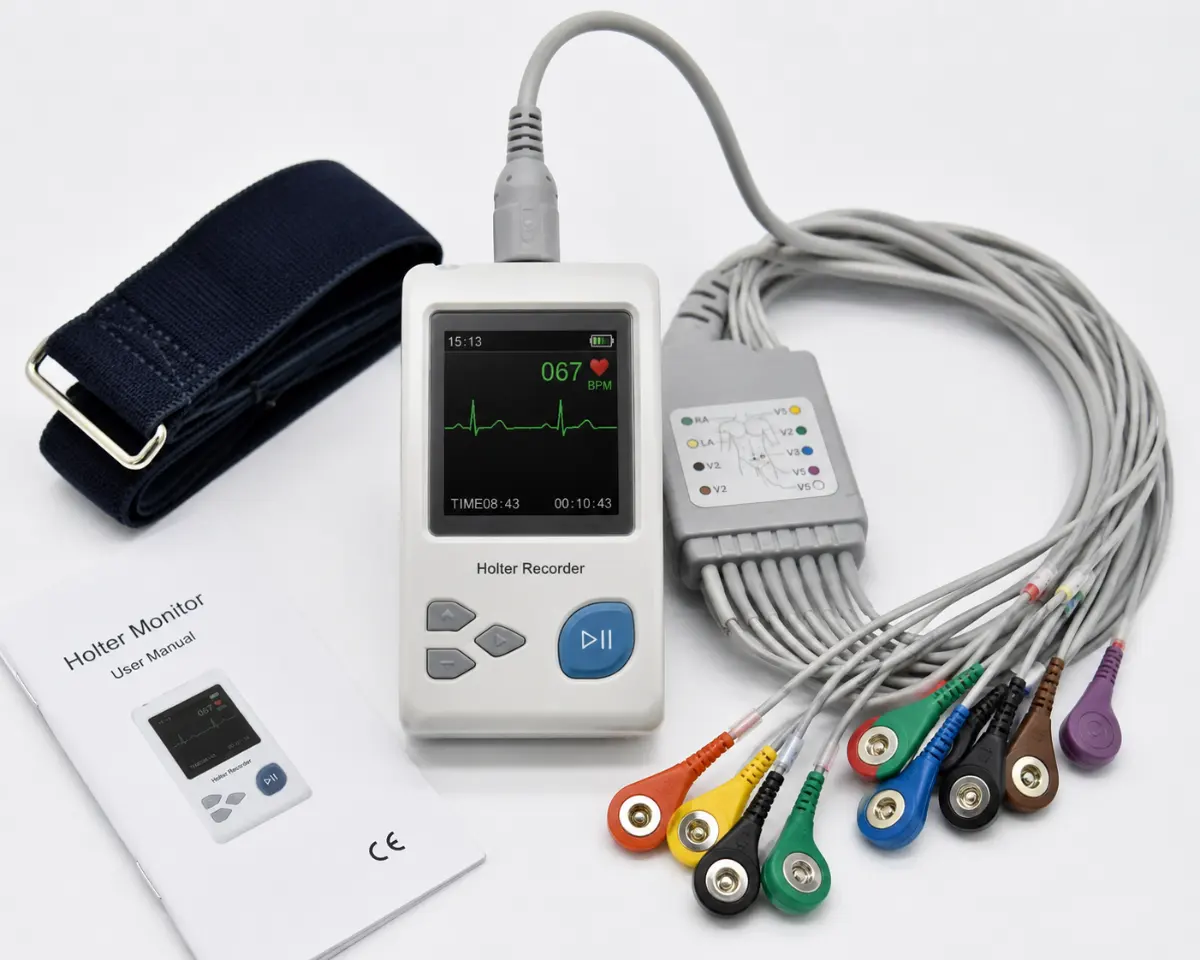
If your doctor has recommended a Holter monitor, you may have questions about what it is and how it works. A Holter monitor is a small, portable device that records your heart’s electrical activity continuously for 24 to 48 hours, or sometimes longer. Unlike a standard electrocardiogram (ECG) that captures a brief snapshot of your heart’s rhythm, a Holter monitor provides a detailed, ongoing record that helps doctors detect irregularities that might not appear during a short office visit. This test is painless, non invasive, and plays a key role in diagnosing heart rhythm problems that can affect your health and quality of life.
What Is a Holter Monitor?
A Holter monitor is a battery powered medical device about the size of a small smartphone that records the electrical signals from your heart. These signals, known as an electrocardiogram or ECG, show how fast your heart is beating, whether the rhythm is steady or irregular, and the strength and timing of electrical impulses as they move through the heart’s chambers. The monitor is connected to electrodes, small, sticky patches, that are placed on your chest. Wires from the electrodes attach to the monitor, which you wear on a strap over your shoulder or around your waist. Because it’s portable, you can go about your normal daily activities while the device records your heart’s activity.
Why Do Doctors Recommend a Holter Monitor?
Your doctor may suggest a Holter monitor if you’ve experienced symptoms that suggest a heart rhythm problem, such as palpitations, dizziness, fainting, or unexplained fatigue. These symptoms can come and go, and a standard ECG performed in the doctor’s office may not capture them. A Holter monitor, however, records your heart’s activity over an extended period, increasing the chances of detecting irregularities like atrial fibrillation, bradycardia (slow heart rate), tachycardia (fast heart rate), or pauses in heart rhythm. It’s also used to evaluate how well medications are working, check the function of a pacemaker, or assess your heart’s response to daily activities like exercise, stress, or sleep.
Who Might Need to Wear One?
Holter monitors are commonly recommended for people who have symptoms that could be related to an arrhythmia, even if a standard ECG didn’t show any problems. You might be a candidate if you’ve experienced frequent or unexplained episodes of rapid heartbeat, skipped beats, lightheadedness, or chest discomfort. They’re also used for people with known heart conditions, such as those recovering from a heart attack, living with heart failure, or managing a chronic arrhythmia. Additionally, if you’ve had a stroke with no clear cause, your doctor may use a Holter monitor to check for atrial fibrillation, a common and treatable risk factor for stroke.
What to Expect During the Test
The process of wearing a Holter monitor is straightforward and painless. A technician or nurse will place several electrodes on your chest after cleaning the skin to ensure good contact. The electrodes are connected to the monitor, which you’ll wear in a small pouch or on a strap. You’ll be given instructions on how to keep the electrodes in place, avoid getting the monitor wet, and record your activities and symptoms in a diary. It’s important to go about your usual routine, including work, exercise, and sleep, so the monitor can capture your heart’s activity in real life conditions. You’ll also be asked to press a button on the monitor if you experience symptoms like dizziness or palpitations, which helps your doctor match your symptoms to the recorded heart rhythm.
How to Prepare for Your Holter Monitor Test
Preparing for a Holter monitor test is simple, but there are a few things you can do to ensure the best results. On the day of the test, wear loose, comfortable clothing that allows easy access to your chest. Avoid applying lotions, oils, or powders to your chest, as these can interfere with the electrodes sticking properly. You can eat and drink normally before and during the test, and you should continue taking any prescribed medications unless your doctor advises otherwise. It’s also a good idea to bring a list of your current medications and any symptoms you’ve been experiencing. If you have a lot of chest hair, you may be asked to shave small areas where the electrodes will be placed to ensure a secure connection.
What Happens After the Test?
Once the monitoring period is over, you’ll return the Holter monitor to your doctor’s office or a lab. A technician will remove the electrodes, which may leave a slight residue on your skin that can be easily washed off. The data recorded by the monitor will be downloaded and analyzed by a cardiologist or a trained technician. This process can take a few days to a week, depending on the facility. Your doctor will review the results and discuss them with you at a follow up appointment. If the monitor detected any irregularities, your doctor may recommend further testing, such as an echocardiogram or stress test, or suggest treatment options like medication, lifestyle changes, or procedures to manage your heart rhythm.
When to Seek Medical Attention
While wearing a Holter monitor is generally safe, there are a few situations where you should contact your doctor or seek medical attention. If you experience severe chest pain, shortness of breath, or symptoms of a heart attack, call emergency services immediately. If the electrodes become loose or fall off, or if the monitor stops working, contact your healthcare provider for instructions. It’s also important to keep a detailed diary of your symptoms and activities, as this information helps your doctor interpret the results accurately. If you feel unwell or have concerns while wearing the monitor, don’t hesitate to reach out to your medical team for guidance.
What Experts Recommend
Medical experts agree that Holter monitors are a valuable tool for diagnosing heart rhythm problems that might otherwise go undetected. The American Heart Association recommends their use for patients with symptoms suggestive of arrhythmias, especially when a standard ECG doesn’t provide clear answers. Experts also emphasize the importance of following your doctor’s instructions while wearing the monitor, including keeping it dry, avoiding strong magnets or electrical devices that could interfere with the recording, and maintaining your usual activities. If your doctor recommends a Holter monitor, it’s because they believe the information it provides could be crucial for your heart health. Being proactive and cooperative during the test can lead to a more accurate diagnosis and better management of your condition.
Key Takeaways
- A Holter monitor is a portable device that records your heart’s electrical activity continuously for 24 to 48 hours, helping doctors detect irregular heart rhythms that may not appear during a standard ECG.
- It’s commonly used for people experiencing symptoms like palpitations, dizziness, or fainting, as well as those with known heart conditions or a history of stroke.
- The test is painless and non invasive, involving electrodes placed on your chest that connect to a small monitor you wear during your normal daily activities.
- You’ll need to keep a diary of your symptoms and activities while wearing the monitor to help your doctor interpret the results accurately.
- After the test, your doctor will review the recorded data and discuss any findings or next steps, which may include further testing or treatment.
Frequently Asked Questions
How long do I need to wear a Holter monitor?
Most Holter monitors are worn for 24 to 48 hours, but some extended monitoring may last up to 7 days or longer, depending on your doctor’s recommendation and the symptoms being evaluated.
Can I shower or exercise while wearing a Holter monitor?
You should avoid showering, swimming, or getting the monitor wet, as moisture can damage the device or loosen the electrodes. You can exercise lightly, but avoid activities that cause excessive sweating or movement that might dislodge the electrodes. Always follow your doctor’s specific instructions.
Will the Holter monitor detect all heart problems?
A Holter monitor is highly effective for detecting irregular heart rhythms that occur frequently or during specific activities. However, it may not capture very brief or rare arrhythmias. If your symptoms persist but the Holter monitor doesn’t show any issues, your doctor may recommend a longer term monitor or other tests.
Is wearing a Holter monitor uncomfortable?
Most people find wearing a Holter monitor to be comfortable and unobtrusive. The electrodes may cause minor skin irritation in some people, but this is usually mild and temporary. The monitor itself is lightweight and can be worn discreetly under clothing.
What should I do if I experience symptoms while wearing the monitor?
If you experience symptoms like dizziness, palpitations, or chest pain, press the event button on the monitor (if available) and note the time and what you were doing in your diary. This helps your doctor correlate your symptoms with the recorded heart rhythm.
Medical Review: MedSense Editorial Board
DISCUSSION (0)
POST A COMMENT