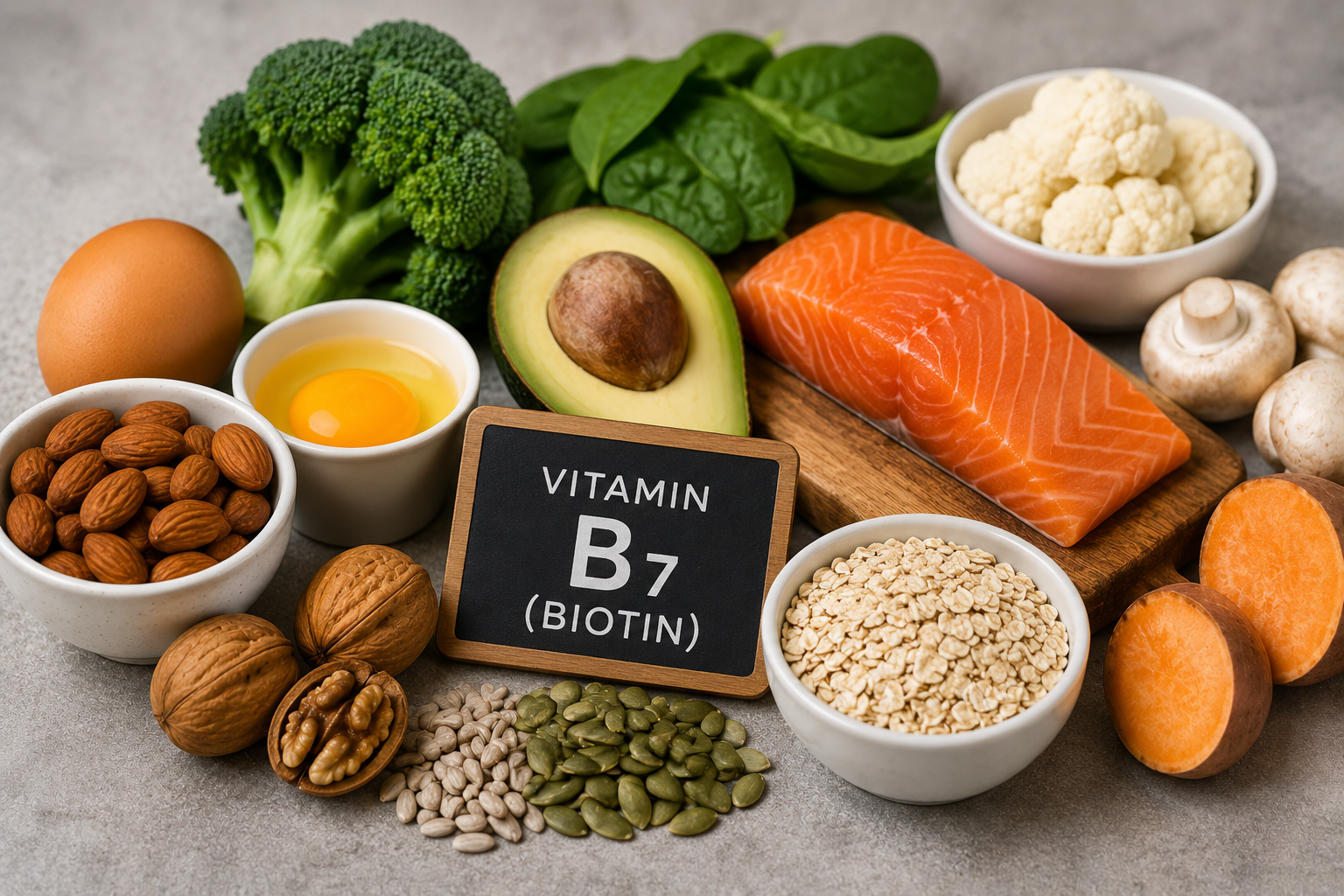
What Is Vitamin B7 (Biotin)?
Vitamin B7, or biotin, is one of the eight B complex vitamins that help the body convert food into energy. Like other B vitamins, biotin is water soluble, meaning the body does not store it and excess amounts are excreted through urine. Biotin acts as a coenzyme in several metabolic processes, particularly those involving carbohydrates, fats, and proteins. It also plays a role in gene regulation and cell signaling, making it vital for overall cellular health.
Biotin was first discovered in the early 20th century during research on egg white injury, a condition caused by consuming large amounts of raw egg whites. Researchers found that a substance in egg yolks, later identified as biotin, could prevent this condition. Today, biotin is recognized as an essential nutrient that supports not only metabolism but also the health of the skin, hair, nails, and nervous system.
Why Does Biotin Matter?
Biotin is involved in several key bodily functions that impact daily health and well being. One of its primary roles is supporting metabolism by helping enzymes break down macronutrients, carbohydrates, fats, and proteins, into energy. This process is essential for maintaining steady energy levels, supporting brain function, and keeping the nervous system healthy. Without adequate biotin, the body may struggle to efficiently use the nutrients from food, leading to fatigue or sluggishness.
Beyond metabolism, biotin is often associated with cosmetic benefits, particularly for hair, skin, and nails. While research on biotin’s effectiveness for improving hair and nail strength is mixed, some studies suggest that biotin supplementation may help individuals with brittle nails or hair thinning, especially if they have a deficiency. Biotin also supports the production of keratin, a protein that forms the structural basis of hair, skin, and nails. However, it’s important to note that biotin’s benefits in these areas are most pronounced in individuals who are deficient in the vitamin.
Who Might Need More Biotin?
Most people get enough biotin through a balanced diet, as it is found in a variety of foods. However, certain groups may be at higher risk of deficiency or may benefit from additional biotin intake. These include pregnant or breastfeeding women, as biotin requirements increase during pregnancy and lactation. Some studies suggest that up to 50% of pregnant women may develop a mild biotin deficiency, which could affect fetal development, though more research is needed to confirm this.
Individuals with certain medical conditions may also have lower biotin levels. For example, people with biotinidase deficiency, a rare genetic disorder, cannot properly recycle biotin in the body and may require lifelong supplementation. Additionally, those with gastrointestinal disorders, such as Crohn’s disease or celiac disease, may have difficulty absorbing biotin and other nutrients. Long term use of certain medications, such as anticonvulsants or antibiotics, can also interfere with biotin absorption or increase its excretion, potentially leading to deficiency over time.
Natural Food Sources of Biotin
Biotin is widely available in many foods, making it relatively easy to meet daily requirements through diet alone. Some of the richest sources of biotin include egg yolks, organ meats (such as liver and kidney), nuts (like almonds, peanuts, and walnuts), seeds (such as sunflower seeds), and certain vegetables (like sweet potatoes, spinach, and broccoli). Dairy products, such as milk and cheese, also contain small amounts of biotin. For those following a plant based diet, legumes, whole grains, and soy products can provide biotin as well.
It’s worth noting that raw egg whites contain a protein called avidin, which binds to biotin and prevents its absorption. Cooking egg whites deactivates avidin, so consuming cooked eggs poses no risk of biotin deficiency. For most people, eating a varied diet that includes biotin rich foods is sufficient to maintain adequate levels of this vitamin.
Biotin Supplements: Are They Necessary?
Biotin supplements have gained popularity in recent years, often marketed for their potential to improve hair, skin, and nail health. While supplements can be beneficial for individuals with a diagnosed deficiency or those at risk of low biotin levels, they are generally unnecessary for most healthy people. The recommended daily intake of biotin for adults is 30 micrograms (mcg), an amount easily obtained through diet. Many biotin supplements, however, contain much higher doses, sometimes up to 10,000 mcg, which far exceed the body’s needs.
Before considering a biotin supplement, it’s important to consult with a healthcare provider. High doses of biotin can interfere with certain laboratory tests, such as those for thyroid function or cardiac biomarkers, leading to inaccurate results. Additionally, while biotin is generally safe, excessive intake may cause mild side effects, such as digestive upset or skin rashes. For most people, focusing on a balanced diet is the best way to ensure adequate biotin intake without the risks associated with unnecessary supplementation.
Signs of Biotin Deficiency
Biotin deficiency is rare, but when it occurs, it can lead to noticeable symptoms. Early signs of deficiency may include thinning hair, brittle nails, and a scaly red rash around the eyes, nose, or mouth. Neurological symptoms, such as depression, lethargy, hallucinations, and numbness or tingling in the extremities, may also develop over time. In severe cases, biotin deficiency can lead to more serious health issues, including impaired immune function and developmental delays in infants.
If you suspect a biotin deficiency, it’s important to speak with a healthcare provider. A blood test can confirm low biotin levels, and your provider can recommend appropriate treatment, which may include dietary changes or supplementation. Since biotin deficiency is uncommon, persistent symptoms should be evaluated to rule out other underlying conditions.
When to Seek Medical Advice
While biotin deficiency is rare, certain symptoms warrant medical attention. If you experience unexplained hair loss, persistent skin rashes, or neurological symptoms like numbness or mood changes, it’s a good idea to consult a healthcare provider. These symptoms can have many potential causes, and a professional evaluation can help determine whether biotin deficiency or another condition is to blame.
Additionally, if you’re considering biotin supplements for cosmetic reasons, such as improving hair or nail strength, it’s wise to discuss this with your provider first. They can help you weigh the potential benefits and risks, as well as recommend evidence based approaches to addressing your concerns. For most people, a balanced diet and good overall health practices are the best ways to support hair, skin, and nail health.
What Experts Recommend
Health experts agree that biotin is an essential nutrient with important roles in metabolism, energy production, and overall health. However, they also emphasize that most people can meet their biotin needs through a varied diet without the need for supplements. The National Institutes of Health (NIH) recommends focusing on whole foods, such as eggs, nuts, seeds, and vegetables, to ensure adequate biotin intake. For individuals at risk of deficiency, such as pregnant women or those with certain medical conditions, a healthcare provider may recommend supplementation.
Experts also caution against relying on biotin supplements for cosmetic benefits, as the evidence supporting their effectiveness is limited. Instead, they recommend maintaining a balanced diet, staying hydrated, and practicing good skin and hair care habits. If you’re concerned about biotin levels or experiencing symptoms of deficiency, consulting a healthcare provider is the best course of action to receive personalized advice and care.
Key Takeaways
- Vitamin B7 (biotin) is a water soluble B vitamin that supports metabolism, energy production, and the health of hair, skin, and nails.
- Biotin is found in a variety of foods, including egg yolks, nuts, seeds, organ meats, and certain vegetables, making deficiency rare in healthy individuals.
- Most people can meet their biotin needs through diet alone, and supplements are generally unnecessary unless recommended by a healthcare provider.
- Biotin deficiency is uncommon but can cause symptoms like hair thinning, skin rashes, and neurological issues. If suspected, consult a healthcare provider for evaluation.
- High doses of biotin supplements can interfere with laboratory tests and may cause side effects, so it’s important to use them only under medical supervision.
Frequently Asked Questions
What are the benefits of biotin?
Biotin supports metabolism by helping the body convert food into energy. It also plays a role in maintaining healthy hair, skin, and nails, though its benefits in these areas are most noticeable in individuals with a deficiency. Additionally, biotin supports brain function and nervous system health.
Can biotin improve hair growth?
While biotin is often marketed for hair growth, scientific evidence supporting its effectiveness in people without a deficiency is limited. Some studies suggest that biotin supplementation may help individuals with brittle nails or hair thinning due to deficiency, but it is not a guaranteed solution for hair loss.
How much biotin do I need daily?
The recommended daily intake of biotin for adults is 30 micrograms (mcg). Most people can meet this requirement through a balanced diet that includes biotin rich foods like eggs, nuts, seeds, and vegetables. Pregnant or breastfeeding women may need slightly more.
Are there any risks associated with biotin supplements?
Biotin supplements are generally safe when taken as directed, but high doses can interfere with certain laboratory tests, such as those for thyroid function or cardiac biomarkers. Excessive intake may also cause mild side effects like digestive upset or skin rashes. Always consult a healthcare provider before starting any supplement.
What foods are high in biotin?
Biotin is found in a variety of foods, including egg yolks, organ meats (like liver), nuts (such as almonds and peanuts), seeds (like sunflower seeds), sweet potatoes, spinach, and broccoli. Dairy products and whole grains also contain smaller amounts of biotin.
Medical Review: MedSense Editorial Board
DISCUSSION (0)
POST A COMMENT