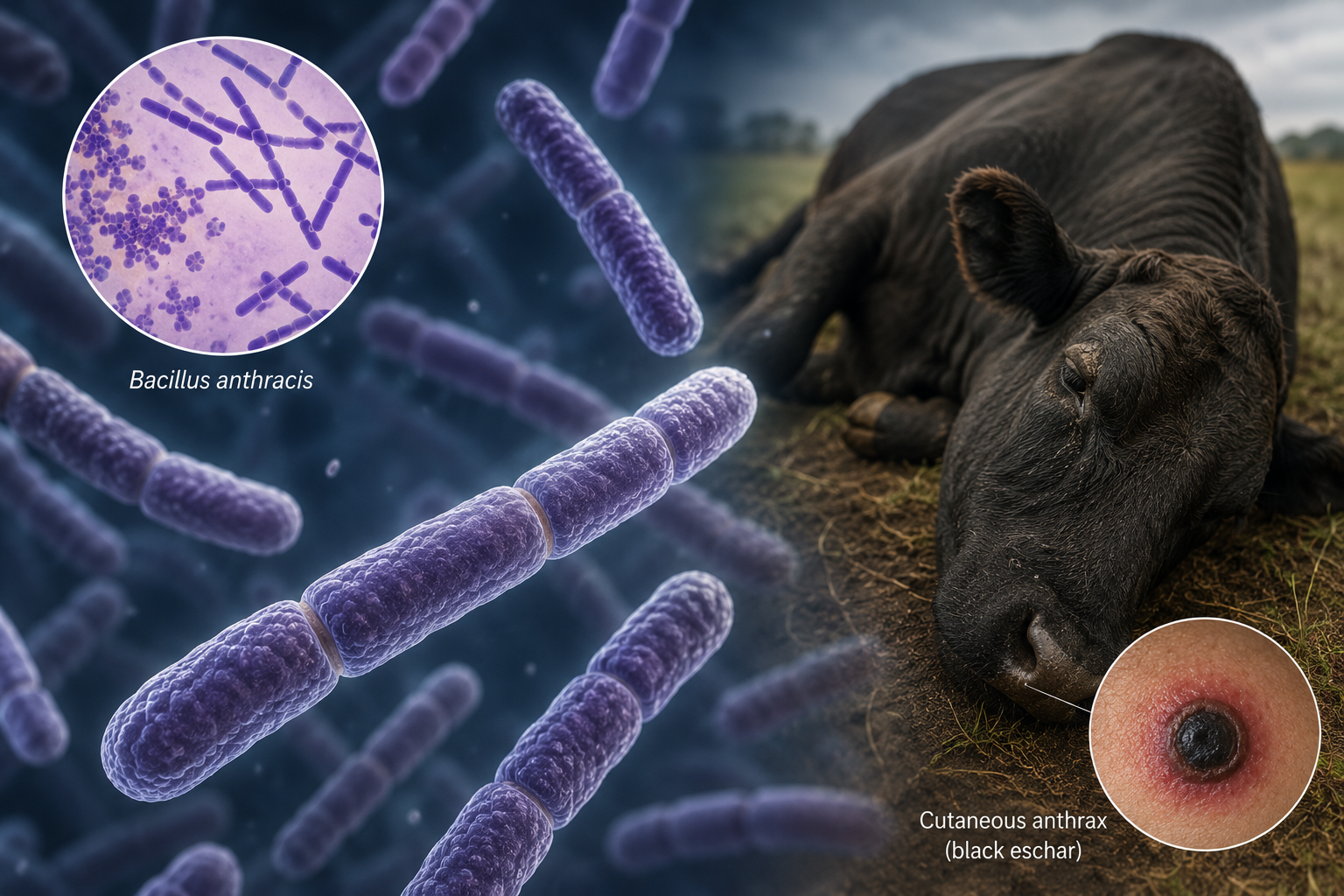
What Is Anthrax?
Anthrax is an infectious disease caused by the spore forming bacterium Bacillus anthracis. These spores are highly resilient and can survive in soil, water, and animal products for decades. When they enter the body, through the skin, lungs, or digestive system, they can germinate and release toxins that cause severe illness. Anthrax is not contagious, meaning it does not spread from person to person like the flu or COVID 19. Instead, infection typically occurs through direct exposure to spores.
Historically, anthrax has been a concern in agricultural settings, particularly in regions where livestock vaccination is limited. However, it gained broader public attention due to its potential use as a biological weapon. While naturally occurring anthrax is rare in developed countries, it remains a public health priority due to its severity and the need for rapid diagnosis and treatment.
How Does Anthrax Spread?
Anthrax spreads through exposure to Bacillus anthracis spores, which can enter the body in several ways. The most common routes of infection include:
- Cutaneous anthrax: The most frequent form, occurring when spores enter the body through a cut or scrape on the skin. This often happens when handling contaminated animal products like wool, hides, or hair.
- Inhalation anthrax: A rare but deadly form that occurs when spores are inhaled into the lungs. This can happen in occupational settings, such as wool mills or laboratories, or through intentional release in a bioterrorism event.
- Gastrointestinal anthrax: Caused by consuming undercooked meat from infected animals. This form is extremely rare but can be severe.
- Injection anthrax: A newer form identified in people who inject drugs, particularly heroin. It occurs when spores contaminate the injection site.
While anthrax spores can be found naturally in soil, human infections are uncommon in areas with strong veterinary and public health practices. Most cases occur in agricultural workers, veterinarians, or individuals exposed to contaminated animal products.
Who Is at Risk for Anthrax?
Certain groups of people have a higher risk of exposure to anthrax spores. These include:
- Agricultural workers: Farmers, ranchers, and veterinarians who handle livestock or animal products may come into contact with spores.
- Laboratory workers: Those who work with Bacillus anthracis in research or diagnostic settings are at risk if proper safety protocols are not followed.
- Military personnel: Anthrax has been studied as a potential biological weapon, so military members may receive vaccinations or training to recognize symptoms.
- People who inject drugs: Injection anthrax has been reported in Europe among heroin users, likely due to contaminated drug supplies.
- Travelers to high risk regions: In some parts of the world, such as parts of Africa, Asia, and the Middle East, anthrax is more common in livestock, increasing the risk of human exposure.
For most people in the United States and other developed countries, the risk of anthrax is very low. However, awareness is important, especially for those in high risk occupations or regions.
Symptoms of Anthrax
The symptoms of anthrax depend on how the infection enters the body. Each form of anthrax has distinct signs, and early recognition is critical for effective treatment.
- Cutaneous anthrax: The first sign is often a small, painless sore that develops into a blister. The blister then forms a black scab, or eschar, surrounded by swelling. Without treatment, the infection can spread to the lymph nodes and bloodstream.
- Inhalation anthrax: Early symptoms resemble the flu, including fever, chills, fatigue, and muscle aches. Within a few days, symptoms worsen to include severe breathing difficulties, chest pain, and shock. Inhalation anthrax is often fatal if not treated promptly.
- Gastrointestinal anthrax: Symptoms include nausea, vomiting, abdominal pain, and bloody diarrhea. Severe cases can lead to loss of appetite, fever, and swelling of the abdomen.
- Injection anthrax: Symptoms may include redness and swelling at the injection site, followed by fever, abscesses, and severe soft tissue infections.
If you suspect you or someone else has been exposed to anthrax, seek medical attention immediately. Early diagnosis and treatment can significantly improve outcomes.
Treatment and Management of Anthrax
Anthrax is treated with antibiotics, and the sooner treatment begins, the better the chances of recovery. The type of antibiotic and duration of treatment depend on the form of anthrax and the patient's overall health. Commonly used antibiotics include ciprofloxacin, doxycycline, and penicillin. In severe cases, such as inhalation anthrax, hospitalization and supportive care, such as intravenous fluids and mechanical ventilation, may be necessary.
In addition to antibiotics, anthrax antitoxin may be used to neutralize the toxins produced by the bacteria. Antitoxin is most effective when given early in the course of the illness, particularly for inhalation anthrax. The U.S. Strategic National Stockpile maintains supplies of anthrax antitoxin for use in emergencies, such as a bioterrorism event.
For people who have been exposed to anthrax spores but are not yet sick, post exposure prophylaxis (PEP) with antibiotics can prevent infection from developing. PEP typically involves a 60 day course of antibiotics, along with vaccination in some cases. If you believe you have been exposed to anthrax, contact a healthcare provider or public health authority immediately.
Preventing Anthrax
Preventing anthrax depends on reducing exposure to spores and, in some cases, vaccination. Here are key strategies to lower the risk of infection:
- Vaccination: An anthrax vaccine is available for people at high risk of exposure, such as military personnel, laboratory workers, and some veterinarians. The vaccine is not recommended for the general public.
- Safe handling of animal products: If you work with livestock or animal products, wear protective clothing, gloves, and masks to minimize exposure. Properly dispose of animal carcasses and disinfect contaminated areas.
- Food safety: Avoid consuming undercooked meat from animals that may be infected. In regions where anthrax is common, ensure meat is thoroughly cooked and sourced from reputable suppliers.
- Awareness of bioterrorism risks: While rare, anthrax has been used as a biological weapon. Stay informed about public health alerts and follow guidance from authorities in the event of a suspected release.
For most people, the risk of anthrax is low, but taking precautions in high risk settings can help prevent infection.
When to Seek Medical Care
If you develop symptoms of anthrax, especially after potential exposure to spores, seek medical care immediately. Early symptoms, such as a skin sore or flu like illness, can be easily mistaken for other conditions, so it is important to inform your healthcare provider about any possible exposure. This is particularly critical if you work in a high risk occupation or have traveled to a region where anthrax is more common.
In the event of a suspected bioterrorism attack involving anthrax, public health authorities will provide guidance on testing, treatment, and prevention. Follow their instructions closely to protect yourself and others.
What Experts Recommend
Public health experts emphasize the importance of awareness and preparedness when it comes to anthrax. While naturally occurring cases are rare, the potential for intentional release makes anthrax a priority for biodefense efforts. The Centers for Disease Control and Prevention (CDC) and the World Health Organization (WHO) recommend the following:
- High risk individuals, such as laboratory workers and military personnel, should receive the anthrax vaccine as part of their occupational health protocols.
- Healthcare providers should be trained to recognize the signs and symptoms of anthrax, particularly in patients with a history of exposure.
- Public health agencies should maintain stockpiles of antibiotics and antitoxin to respond to potential outbreaks or bioterrorism events.
- Research into new treatments and vaccines should continue to improve preparedness for anthrax and other biothreats.
For the general public, experts recommend staying informed about anthrax but avoiding unnecessary alarm. The risk of infection is low, and simple precautions can further reduce the likelihood of exposure.
Key Takeaways
- Anthrax is a rare but serious infectious disease caused by the bacterium Bacillus anthracis, which forms resilient spores that can survive for decades.
- The disease spreads through exposure to spores, not person to person contact, and can enter the body through the skin, lungs, or digestive system.
- Symptoms vary depending on the form of anthrax, cutaneous, inhalation, gastrointestinal, or injection, and early treatment with antibiotics is critical for recovery.
- High risk groups include agricultural workers, laboratory personnel, military members, and people who inject drugs, though the general public's risk is low.
- Prevention strategies include vaccination for high risk individuals, safe handling of animal products, and awareness of bioterrorism risks.
- If you suspect exposure to anthrax or develop symptoms, seek medical care immediately and inform your provider about potential exposure.
Frequently Asked Questions
Is anthrax contagious?
No, anthrax is not contagious. It does not spread from person to person like the flu or COVID 19. Infection occurs through direct exposure to Bacillus anthracis spores, such as through contact with contaminated animal products or inhalation of spores.
Can anthrax be treated?
Yes, anthrax can be treated with antibiotics, and early treatment significantly improves outcomes. In severe cases, such as inhalation anthrax, antitoxin and supportive care may also be necessary. Post exposure prophylaxis with antibiotics can prevent infection in people who have been exposed to spores.
Who should get the anthrax vaccine?
The anthrax vaccine is recommended for people at high risk of exposure, such as military personnel, laboratory workers, and some veterinarians. It is not routinely recommended for the general public. If you believe you are at risk, consult a healthcare provider or occupational health specialist.
What should I do if I think I’ve been exposed to anthrax?
If you suspect you have been exposed to anthrax, seek medical attention immediately. Inform your healthcare provider about your potential exposure so they can evaluate your risk and recommend appropriate testing or treatment. In the event of a suspected bioterrorism attack, follow guidance from public health authorities.
How common is anthrax in the United States?
Naturally occurring anthrax is very rare in the United States, with only a few cases reported each year. Most cases occur in agricultural settings or among people who handle animal products. The risk of anthrax from bioterrorism is also low, but public health agencies maintain preparedness plans for such events.
Medical Review: MedSense Editorial Board
DISCUSSION (0)
POST A COMMENT