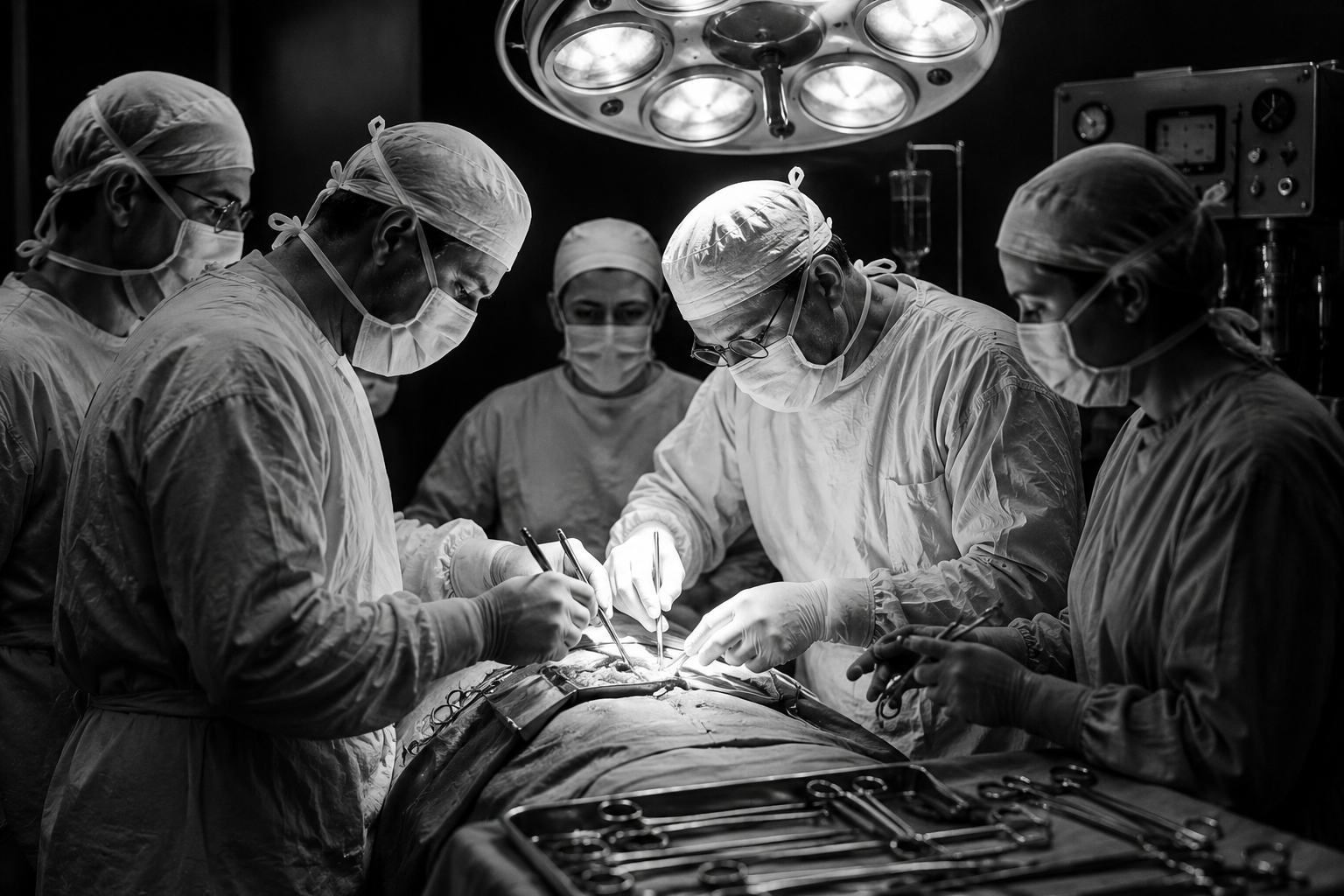
On December 23, 1954, a team of surgeons at Brigham and Women’s Hospital in Boston performed a medical first that would redefine the boundaries of modern medicine: the world’s first successful human kidney transplant. This landmark procedure not only saved a patient’s life but also laid the foundation for the field of organ transplantation, offering hope to millions of people worldwide facing organ failure. The surgery, which involved identical twins, demonstrated for the first time that a healthy organ could be transplanted between humans without immediate rejection, proving that the immune system could be managed in ways previously thought impossible.
What It Was
The first successful kidney transplant took place between 23 year old Ronald Herrick and his identical twin brother, Richard Herrick, who was suffering from end stage kidney disease. The surgery was performed by a team led by Dr. Joseph Murray, who later won the Nobel Prize in Physiology or Medicine for his work in organ transplantation. Unlike earlier attempts that had failed due to the recipient’s immune system rejecting the foreign organ, the identical twins shared the same genetic makeup, which meant Richard’s body was far less likely to reject Ronald’s kidney. This genetic match was the key to the transplant’s success and provided critical proof that organ transplantation could work in humans.
The procedure itself was a marvel of mid 20th century medicine, requiring meticulous surgical technique and a deep understanding of kidney function. The team had to carefully connect blood vessels and the ureter, the tube that carries urine from the kidney to the bladder, while minimizing the risk of infection and complications. The surgery lasted just over five hours, and Richard Herrick went on to live for eight more years with his new kidney before passing away from a heart condition unrelated to the transplant.
Why It Matters
The success of this transplant was a turning point in medical history, proving that organ transplantation was not just a theoretical possibility but a viable treatment for organ failure. Before 1954, patients with kidney failure had few options, and those who did survive often relied on primitive and ineffective treatments like dialysis, which was still in its early stages. The breakthrough demonstrated that the body’s immune system could be controlled, paving the way for future transplants between non identical individuals. This achievement opened the door to the development of immunosuppressive drugs, which are now a cornerstone of transplant medicine, allowing patients to receive organs from donors who are not genetically identical.
Beyond its immediate impact, the first kidney transplant also sparked a wave of innovation in surgical techniques, medical ethics, and patient care. It challenged the medical community to rethink the limits of what was possible, inspiring researchers to explore other types of organ transplants, including heart, liver, and lung transplants. The procedure also highlighted the importance of organ donation, a concept that has since become a cornerstone of modern healthcare systems around the world.
How It Changed Medicine
The legacy of the 1954 kidney transplant can be seen in nearly every aspect of modern transplantation medicine. Today, kidney transplants are one of the most common and successful types of organ transplants, with over 25,000 performed annually in the United States alone. The development of immunosuppressive drugs, such as cyclosporine in the 1980s, further revolutionized the field by reducing the risk of organ rejection and making transplants between non identical individuals far more feasible. These advancements have extended the lives of countless patients and improved their quality of life, allowing them to return to normal activities without the constant burden of organ failure.
The success of the first kidney transplant also had a profound impact on medical ethics and the legal framework surrounding organ donation. It prompted the creation of organ procurement organizations and the establishment of waiting lists for transplants, ensuring that donated organs are allocated fairly and efficiently. The procedure also raised important questions about the definition of death, leading to the development of brain death criteria, which are now widely accepted standards in medicine. These ethical and legal advancements have helped shape the transplant systems we rely on today, ensuring that the legacy of the 1954 breakthrough continues to benefit patients worldwide.
The Pioneers Behind the Breakthrough
The success of the first kidney transplant was the result of years of research, collaboration, and perseverance by a team of dedicated scientists and physicians. Dr. Joseph Murray, who led the surgical team, was a pioneer in the field of transplantation and later became a Nobel laureate for his work. His colleague, Dr. David Hume, played a crucial role in refining the surgical techniques used during the procedure, while Dr. John Merrill conducted groundbreaking research on kidney function and rejection. The team also included Dr. Hartwell Harrison, who was instrumental in developing the surgical tools and techniques necessary for the transplant.
Equally important was the role of the Herrick brothers, Ronald and Richard, whose willingness to participate in the experimental procedure provided the world with its first glimpse of the potential of organ transplantation. Their courage and the trust they placed in the medical team helped shift public perception of transplants from a risky experiment to a life saving treatment. The success of their transplant also inspired other patients and families to consider organ donation, creating a ripple effect that has saved countless lives over the past seven decades.
What Readers Should Know Today
While the first kidney transplant was a monumental achievement, it is important to recognize that organ transplantation has evolved significantly since 1954. Today, transplants are far more common and successful, thanks to advances in medical technology, surgical techniques, and immunosuppressive therapies. However, the demand for organs still far exceeds the supply, which means that many patients continue to wait years for a transplant. This shortage highlights the critical importance of organ donation and the need for more people to consider registering as donors.
For those considering organ donation, it is essential to understand the process and the impact it can have on the lives of others. Donating an organ, such as a kidney, can provide a second chance at life for someone in need, allowing them to return to their families, careers, and communities. If you are interested in becoming an organ donor, you can register through your local organ procurement organization or organizations like Donate Life America. By making this decision, you can help carry forward the legacy of the 1954 kidney transplant and contribute to the ongoing mission of saving lives through organ transplantation.
Key Takeaways
- The first successful kidney transplant in 1954 between identical twins proved that organ transplantation could work in humans, marking a turning point in medical history.
- This breakthrough paved the way for the development of immunosuppressive drugs, which are now essential for preventing organ rejection in transplant patients.
- The success of the 1954 transplant inspired further research and innovation in organ transplantation, leading to the development of heart, liver, and lung transplants.
- Organ donation is a life saving act that can provide hope to patients with organ failure, and registering as a donor is a simple way to make a lasting impact.
- Advances in medical technology and surgical techniques have made organ transplants safer and more successful, but the demand for organs still far exceeds the supply.
Frequently Asked Questions
Why was the first kidney transplant performed between identical twins?
The transplant was performed between identical twins because they share the same genetic makeup, which significantly reduces the risk of the recipient’s immune system rejecting the donated organ. This genetic match was critical to the success of the procedure, as it minimized the likelihood of organ rejection without the need for immunosuppressive drugs, which were not yet available.
How has the field of organ transplantation evolved since 1954?
Since the first successful kidney transplant, the field of organ transplantation has seen remarkable advancements, including the development of immunosuppressive drugs like cyclosporine, which have made transplants between non identical individuals far more feasible. Surgical techniques have also improved, reducing the risk of complications and improving patient outcomes. Today, transplants are performed for a variety of organs, including the heart, liver, and lungs, and the procedure is considered a standard treatment for organ failure.
What are the biggest challenges facing organ transplantation today?
One of the biggest challenges facing organ transplantation today is the shortage of donor organs, which means that many patients spend years waiting for a transplant. This shortage highlights the critical importance of organ donation and the need for more people to consider registering as donors. Additionally, while immunosuppressive drugs have improved, they still carry risks, such as increased susceptibility to infections and certain cancers. Researchers continue to work on developing safer and more effective treatments to address these challenges.
How can I become an organ donor?
Becoming an organ donor is a simple process that can have a profound impact on the lives of others. You can register as an organ donor through your local organ procurement organization or organizations like Donate Life America. In many countries, you can also indicate your wish to donate on your driver’s license or through a national donor registry. It is important to discuss your decision with your family, as they will be involved in the donation process if the time comes.
What is the long term outlook for patients who receive a kidney transplant?
The long term outlook for patients who receive a kidney transplant is generally positive, with many patients living for decades with their new organ. Advances in immunosuppressive therapies have significantly reduced the risk of organ rejection, and patients can often return to normal activities within a few months of the transplant. However, lifelong medical care is required to monitor kidney function and manage any potential complications, such as infections or side effects from immunosuppressive drugs.
Medical Review: MedSense Editorial Board
DISCUSSION (0)
POST A COMMENT