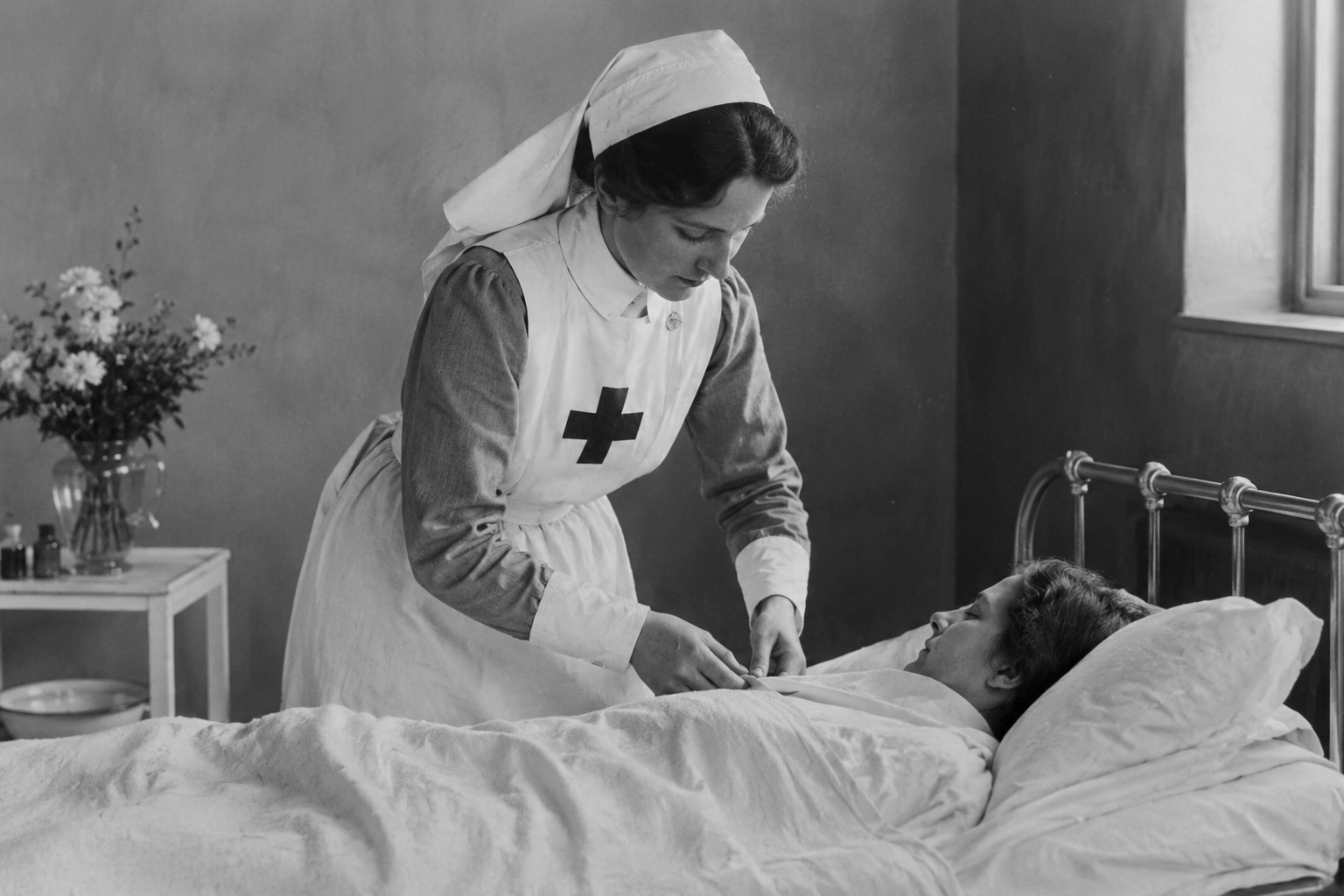
What Is Early Nursing?
Early nursing refers to the informal and often unstructured practices of caring for the sick, injured, or vulnerable that existed before the establishment of formal nursing education and professional standards. Unlike today’s licensed nurses, early caregivers were typically family members, religious figures, or community volunteers who provided comfort, basic medical treatments, and support to those in need. These practices were rooted in cultural traditions, religious beliefs, and practical necessity rather than scientific knowledge or standardized training. Early nursing was as much about emotional and spiritual support as it was about physical care, reflecting the holistic understanding of health that many ancient societies embraced.
In many early civilizations, nursing was intertwined with religion and spirituality. Temples, monasteries, and religious orders often served as centers of healing, where caregivers combined prayer, herbal remedies, and hands on care. For example, in ancient Egypt, Greece, and Rome, priests and priestesses played key roles in treating the sick, while in medieval Europe, monks and nuns provided care in monasteries and convents. These early caregivers laid the groundwork for the idea that healing was not just a physical act but a moral and spiritual one as well.
Why Does Early Nursing Matter?
The history of early nursing is more than a collection of old stories, it is a vital part of understanding how modern healthcare systems developed. Early nursing practices shaped the values, ethics, and structures that define healthcare today. For instance, the emphasis on compassion, patience, and attentiveness in nursing can be traced back to the caregivers of ancient times, who often worked in difficult conditions with limited resources. Their dedication to serving others, even in the face of hardship, set a precedent for the selfless nature of nursing that continues to inspire the profession.
Early nursing also highlights the evolution of medical knowledge and the role of women in healthcare. Before the 19th century, women were often the primary caregivers in families and communities, passing down remedies and techniques through generations. However, their contributions were frequently overlooked or dismissed in historical records. The formalization of nursing as a profession in the 19th century, led by figures like Florence Nightingale, helped elevate the status of women in healthcare and created opportunities for them to gain education, autonomy, and recognition. This shift was not just about improving patient care, it was also a step toward gender equality in a field that had long been dominated by men in positions of authority.
Who Provided Early Nursing Care?
Early nursing care was provided by a diverse range of individuals, depending on the culture, time period, and social structures of the community. In many ancient societies, family members, particularly women, were the first line of care for the sick. Mothers, daughters, and sisters often took on the role of caregivers, using home remedies, herbal treatments, and basic wound care techniques passed down through oral traditions. This family based care was especially common in rural or isolated communities, where access to formal medical practitioners was limited or nonexistent.
Religious institutions also played a central role in early nursing. In medieval Europe, for example, monasteries and convents became hubs of healthcare, where monks and nuns provided care to the sick, poor, and travelers. These religious caregivers often combined spiritual guidance with practical medical treatments, such as setting broken bones, preparing herbal remedies, and offering shelter to those in need. Similarly, in Islamic cultures during the Middle Ages, hospitals known as bimaristans were established, where both male and female caregivers provided medical and nursing care under the guidance of physicians. These early hospitals were among the first to separate patients by illness, a practice that foreshadowed modern medical specialization.
In some cultures, early nursing was also tied to military needs. During times of war, caregivers, often women, followed armies to provide care to wounded soldiers. These battlefield nurses, though untrained by today’s standards, played a crucial role in saving lives and alleviating suffering. Their work laid the foundation for the development of military nursing, which later became a formalized and respected field within the profession.
The Role of Florence Nightingale and the Birth of Modern Nursing
No discussion of early nursing would be complete without mentioning Florence Nightingale, often called the founder of modern nursing. Nightingale’s work during the Crimean War in the 1850s transformed nursing from an informal, often disrespected occupation into a structured, science based profession. Before her time, hospitals were often unsanitary, overcrowded, and poorly managed, with high rates of infection and mortality. Nightingale’s emphasis on hygiene, sanitation, and systematic patient care dramatically improved survival rates and set new standards for healthcare facilities.
Nightingale’s contributions extended beyond the battlefield. After the war, she established the first secular nursing school at St. Thomas’ Hospital in London, which became a model for nursing education worldwide. Her book, Notes on Nursing, published in 1859, was one of the first textbooks on nursing and emphasized the importance of observation, cleanliness, and patient centered care. Nightingale’s work also highlighted the need for data and evidence in healthcare, as she used statistics to demonstrate the impact of improved sanitation on patient outcomes. Her legacy is not just in the techniques she introduced but in the professionalization of nursing, which gave caregivers the training, respect, and authority they deserved.
How Early Nursing Shaped Modern Healthcare
The principles and practices of early nursing continue to influence modern healthcare in profound ways. The emphasis on holistic care, which addresses not just physical ailments but also emotional and spiritual needs, can be traced back to the caregivers of ancient times. Today, nurses are trained to consider the whole person, not just their symptoms, a philosophy that reflects the values of early nursing. Additionally, the idea of patient advocacy, where nurses act as a voice for their patients’ needs and rights, has its roots in the compassionate care provided by early caregivers who often worked in systems that overlooked the vulnerable.
Early nursing also demonstrated the importance of adaptability and innovation in healthcare. Caregivers in ancient and medieval times often had to improvise with limited resources, using whatever materials and knowledge were available to them. This spirit of resourcefulness is still a hallmark of nursing today, particularly in underserved communities or during crises like pandemics or natural disasters. Furthermore, the role of women in early nursing paved the way for their leadership in modern healthcare, with nurses now holding positions of influence in hospitals, research, policy, and education.
Lessons from Early Nursing for Today’s Caregivers
While modern nursing is built on scientific advancements and evidence based practices, there are timeless lessons to be learned from early nursing. One of the most important is the value of human connection in healthcare. Early caregivers often had little more than their presence and compassion to offer, yet their impact was profound. In today’s fast paced, technology driven healthcare environment, it is easy to overlook the simple act of listening, comforting, or holding a patient’s hand. Early nursing reminds us that healing is not just about treatments and procedures but about the relationships between caregivers and patients.
Another lesson is the importance of humility and lifelong learning. Early nurses often relied on trial and error, observation, and the wisdom of those who came before them. While modern nursing is grounded in rigorous education and research, the willingness to learn, adapt, and grow remains essential. Nurses today must stay updated on the latest medical advancements, but they must also cultivate the empathy, patience, and resilience that have defined nursing since its earliest days.
When to Reflect on the History of Nursing
Understanding the history of early nursing is not just an academic exercise, it is a way to honor the legacy of those who came before us and to inspire future generations of caregivers. Reflecting on this history is particularly valuable during times of change or challenge in healthcare, such as during a pandemic, when the role of nurses becomes even more critical. It is also important for students and new nurses to learn about the struggles and triumphs of early caregivers, as it provides context for the profession’s evolution and reinforces the values that define nursing.
For patients and families, learning about early nursing can foster a deeper appreciation for the care they receive. It can also help them understand that nursing is not just a job but a calling, one that has been shaped by centuries of dedication, innovation, and compassion. By recognizing the roots of nursing, we can all play a part in supporting and uplifting the profession, ensuring that it continues to thrive and adapt in the years to come.
Key Takeaways
- Early nursing was rooted in informal, community based care, often provided by family members, religious figures, or volunteers, long before formal training existed.
- The history of early nursing highlights the evolution of healthcare values, including compassion, holistic care, and the role of women in medicine.
- Religious institutions, such as monasteries and Islamic bimaristans, played a crucial role in early nursing by providing structured care and medical treatments.
- Florence Nightingale’s work in the 19th century transformed nursing into a respected, science based profession, emphasizing hygiene, education, and patient centered care.
- Modern nursing continues to be shaped by the principles of early nursing, including holistic care, patient advocacy, and adaptability in the face of challenges.
- Reflecting on the history of nursing helps us appreciate the enduring values of empathy, resilience, and lifelong learning that define the profession today.
Frequently Asked Questions
What were the main responsibilities of early nurses?
Early nurses, who were often family members, religious figures, or community volunteers, focused on providing basic care such as wound cleaning, administering herbal remedies, offering emotional support, and ensuring the comfort of the sick. Their responsibilities were shaped by the needs of their communities and the limited medical knowledge of the time. Unlike modern nurses, they did not have formal training but relied on traditions, observation, and practical experience.
How did religion influence early nursing practices?
Religion played a significant role in early nursing by shaping the values and structures of care. In many cultures, temples, monasteries, and religious orders served as centers of healing, where caregivers combined spiritual guidance with medical treatments. For example, in medieval Europe, monks and nuns provided care in monasteries, while in Islamic cultures, hospitals known as bimaristans were established under religious principles. These institutions often emphasized compassion, charity, and holistic care, which remain central to nursing today.
Who was Florence Nightingale, and why is she important in nursing history?
Florence Nightingale was a British nurse who became a pioneer of modern nursing during the 19th century. Her work during the Crimean War, where she improved sanitation and patient care in military hospitals, dramatically reduced mortality rates and set new standards for healthcare. Nightingale also founded the first secular nursing school and wrote Notes on Nursing, which became a foundational text for the profession. Her emphasis on education, evidence based practice, and patient centered care transformed nursing into a respected and structured field.
How did early nursing contribute to the professionalization of women in healthcare?
Early nursing was one of the few fields where women could play a significant role in healthcare, even before they had access to formal education or professional opportunities. While their contributions were often overlooked, the formalization of nursing in the 19th century, led by figures like Florence Nightingale, created pathways for women to gain education, autonomy, and recognition. This shift not only improved patient care but also challenged gender norms and paved the way for women’s leadership in modern healthcare.
What lessons from early nursing are still relevant today?
Early nursing teaches us the enduring value of compassion, adaptability, and human connection in healthcare. Despite advances in medical technology, the principles of holistic care, patient advocacy, and lifelong learning remain as important today as they were in ancient times. Early nursing also reminds us of the importance of humility, resilience, and the willingness to innovate, even with limited resources. These lessons continue to inspire nurses and caregivers in their mission to provide high quality, patient centered care.
Medical Review: MedSense Editorial Board
DISCUSSION (0)
POST A COMMENT