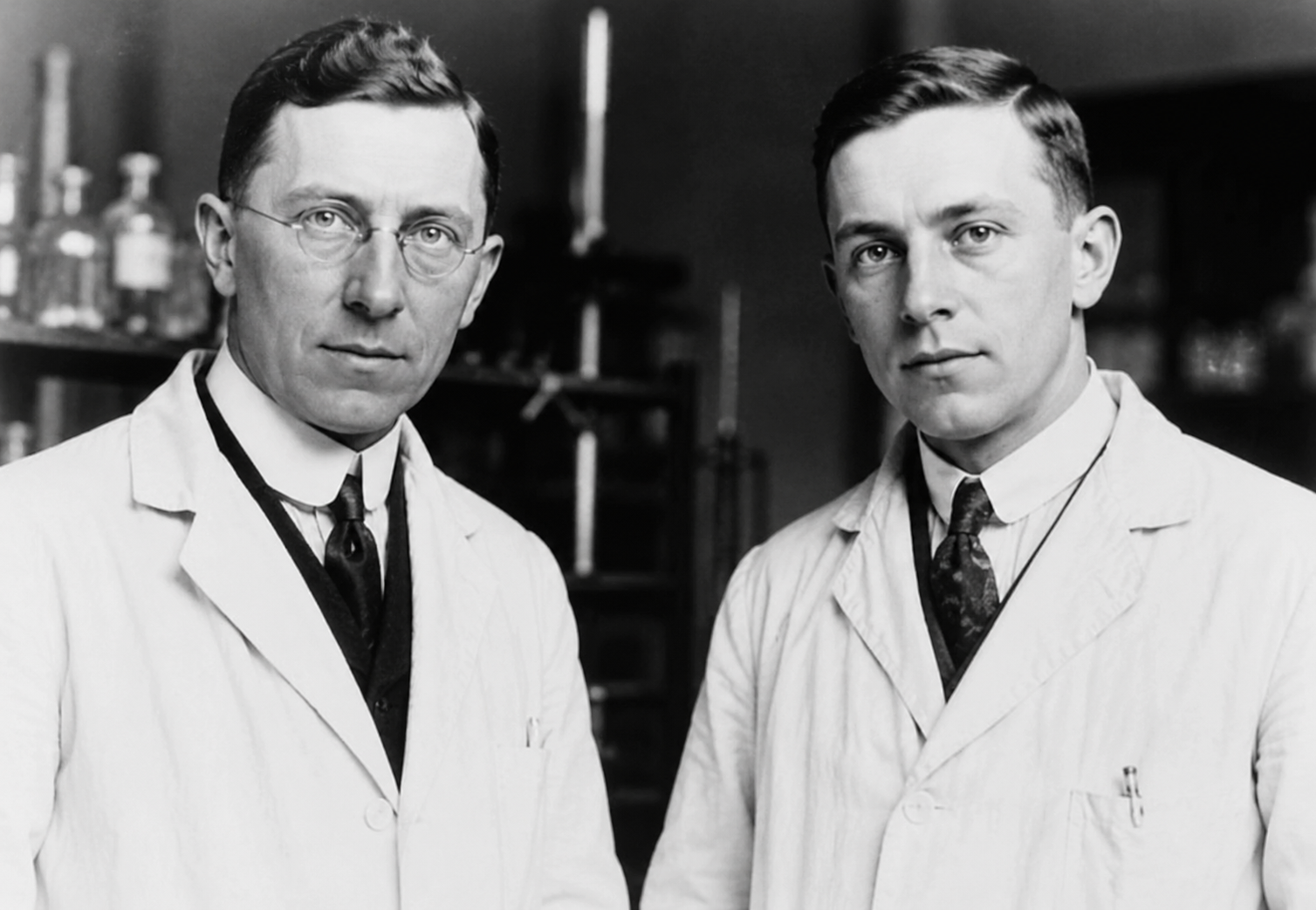
Before 1921, a diagnosis of diabetes was often a death sentence, especially for children and young adults, as the body’s inability to process sugar led to severe wasting, coma, and eventually death. That all changed when a determined young surgeon named Frederick Banting, working alongside a dedicated medical student named Charles Best, unlocked one of the most important medical breakthroughs of the 20th century: the discovery of insulin. Their work didn’t just extend lives, it transformed diabetes from a fatal condition into a manageable one, offering hope to millions and paving the way for modern diabetes care.
What Was Diabetes Like Before Insulin?
In the early 1900s, diabetes mellitus was a poorly understood and devastating disease. Doctors knew that patients with diabetes had high levels of sugar in their blood and urine, but they had no effective way to treat it. The only available treatments were extreme dietary restrictions, which sometimes prolonged life by a few years but left patients weak, malnourished, and still facing an inevitable decline. Children diagnosed with type 1 diabetes, in particular, rarely lived more than a year after diagnosis, as their bodies simply couldn’t survive without the ability to process glucose.
At the time, researchers suspected that the pancreas played a key role in diabetes, as removing the pancreas from dogs caused them to develop symptoms similar to the disease. However, earlier attempts to extract a therapeutic substance from the pancreas had failed, often because the digestive enzymes in the pancreas destroyed the very compound they were trying to isolate. This compound, later named insulin, was the missing piece in diabetes treatment, but no one had yet figured out how to extract it safely and effectively.
How Banting and Best Made Their Breakthrough
Frederick Banting, a young Canadian surgeon with a keen interest in diabetes, became convinced that the key to isolating insulin lay in tying off the pancreatic ducts of dogs to stop the flow of digestive enzymes, allowing the insulin producing islet cells to remain intact. He approached John Macleod, a renowned physiologist at the University of Toronto, who was initially skeptical but eventually agreed to provide Banting with a laboratory, a small budget, and the assistance of Charles Best, a medical student with a strong background in biochemistry.
Working through the summer of 1921, Banting and Best faced numerous challenges, from limited funding to the technical difficulties of working with delicate pancreatic tissue. Their first breakthrough came when they successfully tied off the pancreatic ducts of dogs, waited several weeks for the digestive tissue to degenerate, and then extracted a substance from the remaining islet cells. When they injected this extract into diabetic dogs, their blood sugar levels dropped dramatically, and their symptoms improved. This was the first proof that they had isolated a substance capable of treating diabetes, which they named “isletin” (later renamed insulin).
The Race to Refine and Test Insulin
While Banting and Best’s initial experiments were promising, the insulin they extracted was impure and caused side effects like fever and abscesses at the injection site. Recognizing the need for a purer, more stable form of insulin, Macleod brought in biochemist James Collip to help refine the extraction process. Collip’s expertise in chemistry was crucial, he developed a method to purify insulin using alcohol, which made it safe for human trials.
The first human trial took place in January 1922, when a 14 year old boy named Leonard Thompson, who was dying of diabetes, received an injection of the purified insulin. Within days, his blood sugar levels dropped, his symptoms improved, and he began to regain strength. This success was quickly followed by trials in other patients, all of whom showed remarkable improvement. By 1923, insulin was being produced on a larger scale, and diabetes patients around the world were receiving a treatment that could truly save their lives.
Why the Discovery of Insulin Matters Today
The discovery of insulin didn’t just change the lives of people with diabetes, it revolutionized the field of medicine. For the first time, a disease that had been universally fatal could be managed with regular treatment, allowing patients to live full, productive lives. Banting and Macleod were awarded the Nobel Prize in Physiology or Medicine in 1923, with Banting famously sharing his prize money with Best, and Macleod sharing his with Collip, acknowledging the collaborative nature of their work.
Today, insulin remains a cornerstone of diabetes treatment, though the way it’s produced and delivered has evolved significantly. Early insulin was derived from animal pancreases, but modern insulin is synthesized using recombinant DNA technology, making it more consistent and widely available. Advances in insulin delivery, such as insulin pumps and continuous glucose monitors, have further improved the quality of life for people with diabetes, but none of these innovations would have been possible without the foundational work of Banting and Best.
What Readers Should Know About Insulin and Diabetes Care
While insulin is a life saving treatment, managing diabetes still requires careful attention to diet, exercise, and blood sugar monitoring. For people with type 1 diabetes, insulin is an absolute necessity, as their bodies produce little to no insulin on their own. For those with type 2 diabetes, insulin may be needed if other treatments, such as oral medications or lifestyle changes, are no longer effective. Understanding how insulin works, helping cells absorb glucose from the bloodstream, can help patients and caregivers appreciate the importance of consistent treatment and monitoring.
It’s also worth noting that access to insulin remains a global challenge. Despite its life saving potential, insulin is still unaffordable or unavailable for many people with diabetes, particularly in low income countries. Advocacy efforts continue to push for more affordable and accessible insulin worldwide, ensuring that Banting and Best’s discovery reaches everyone who needs it.
Lessons from the Discovery of Insulin
The story of insulin’s discovery is a powerful reminder of how persistence, collaboration, and scientific curiosity can lead to life changing breakthroughs. Banting and Best’s work demonstrates the importance of supporting medical research, even when the odds seem long. Their success also highlights the value of interdisciplinary teamwork, Banting’s surgical expertise, Best’s biochemical knowledge, Macleod’s physiological insights, and Collip’s chemical skills all played a role in bringing insulin from the laboratory to the clinic.
For anyone living with diabetes or caring for someone who does, the discovery of insulin is a testament to the progress that’s possible when science and determination come together. It’s a story of hope, resilience, and the enduring impact of medical innovation.
Key Takeaways
- Before insulin, diabetes was a fatal disease with no effective treatment, particularly for children and young adults.
- Frederick Banting and Charles Best successfully isolated insulin in 1921 by tying off the pancreatic ducts of dogs and extracting a substance from the islet cells.
- James Collip’s work to purify insulin made it safe for human use, leading to the first successful trial in 1922.
- The discovery of insulin transformed diabetes from a death sentence into a manageable condition, saving millions of lives.
- Modern insulin is produced using recombinant DNA technology, but the foundational work of Banting and Best made all subsequent advancements possible.
- Access to insulin remains a challenge for many people with diabetes worldwide, highlighting the need for continued advocacy and innovation.
- The story of insulin’s discovery underscores the importance of scientific collaboration, persistence, and the life changing potential of medical research.
Frequently Asked Questions
What was diabetes treatment like before insulin?
Before insulin, diabetes treatment was extremely limited and ineffective. The only approach was severe dietary restriction, which could prolong life by a few years but left patients weak and malnourished. Children with type 1 diabetes rarely survived more than a year after diagnosis, as their bodies couldn’t process glucose without insulin.
How did Banting and Best discover insulin?
Banting and Best hypothesized that tying off the pancreatic ducts of dogs would allow them to extract a substance from the islet cells without it being destroyed by digestive enzymes. After weeks of experimentation, they successfully isolated a substance, later named insulin, that lowered blood sugar levels in diabetic dogs.
Who was the first person to receive insulin treatment?
The first human to receive insulin treatment was Leonard Thompson, a 14 year old boy dying of diabetes. In January 1922, he received an injection of purified insulin, which dramatically lowered his blood sugar levels and improved his symptoms, marking the first successful human trial of insulin.
Why was the discovery of insulin so important?
The discovery of insulin was revolutionary because it transformed diabetes from a fatal disease into a manageable condition. Before insulin, people with diabetes faced certain death, but after its discovery, they could live full, productive lives with regular treatment. It also paved the way for modern diabetes care and inspired further medical research.
How is insulin produced today?
Today, insulin is produced using recombinant DNA technology, which involves inserting the human insulin gene into bacteria or yeast cells. These cells then produce insulin, which is harvested and purified. This method is more efficient and consistent than the early extraction process, which relied on animal pancreases.
Is insulin still the primary treatment for diabetes?
Yes, insulin remains the primary treatment for type 1 diabetes, as people with this condition produce little to no insulin on their own. For type 2 diabetes, insulin may be used if other treatments, such as oral medications or lifestyle changes, are no longer effective. Advances in insulin delivery, like pumps and continuous glucose monitors, have made management easier and more precise.
What challenges still exist with insulin access today?
Despite its life saving potential, insulin is still unaffordable or inaccessible for many people with diabetes, particularly in low income countries. High costs, lack of healthcare infrastructure, and supply chain issues can prevent patients from getting the insulin they need. Advocacy efforts are ongoing to improve access and affordability worldwide.
Medical Review: MedSense Editorial Board
DISCUSSION (0)
POST A COMMENT