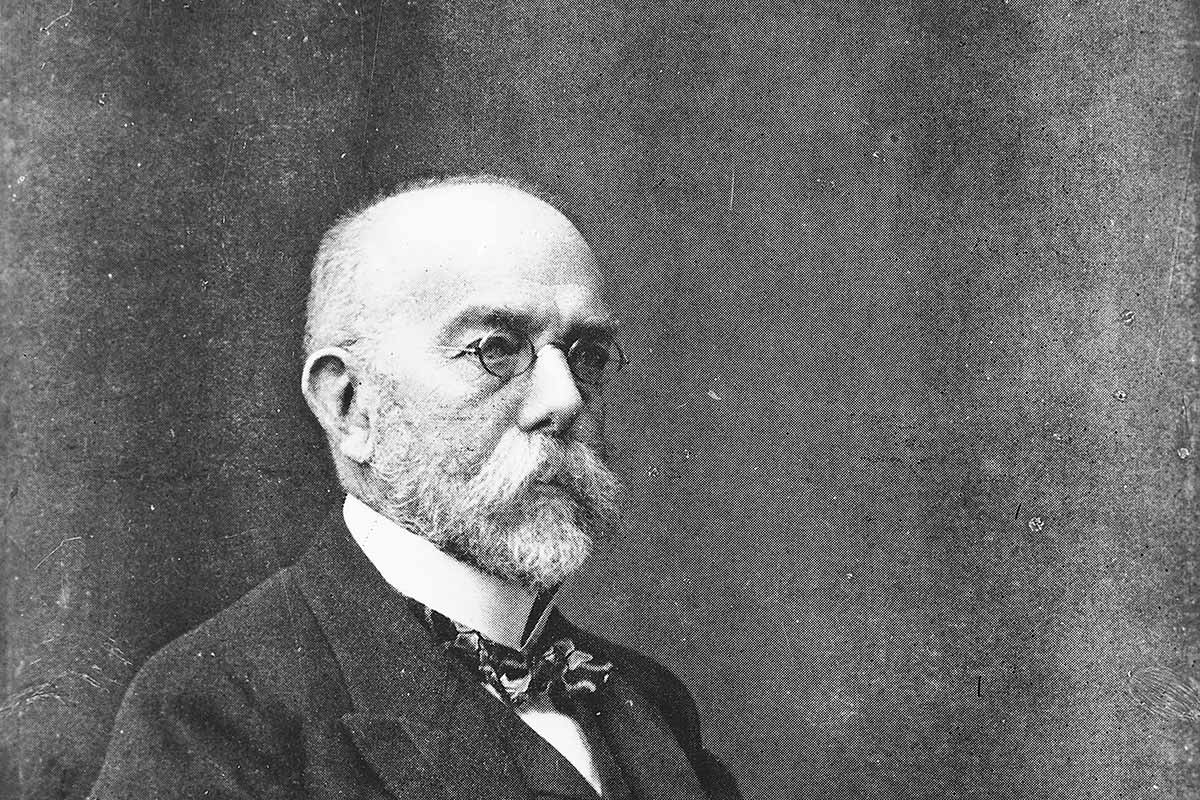
Who Was Robert Koch?
Heinrich Hermann Robert Koch was born on December 11, 1843, in Clausthal, a small mining town in Germany. From an early age, Koch displayed a keen interest in nature and science, often collecting plants and insects. His academic journey began with the study of medicine at the University of Göttingen, where he was influenced by the work of renowned scientists like Jacob Henle, who proposed that microorganisms might cause disease. After earning his medical degree in 1866, Koch worked as a physician in various rural communities, where his observations of disease patterns sparked his lifelong fascination with infectious illnesses.
Koch’s career took a pivotal turn in 1876 when he began studying anthrax, a deadly disease affecting livestock and humans. At the time, the cause of anthrax was unknown, and outbreaks often devastated farming communities. Using a microscope and innovative laboratory techniques, Koch isolated the bacterium responsible for anthrax, Bacillus anthracis, and demonstrated how it could spread from animal to animal. This groundbreaking work not only identified the cause of anthrax but also provided the first clear evidence that specific bacteria could cause specific diseases. His findings were published in 1876 and marked the beginning of a new era in medical science.
Koch’s Postulates: The Blueprint for Proving Disease Causes
One of Koch’s most enduring contributions to medicine is the development of Koch’s Postulates, a set of four criteria designed to establish a causal relationship between a microorganism and a disease. These postulates, first outlined in 1884, became the gold standard for identifying disease causing pathogens and remain influential in microbiology and epidemiology today. The postulates are as follows:
- The microorganism must be found in abundance in all organisms suffering from the disease but should not be found in healthy organisms.
- The microorganism must be isolated from a diseased organism and grown in pure culture.
- The cultured microorganism should cause disease when introduced into a healthy organism.
- The microorganism must be re isolated from the inoculated, diseased experimental host and identified as being identical to the original specific causative agent.
While Koch’s Postulates have been refined over time, particularly with the discovery of viruses and asymptomatic carriers, they provided a systematic framework for linking microbes to diseases. This framework was instrumental in Koch’s later discoveries, including the identification of the bacteria responsible for tuberculosis and cholera, two of the most devastating diseases of his time.
Major Discoveries: Tuberculosis, Cholera, and Beyond
Koch’s work on tuberculosis (TB) cemented his reputation as one of the greatest scientists in history. In 1882, he announced the discovery of Mycobacterium tuberculosis, the bacterium that causes TB, a disease that was responsible for one in seven deaths in Europe at the time. His presentation of this finding to the Berlin Physiological Society is often regarded as one of the most important moments in medical history. Koch’s research not only identified the cause of TB but also debunked the prevailing belief that it was an inherited or constitutional disease. His work paved the way for the development of diagnostic tests, such as the tuberculin skin test, and later, treatments like antibiotics.
In 1883, Koch turned his attention to cholera, a disease that caused deadly pandemics in the 19th century. During an outbreak in Egypt, he identified the bacterium Vibrio cholerae as the cause of cholera and demonstrated how it spread through contaminated water. His findings reinforced the importance of sanitation and clean water in preventing infectious diseases, leading to significant improvements in public health infrastructure. Koch’s work on cholera also earned him international recognition, including a Nobel Prize in Physiology or Medicine in 1905 for his contributions to understanding tuberculosis.
Koch’s Influence on Public Health and Modern Medicine
Koch’s discoveries had a profound impact on public health, shifting the focus from treating symptoms to preventing infections. His research provided the scientific basis for the germ theory of disease, which states that many diseases are caused by microorganisms. This theory revolutionized medicine by emphasizing the importance of hygiene, sterilization, and vaccination. For example, Koch’s work on anthrax directly influenced Louis Pasteur’s development of the anthrax vaccine, while his tuberculosis research laid the groundwork for the BCG vaccine, still used today to prevent TB.
Beyond his scientific achievements, Koch was a dedicated educator and mentor. He founded the Institute for Infectious Diseases in Berlin (now the Robert Koch Institute), which became a leading center for microbiology and public health research. Many of his students and colleagues went on to make their own groundbreaking discoveries, further extending his influence on global health. The institute remains a vital institution in Germany, continuing Koch’s legacy of combating infectious diseases through research and innovation.
Controversies and Challenges in Koch’s Career
Despite his many successes, Koch’s career was not without controversy. One of the most notable controversies involved his work on tuberculosis. In 1890, Koch announced that he had developed a substance called tuberculin, which he claimed could cure TB. While tuberculin did not prove to be an effective treatment, it later became a valuable tool for diagnosing tuberculosis. The initial hype and subsequent disappointment led to criticism of Koch, though his reputation as a scientist remained largely intact.
Koch also faced ethical challenges, particularly in his later years. During expeditions to Africa and India to study tropical diseases like malaria and sleeping sickness, some of his methods were criticized for being invasive or risky to local populations. While his intentions were to advance medical knowledge, these controversies highlight the complex ethical landscape of scientific research during the colonial era. Despite these challenges, Koch’s contributions to medicine far outweighed the controversies, and his work continues to be celebrated for its lasting impact.
Legacy and Honors: How Koch’s Work Shapes Medicine Today
Robert Koch’s legacy is woven into the fabric of modern medicine. His discoveries not only saved millions of lives but also transformed how we approach disease prevention and treatment. Today, the Robert Koch Institute in Germany remains a global leader in infectious disease research, and his name is synonymous with the fight against epidemics. In 1905, Koch was awarded the Nobel Prize in Physiology or Medicine for his work on tuberculosis, cementing his place among the most influential scientists in history.
Koch’s influence extends beyond bacteriology. His emphasis on rigorous scientific methods and evidence based medicine set a standard for future generations of researchers. The principles he established continue to guide the study of infectious diseases, from the identification of new pathogens to the development of vaccines and antibiotics. In an era where global pandemics like COVID 19 remind us of the ongoing threat of infectious diseases, Koch’s work serves as a reminder of the power of science to protect and improve human health.
What Experts Say About Koch’s Contributions
Medical historians and scientists often regard Robert Koch as one of the founders of modern microbiology. Dr. Thomas D. Brock, a microbiologist and historian, once wrote, "Koch’s work was not just about discovering bacteria; it was about proving that these tiny organisms could cause devastating diseases. His methods and discoveries created a paradigm shift in medicine." Similarly, the World Health Organization (WHO) has acknowledged Koch’s role in shaping public health policies, particularly in the areas of sanitation, vaccination, and disease surveillance.
Koch’s approach to science, combining meticulous observation, experimentation, and practical application, continues to inspire researchers today. His ability to translate complex scientific concepts into actionable public health measures demonstrates the enduring relevance of his work. As we face new challenges in infectious disease control, Koch’s legacy reminds us of the importance of curiosity, perseverance, and evidence based solutions.
Key Lessons from Koch’s Life and Work
Robert Koch’s life offers valuable lessons for both scientists and the general public. First, his story underscores the importance of curiosity and observation in scientific discovery. Koch’s early work on anthrax began with simple questions: Why do animals get sick? How does disease spread? By pursuing these questions with rigor, he uncovered truths that transformed medicine.
Second, Koch’s career highlights the power of collaboration and mentorship. Many of his students, such as Paul Ehrlich and Emil von Behring, went on to make their own Nobel Prize winning discoveries. This tradition of mentorship continues to shape scientific progress today, emphasizing the importance of sharing knowledge and fostering the next generation of researchers.
Finally, Koch’s work reminds us that scientific progress is not always linear. His initial failure with tuberculin, for example, led to an unexpected breakthrough in diagnostics. This resilience in the face of setbacks is a hallmark of great scientists and serves as an inspiration for anyone pursuing a career in medicine or research.
Key Takeaways
- Robert Koch was a German physician and microbiologist who revolutionized medicine by proving that specific bacteria cause specific diseases, laying the foundation for modern bacteriology.
- His most famous contributions include the discovery of the bacteria responsible for anthrax, tuberculosis, and cholera, as well as the development of Koch’s Postulates, a framework for identifying disease causing pathogens.
- Koch’s work on tuberculosis earned him the Nobel Prize in Physiology or Medicine in 1905 and led to significant advancements in diagnostics, treatment, and public health.
- His research reinforced the germ theory of disease, emphasizing the importance of hygiene, sanitation, and vaccination in preventing infections.
- Koch founded the Institute for Infectious Diseases in Berlin, which remains a leading center for microbiology and public health research, continuing his legacy of combating infectious diseases.
- Despite controversies and setbacks, Koch’s rigorous scientific methods and evidence based approach set a standard for future generations of researchers and continue to influence medicine today.
Frequently Asked Questions
What are Koch’s Postulates, and why are they important?
Koch’s Postulates are a set of four criteria used to establish a causal relationship between a microorganism and a disease. They are important because they provided the first systematic method for proving that specific bacteria cause specific illnesses, which was a groundbreaking concept in the 19th century. While modern science has refined these postulates, they remain foundational in microbiology and epidemiology.
How did Robert Koch discover the cause of tuberculosis?
Koch discovered the cause of tuberculosis in 1882 by isolating the bacterium Mycobacterium tuberculosis from the tissues of infected animals and humans. Using staining techniques and microscopy, he demonstrated that this bacterium was present in all cases of tuberculosis and could reproduce the disease when introduced into healthy animals. His findings disproved the prevailing belief that tuberculosis was an inherited or constitutional disease.
What was Koch’s role in the development of the germ theory of disease?
Koch played a pivotal role in proving the germ theory of disease, which states that many diseases are caused by microorganisms. His work on anthrax, tuberculosis, and cholera provided concrete evidence that specific bacteria could cause specific illnesses. This theory revolutionized medicine by shifting the focus from treating symptoms to preventing infections through hygiene, sterilization, and vaccination.
Did Robert Koch win a Nobel Prize?
Yes, Robert Koch was awarded the Nobel Prize in Physiology or Medicine in 1905 for his research on tuberculosis. The Nobel Committee recognized his contributions to understanding the cause, transmission, and diagnosis of the disease, which had a profound impact on global health.
What is the Robert Koch Institute, and what does it do today?
The Robert Koch Institute (RKI) is a federal institution in Germany dedicated to public health and infectious disease research. Founded by Koch in 1891, the RKI continues his legacy by monitoring disease outbreaks, conducting research on pathogens, and advising the German government on health policies. It plays a crucial role in global health, particularly in responding to epidemics and pandemics.
How did Koch’s work influence modern medicine?
Koch’s work influenced modern medicine in several key ways. His discoveries led to the development of diagnostic tests, vaccines, and antibiotics. His emphasis on hygiene and sanitation improved public health practices, while his scientific methods set a standard for evidence based medicine. Today, his principles guide the study of infectious diseases, from identifying new pathogens to developing treatments and preventive measures.
What controversies surrounded Robert Koch’s career?
One of the major controversies in Koch’s career involved his announcement in 1890 that he had developed a cure for tuberculosis called tuberculin. While tuberculin did not prove effective as a treatment, it later became a valuable diagnostic tool. Additionally, some of Koch’s research methods during expeditions to Africa and India were criticized for being ethically questionable by modern standards. Despite these controversies, his scientific contributions remain widely celebrated.
Medical Review: MedSense Editorial Board
DISCUSSION (0)
POST A COMMENT