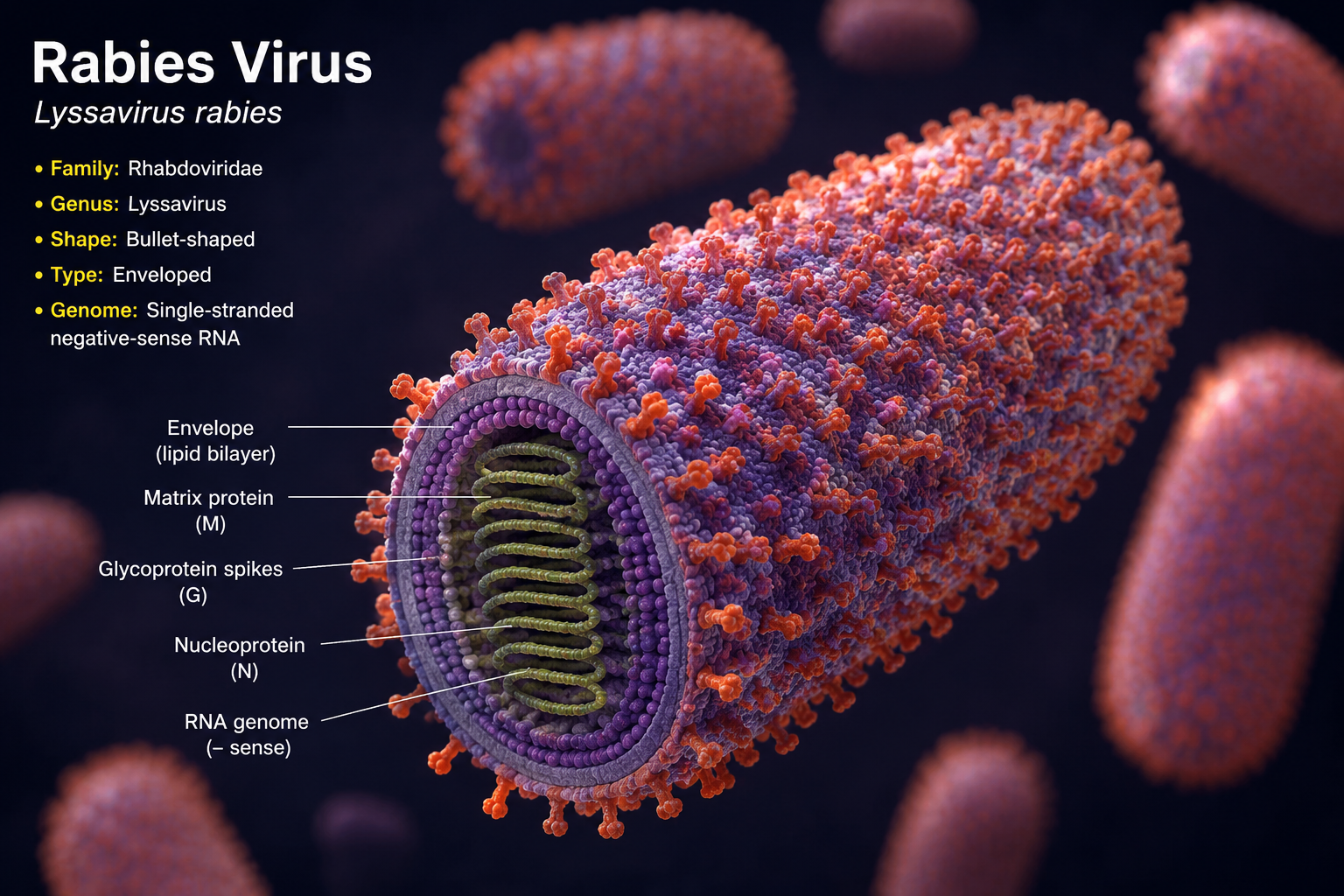
What Is Rabies?
Rabies is a viral infection caused by the rabies virus, which belongs to the family Rhabdoviridae. The virus attacks the central nervous system, leading to inflammation of the brain and spinal cord. Once symptoms develop, rabies is almost always fatal, making early prevention and treatment critical. The virus is typically transmitted through the saliva of an infected animal, most commonly via a bite or scratch. In rare cases, it can also spread if infected saliva comes into contact with an open wound or mucous membranes, such as the eyes, nose, or mouth.
Rabies is a zoonotic disease, meaning it can spread from animals to humans. While any mammal can carry and transmit the virus, certain animals are more likely to be infected. In the United States, rabies is most commonly found in wild animals like bats, raccoons, skunks, and foxes. Domestic animals, such as dogs and cats, can also carry rabies, especially if they are not vaccinated. In many developing countries, stray dogs are the primary source of human rabies infections.
Why Does Rabies Matter?
Rabies is a global health concern because of its near 100% fatality rate once symptoms appear. According to the World Health Organization (WHO), tens of thousands of people die from rabies each year, with the majority of cases occurring in Africa and Asia. Children are particularly vulnerable, as they are more likely to interact with animals and may not report bites or scratches. The disease is preventable through vaccination, but many people in high risk areas lack access to medical care or are unaware of the risks.
Even in countries where rabies is rare, the disease remains a concern due to its severity. Travelers to regions with high rabies rates, outdoor enthusiasts, and people who work with animals are at increased risk. Additionally, bats are a growing concern in some areas, as they can carry rabies without showing obvious signs of illness. Because of this, any encounter with a bat, even without a visible bite, should be taken seriously and evaluated by a healthcare provider.
Who Is at Risk for Rabies?
Anyone can be at risk for rabies if they come into contact with an infected animal. However, certain groups are at higher risk than others. People who live in or travel to areas where rabies is common, such as parts of Africa, Asia, and Latin America, are more likely to encounter infected animals. Children, who may not recognize the danger of animal bites or scratches, are also at increased risk.
Other high risk groups include veterinarians, animal handlers, wildlife workers, and laboratory personnel who may be exposed to the virus through their work. Outdoor enthusiasts, such as campers and hikers, may also be at risk if they encounter wild animals. In the United States, bats are the leading cause of human rabies cases, so anyone who finds a bat in their home or campsite should seek medical advice, even if there is no visible bite.
Symptoms of Rabies
The symptoms of rabies typically develop in stages, and the time between exposure and the onset of symptoms can vary from a few days to several months. This incubation period depends on factors such as the location of the bite, the amount of virus introduced, and the person’s immune response. Once symptoms appear, the disease progresses rapidly and is almost always fatal.
The first stage of rabies is often nonspecific and may include flu like symptoms such as fever, headache, fatigue, and discomfort at the site of the bite. As the virus spreads to the nervous system, more severe symptoms develop. These may include anxiety, confusion, agitation, hallucinations, and difficulty swallowing. One of the hallmark symptoms of rabies is hydrophobia, or fear of water, which occurs because the virus affects the muscles involved in swallowing. In the final stages, the disease leads to paralysis, coma, and death.
Treatment and Management of Rabies
There is no cure for rabies once symptoms appear, which is why prevention is so critical. However, if someone is exposed to the virus, a series of vaccinations can prevent the disease from developing. This treatment, known as post exposure prophylaxis (PEP), involves cleaning the wound thoroughly and administering a series of rabies vaccines and, in some cases, rabies immune globulin (RIG). PEP is highly effective if given promptly after exposure, ideally within a few days.
If you are bitten or scratched by an animal that may have rabies, wash the wound immediately with soap and water for at least 15 minutes. This simple step can significantly reduce the risk of infection. After cleaning the wound, seek medical attention right away, even if you are unsure whether the animal was infected. Your healthcare provider can assess your risk and determine whether PEP is necessary. If the animal can be captured or observed, it may be tested for rabies to guide your treatment.
Preventing Rabies
Preventing rabies involves a combination of animal vaccination, public education, and personal precautions. Vaccinating pets, such as dogs and cats, is one of the most effective ways to prevent the spread of rabies to humans. Many countries require pets to be vaccinated against rabies, and keeping your pets up to date on their vaccines is a key part of responsible pet ownership.
If you are traveling to an area where rabies is common, consider getting a pre exposure rabies vaccine. This is especially important for travelers who may be at higher risk, such as those planning to work with animals or spend time in rural areas. Avoid contact with wild or stray animals, and do not attempt to feed, pet, or handle them. If you are bitten or scratched, seek medical care immediately, even if you have been vaccinated.
In areas where bats are common, take steps to prevent them from entering your home. Seal any gaps or openings in your attic, basement, or walls, and avoid handling bats if you find one in your living space. If you wake up to find a bat in your room, seek medical advice, as bats can bite without leaving a visible mark.
When to Seek Medical Care
If you are bitten or scratched by an animal, seek medical care right away, even if the wound seems minor. Do not wait for symptoms to appear, as rabies is almost always fatal once symptoms develop. Your healthcare provider can assess your risk and recommend the appropriate treatment, which may include PEP.
You should also seek medical care if you have had any contact with a bat, even if you do not recall being bitten. Bats have small teeth, and their bites may not be noticeable. If a bat is found in your home, especially in a room where someone was sleeping, contact your local health department or a healthcare provider for guidance.
What Experts Recommend
Health experts emphasize the importance of rabies prevention through vaccination and education. The World Health Organization (WHO) and the Centers for Disease Control and Prevention (CDC) recommend vaccinating pets and livestock to reduce the risk of human exposure. They also advise travelers to high risk areas to consider pre exposure vaccination and to avoid contact with animals.
Experts also stress the importance of seeking medical care immediately after any potential exposure to rabies. Even if you are unsure whether the animal was infected, it is better to err on the side of caution. Prompt treatment with PEP can prevent the disease from developing and save lives.
Key Takeaways
- Rabies is a deadly viral infection that affects the brain and nervous system, typically spread through the bite or scratch of an infected animal.
- Once symptoms appear, rabies is almost always fatal, making early prevention and treatment critical.
- High risk groups include travelers to rabies endemic areas, children, veterinarians, and outdoor enthusiasts.
- Symptoms of rabies include flu like illness, anxiety, confusion, hallucinations, and hydrophobia (fear of water).
- There is no cure for rabies once symptoms develop, but post exposure prophylaxis (PEP) can prevent the disease if given promptly after exposure.
- Prevent rabies by vaccinating pets, avoiding contact with wild or stray animals, and seeking medical care immediately after a potential exposure.
- If you are bitten or scratched by an animal, wash the wound thoroughly and seek medical attention right away, even if the animal seems healthy.
Frequently Asked Questions
Can rabies be cured?
There is no cure for rabies once symptoms appear. However, post exposure prophylaxis (PEP), which includes rabies vaccines and immune globulin, can prevent the disease if given promptly after exposure.
How long does it take for rabies symptoms to appear?
The incubation period for rabies can vary from a few days to several months, depending on factors like the location of the bite and the amount of virus introduced. On average, symptoms appear within 1 to 3 months after exposure.
What animals are most likely to carry rabies?
In the United States, rabies is most commonly found in wild animals like bats, raccoons, skunks, and foxes. In many developing countries, stray dogs are the primary source of human rabies infections. Domestic animals like dogs and cats can also carry rabies if they are not vaccinated.
What should I do if I am bitten by an animal?
If you are bitten or scratched by an animal, wash the wound immediately with soap and water for at least 15 minutes. Seek medical attention right away, even if the animal seems healthy. Your healthcare provider can assess your risk and recommend treatment, such as post exposure prophylaxis (PEP).
Is the rabies vaccine safe?
Yes, the rabies vaccine is safe and effective. It is recommended for people at high risk of exposure, such as travelers to rabies endemic areas, veterinarians, and laboratory workers. The vaccine is also used as part of post exposure prophylaxis (PEP) to prevent rabies after a potential exposure.
Can I get rabies from a bat without being bitten?
While rabies is typically transmitted through a bite, it is possible to get rabies if infected saliva comes into contact with an open wound or mucous membranes. Bats can bite without leaving a visible mark, so any encounter with a bat should be taken seriously. If you find a bat in your home, contact a healthcare provider for advice.
Medical Review: MedSense Editorial Board
DISCUSSION (0)
POST A COMMENT