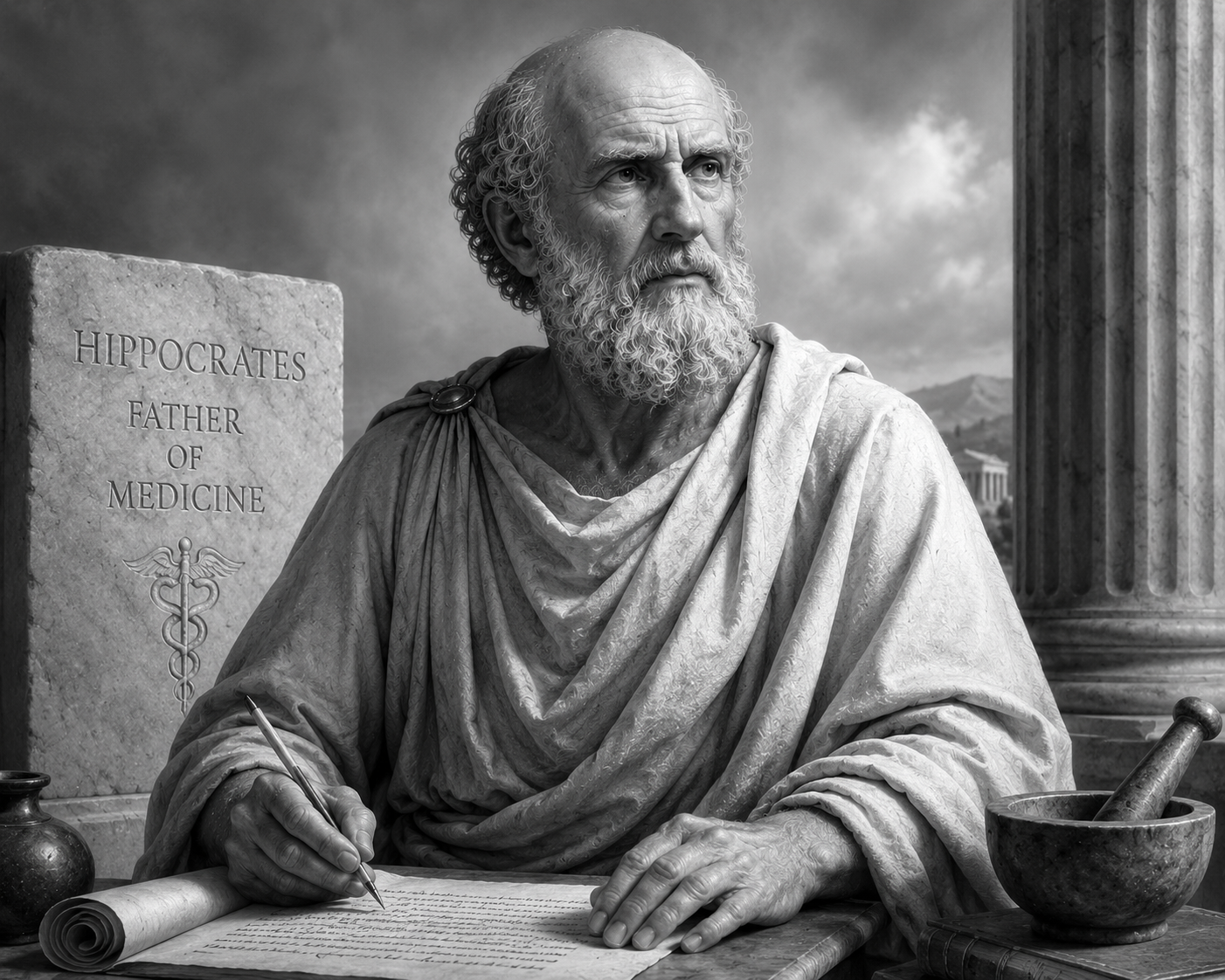
Over two thousand years ago, a Greek physician named Hippocrates laid the groundwork for modern medicine. His teachings shifted healthcare from superstition to science, emphasizing observation, ethics, and natural healing. Today, doctors around the world still swear by the Hippocratic Oath, a testament to his enduring influence. But who was Hippocrates, and why does his legacy matter to us now?
Who Was Hippocrates?
Hippocrates was born around 460 BCE on the Greek island of Kos. Unlike many of his contemporaries, who attributed illness to divine punishment or supernatural forces, Hippocrates believed diseases had natural causes. He traveled extensively across Greece, treating patients and teaching students, earning a reputation as a pioneer of clinical medicine.
The Hippocratic Approach: Observation Over Superstition
Before Hippocrates, medicine was often intertwined with religion and magic. He challenged this by insisting that illnesses could be understood through careful observation and logical reasoning. His methods included:
- Patient histories: Documenting symptoms, lifestyle, and environmental factors to identify patterns.
- Clinical examinations: Physically assessing patients to diagnose conditions.
- Natural treatments: Using diet, rest, and herbal remedies instead of rituals or prayers.
The Hippocratic Corpus: A Medical Revolution
The Hippocratic Corpus is a collection of around 60 ancient texts attributed to Hippocrates and his followers. These writings introduced groundbreaking ideas, such as:
- The Four Humors: The theory that the body’s health depended on the balance of four fluids, blood, phlegm, black bile, and yellow bile. While later disproven, this idea dominated medical thought for centuries and encouraged a holistic view of health.
- Prognosis: Predicting the likely course of a disease based on symptoms, a practice still central to modern medicine.
- Ethics in Medicine: The Hippocratic Oath, though likely written after his death, reflects his emphasis on patient care, confidentiality, and doing no harm.
Why Hippocrates Still Matters Today
Hippocrates’ principles remain foundational in medicine. Here’s how his legacy lives on:
- Evidence based medicine: His focus on observation and documentation paved the way for modern clinical research.
- Patient centered care: The Hippocratic Oath’s emphasis on ethics and compassion is echoed in today’s medical training.
- Preventive health: His belief in the healing power of nature and lifestyle aligns with contemporary wellness practices.
Common Misconceptions About Hippocrates
Despite his fame, myths about Hippocrates persist. Here’s what you should know:
- He didn’t write the Hippocratic Oath: While the oath bears his name, historians believe it was written by his followers after his death.
- Not all texts in the Hippocratic Corpus are his: The collection includes works by multiple authors, reflecting the teachings of his school.
- The Four Humors theory was flawed: Though influential, this theory was later disproven by advances in anatomy and physiology.
How Hippocrates’ Ideas Can Guide Your Health Today
You don’t need to be a doctor to apply Hippocratic wisdom to your life. Here are practical takeaways:
- Listen to your body: Pay attention to symptoms and patterns, just as Hippocrates urged his students to observe patients.
- Prioritize prevention: Focus on diet, exercise, and rest to maintain balance, much like Hippocrates’ holistic approach.
- Seek ethical care: Choose healthcare providers who value transparency, compassion, and evidence based treatments.
When to Reflect on Medical History
Understanding the roots of medicine can help you:
- Appreciate how far healthcare has come, from ancient remedies to modern technology.
- Recognize the importance of questioning assumptions, just as Hippocrates challenged superstition.
- Advocate for ethical, patient focused care in your own healthcare journey.
Key Takeaways
- Hippocrates shifted medicine from superstition to science by emphasizing observation, ethics, and natural healing.
- His teachings, including the Hippocratic Corpus and the Four Humors theory, shaped medical thought for centuries.
- The Hippocratic Oath, though not written by him, reflects his enduring influence on medical ethics and patient care.
- Modern medicine still relies on his principles, such as evidence based practice and preventive health.
- You can apply Hippocratic wisdom today by listening to your body, prioritizing prevention, and seeking ethical care.
Frequently Asked Questions
What is Hippocrates best known for?
Hippocrates is best known as the Father of Medicine for his role in shifting healthcare from supernatural explanations to natural, observable causes. He introduced clinical observation, ethical standards, and the idea that diseases have rational explanations.
Did Hippocrates really write the Hippocratic Oath?
No, historians believe the Hippocratic Oath was written by his followers after his death. However, it reflects the ethical principles he championed, such as patient confidentiality and doing no harm.
What was the Four Humors theory?
The Four Humors theory proposed that health depended on the balance of four bodily fluids: blood, phlegm, black bile, and yellow bile. While later disproven, it was an early attempt to explain illness through natural causes.
How did Hippocrates influence modern medicine?
Hippocrates’ emphasis on observation, documentation, and ethics laid the foundation for evidence based medicine. His focus on preventive care and patient centered treatment also aligns with modern healthcare practices.
Is the Hippocratic Oath still used today?
Yes, many medical schools still use a modernized version of the Hippocratic Oath during graduation ceremonies. It serves as a reminder of the ethical responsibilities of healthcare providers.
Medical Review: MedSense Editorial Board
DISCUSSION (0)
POST A COMMENT