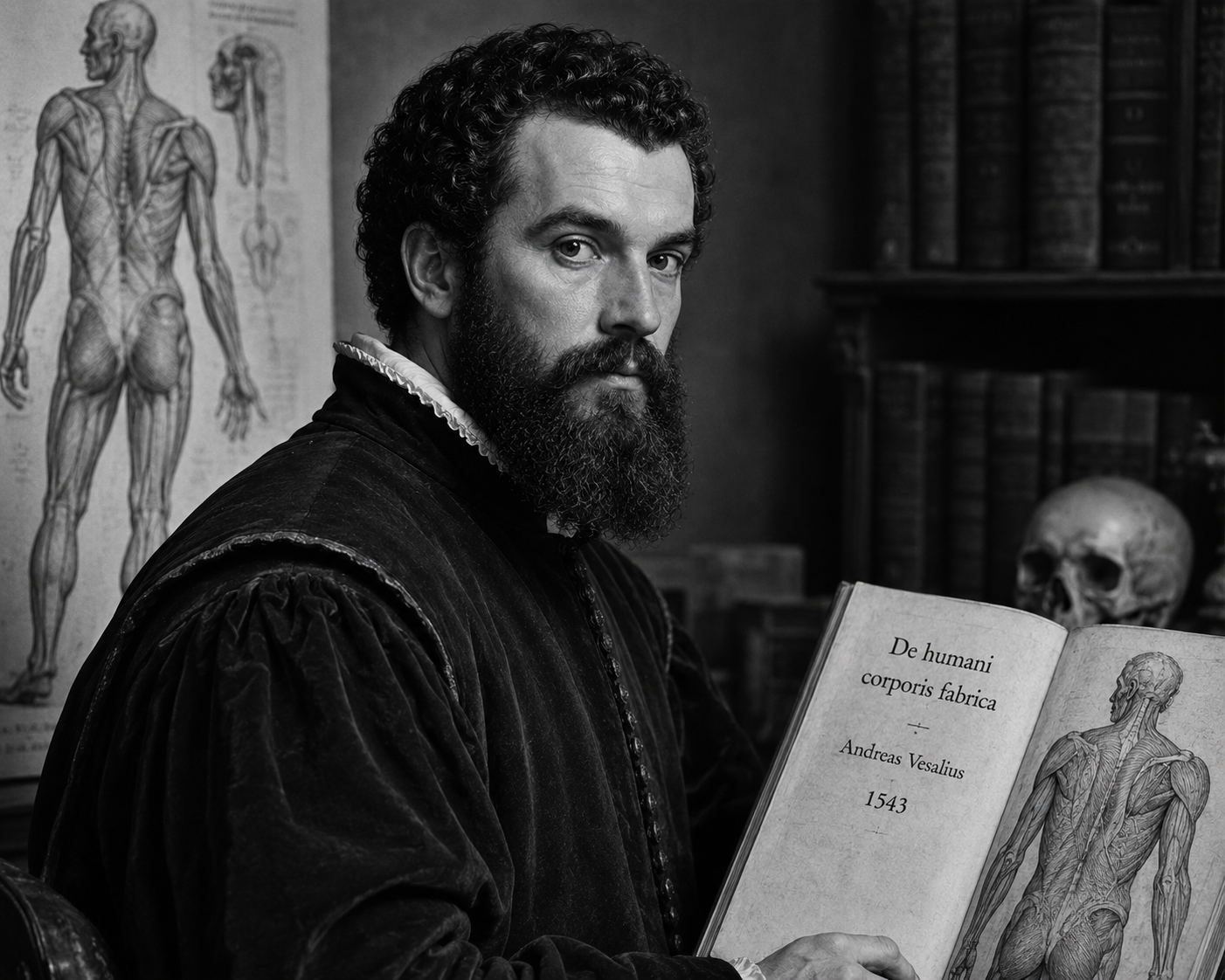
Who Was Andreas Vesalius?
Andreas Vesalius was a Flemish anatomist, physician, and author born in Brussels in 1514. He came from a family of physicians, which likely influenced his early interest in medicine. Vesalius studied at the University of Paris and later at the University of Padua, where he became a professor of surgery and anatomy at the remarkably young age of 23. His passion for understanding the human body led him to challenge the medical teachings of his time, which were largely based on the works of ancient Greek physician Galen. Galen’s writings, though influential, were often inaccurate because they were based on animal dissections rather than human ones. Vesalius recognized these errors and set out to correct them through his own meticulous observations.
Why Does Vesalius Matter in the History of Medicine?
Vesalius’s contributions to medicine cannot be overstated. Before his work, medical students and physicians relied almost entirely on the writings of Galen, which had been accepted as authoritative for over a thousand years. Galen’s descriptions of human anatomy were often incorrect because he had primarily dissected animals, such as dogs and monkeys, and assumed their anatomy was similar to humans. Vesalius, however, believed in learning anatomy through direct observation and human dissection. His insistence on evidence based medicine was revolutionary. By conducting his own dissections and documenting what he saw, Vesalius exposed many of Galen’s errors and provided a more accurate understanding of the human body. This shift from blindly following ancient texts to relying on empirical evidence marked a turning point in medical history and paved the way for modern anatomy.
The Publication of De Humani Corporis Fabrica
The most famous work of Andreas Vesalius is De Humani Corporis Fabrica (On the Fabric of the Human Body), published in 1543. This seven volume book was a groundbreaking achievement in both medicine and publishing. It combined detailed anatomical descriptions with stunning, lifelike illustrations, many of which were created by artists from the workshop of Titian. The illustrations were not just decorative, they were essential to Vesalius’s mission of educating physicians and students. The book covered everything from the skeletal system to the muscles, organs, and nervous system, providing a comprehensive and accurate depiction of human anatomy. De Fabrica was also notable for its high quality printing and attention to detail, making it one of the most influential medical texts ever published. Its release is often considered the birth of modern anatomy.
Challenges and Controversies
Vesalius’s work was not without controversy. His criticisms of Galen and his insistence on human dissection were met with resistance from many in the medical establishment. At the time, dissecting human bodies was often frowned upon, and Vesalius’s methods were seen as radical and even disrespectful. Some of his contemporaries accused him of heresy or arrogance for challenging long held beliefs. Despite this opposition, Vesalius remained committed to his work. He even performed public dissections to demonstrate his findings and educate others. His willingness to challenge authority and advocate for evidence based medicine, even in the face of criticism, demonstrates his dedication to advancing medical knowledge.
Vesalius’s Legacy and Impact on Modern Medicine
The impact of Andreas Vesalius on modern medicine is profound. His work laid the groundwork for the scientific study of anatomy and influenced generations of physicians, surgeons, and medical researchers. By emphasizing the importance of direct observation and dissection, Vesalius helped shift medicine from a discipline based on ancient texts to one grounded in empirical evidence. This shift was a critical step in the development of modern medical science. Today, medical students around the world still study anatomy using principles and illustrations that trace back to Vesalius’s work. His legacy is also evident in the way medicine is taught, with hands on learning and dissection remaining central to medical education. Vesalius’s contributions remind us of the importance of questioning established knowledge and seeking truth through observation and experimentation.
Lessons from Vesalius’s Life for Modern Readers
Andreas Vesalius’s life offers valuable lessons for anyone interested in science, medicine, or the pursuit of knowledge. One of the most important lessons is the power of curiosity and critical thinking. Vesalius did not accept the medical teachings of his time at face value, instead, he questioned them and sought evidence to support or refute them. This approach is a cornerstone of scientific inquiry and remains relevant today. Another lesson is the importance of perseverance. Vesalius faced significant opposition and criticism for his work, but he remained committed to his mission of advancing medical knowledge. His story is a reminder that progress often requires challenging the status quo and advocating for change. Finally, Vesalius’s work highlights the importance of education and communication. His detailed illustrations and clear writing made complex anatomical concepts accessible to others, ensuring that his discoveries could be shared and built upon by future generations.
How Vesalius’s Work Continues to Influence Medicine Today
The influence of Andreas Vesalius extends far beyond the 16th century. Modern medical imaging techniques, such as MRI and CT scans, rely on the foundational knowledge of anatomy that Vesalius helped establish. Surgeons today use detailed anatomical maps that are direct descendants of the illustrations in De Fabrica. Even the way medical students learn anatomy, through hands on dissection and observation, can be traced back to Vesalius’s methods. His work also underscores the importance of interdisciplinary collaboration, as his partnership with artists to create accurate illustrations demonstrates how science and art can work together to advance knowledge. Vesalius’s legacy is a testament to the enduring power of evidence based medicine and the pursuit of truth through observation and experimentation.
Key Takeaways
- Andreas Vesalius was a 16th century physician who revolutionized the study of anatomy by emphasizing direct observation and human dissection over reliance on ancient texts.
- His most famous work, De Humani Corporis Fabrica, published in 1543, provided the first accurate and comprehensive depiction of human anatomy and is considered the foundation of modern anatomy.
- Vesalius faced significant opposition for challenging the medical establishment, but his commitment to evidence based medicine paved the way for modern medical science.
- His legacy continues to influence medicine today, from the way anatomy is taught to the use of detailed anatomical illustrations in medical practice.
- Vesalius’s life teaches the importance of curiosity, critical thinking, and perseverance in the pursuit of knowledge and scientific progress.
Frequently Asked Questions
Why is Andreas Vesalius called the father of modern anatomy?
Vesalius is called the father of modern anatomy because he was the first to systematically study and document the human body through direct observation and dissection. His work corrected many errors in the ancient texts of Galen and provided the first accurate and comprehensive description of human anatomy, which became the foundation for modern anatomical study.
What were some of the key errors in Galen’s anatomy that Vesalius corrected?
Galen’s anatomical descriptions were based primarily on animal dissections, leading to several inaccuracies. For example, Galen described the human liver as having five lobes (like a dog’s liver) and the human jawbone as being made of two separate bones (like a monkey’s). Vesalius corrected these and many other errors by studying human cadavers directly and documenting his findings in De Humani Corporis Fabrica.
How did Vesalius’s work change the way medicine was taught?
Before Vesalius, medical education relied heavily on reading ancient texts and memorizing theories. Vesalius introduced hands on learning through dissection and observation, making anatomy a visual and practical discipline. His methods shifted medical education from theoretical to evidence based, a change that remains central to medical training today.
What challenges did Vesalius face during his career?
Vesalius faced significant opposition from the medical establishment, which was resistant to his criticisms of Galen and his emphasis on human dissection. Many of his contemporaries viewed his methods as radical or even disrespectful. Despite this, Vesalius persisted in his work, often performing public dissections to demonstrate his findings and educate others.
How are Vesalius’s contributions still relevant in modern medicine?
Vesalius’s contributions remain relevant in several ways. His detailed anatomical illustrations are still used as references in medical education. The emphasis on evidence based medicine and hands on learning in medical training can be traced back to his methods. Additionally, modern medical imaging techniques and surgical practices rely on the foundational knowledge of anatomy that Vesalius helped establish.
What can we learn from Vesalius’s approach to science and medicine?
Vesalius’s approach teaches the importance of questioning established knowledge, seeking evidence through observation, and persevering in the face of opposition. His work demonstrates how curiosity and critical thinking can lead to groundbreaking discoveries. Additionally, his collaboration with artists to create accurate illustrations highlights the value of interdisciplinary teamwork in advancing scientific knowledge.
Medical Review: MedSense Editorial Board
DISCUSSION (0)
POST A COMMENT